Meet Flossie: The World’s Oldest Living Cat Who Reached an Incredible 30 Years Old
Meet Flossie: The World’s Oldest Living Cat Who Reached an Incredible 30 Years Old
For most cat owners, every extra year with a beloved pet feels precious.
Cats become part of daily life in ways difficult to explain. They sleep beside people during hard nights, quietly wait near doors, demand attention at random hours, and somehow transform houses into homes simply by existing there.
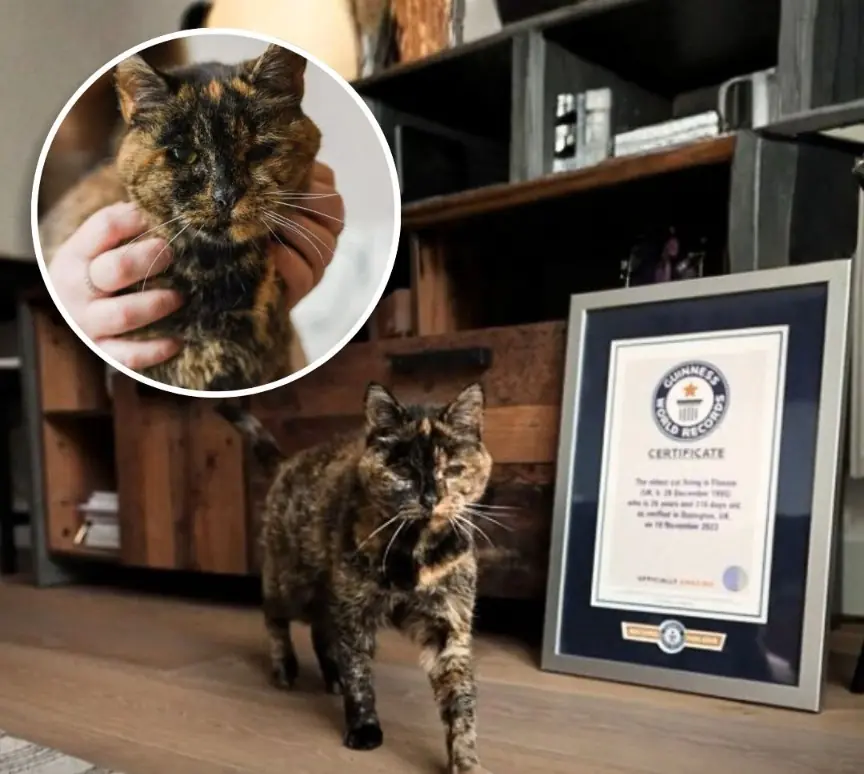
That is why the story of Flossie, officially recognized as the world’s oldest living cat, feels so emotional to animal lovers around the world.
At an astonishing 30 years old, Flossie has lived far beyond the average feline lifespan. In human age comparisons, experts estimate that she is roughly equivalent to 136 human years old.
And somehow, despite her age, this tiny tortoiseshell cat continues calmly walking through life like a quiet little legend.


 6
6
A Cat Older Than Most People Realize
To truly understand how extraordinary Flossie’s age is, it helps to compare it to normal feline lifespans.
Most domestic cats live:
- around 12–18 years on average
- sometimes early 20s with exceptional care
Reaching 30 years old is extremely rare.
That means Flossie has lived through:
- multiple generations of owners
- massive technological changes
- entire decades of human history
She was born in a completely different era from today’s internet-driven world. Long before smartphones, streaming platforms, or social media existed, Flossie was already alive.
That perspective alone makes her feel almost timeless.
The Journey of a Survivor
One of the most touching aspects of Flossie’s story is that her life was not always luxurious or easy.
Over the years, she reportedly passed through several homes after changes in ownership and family circumstances. Like many elderly pets, there were moments when uncertainty surrounded her future.
Sadly, older animals are often overlooked in adoption systems because many people prefer younger pets.
But Flossie’s story eventually reached compassionate caretakers who recognized just how special she truly was.
Instead of spending her final years forgotten, she became celebrated worldwide.


 7
7
Why Cats Like Flossie Fascinate People
Humans naturally become fascinated by extraordinary longevity.
Whether it involves humans, whales, tortoises, or cats, long life creates curiosity because it feels connected to mystery:
- genetics
- resilience
- care
- luck
- adaptation
People immediately begin asking questions:
- What did Flossie eat?
- How did she stay healthy so long?
- Was it genetics?
- Was it love and care?
The truth is probably a combination of many factors.
Veterinarians often explain that longevity in animals usually depends on:
- good nutrition
- reduced stress
- regular care
- safe environments
- genetics
- simple luck
But even among well-cared-for cats, reaching 30 remains incredibly unusual.
The Quiet Beauty of Elderly Animals
There is something deeply emotional about senior animals.
Young pets are playful and energetic, but older animals often carry a completely different kind of presence — calmer, softer, almost wise in a way difficult to describe.
They move slower.
Sleep more.
Watch quietly.
And somehow their age makes every moment feel more meaningful.
For many pet owners, caring for elderly animals becomes an act of love and gratitude. After years of companionship, humans begin protecting the creatures that once comforted them through earlier stages of life.
That emotional connection is why Flossie’s story resonated so strongly online.
People did not just see an old cat.
They saw survival, memory, loyalty, and time itself.

 9
9
Cats Have Shared Human Lives for Thousands of Years
Domestic cats have lived beside humans for thousands of years, yet they still remain slightly mysterious creatures.
Unlike dogs, which were heavily shaped around human social structures, cats retained much of their independence. They coexist with humans rather than fully depending on them emotionally in the same way.
And perhaps that independence makes moments of feline affection feel especially meaningful.
A cat choosing to trust someone feels earned.
Flossie spent three decades sharing her life with humans across different homes and periods of history. That amount of companionship becomes difficult to measure emotionally.
Entire childhoods, relationships, and life chapters likely unfolded while she quietly existed nearby.
The Guinness World Record Recognition
Flossie’s extraordinary age eventually earned official recognition from Guinness World Records as the oldest living cat.
That title transformed her from beloved pet into international internet icon.
Photos of the elderly tortoiseshell cat spread rapidly online as people reacted with disbelief:
- “She has seen everything.”
- “That cat survived multiple generations.”
- “Flossie is basically immortal.”
- “She deserves a tiny crown.”
Behind the jokes, however, many people genuinely felt inspired by her resilience.


 7
7
A Reminder About Caring for Senior Pets
Stories like Flossie’s also encourage awareness about adopting and caring for older animals.
Senior pets are often calmer, affectionate, and deeply loving companions, yet shelters consistently report that elderly animals face lower adoption rates.
Many people fear heartbreak or medical costs associated with older pets.
But countless rescuers explain that senior animals often provide some of the most meaningful emotional bonds imaginable.
Flossie’s popularity helped remind people that old animals still deserve love, comfort, and celebration.
More Than Just a Number
Thirty years is more than a record.
It represents:
- decades of survival
- years of companionship
- countless quiet moments
- lives touched across generations
Somewhere inside that tiny cat exists a lifetime of memories humans can barely imagine.
And perhaps the most beautiful part of Flossie’s story is not the number itself.
It is the fact that after all those years, she is still here:
walking slowly through rooms, accepting affection, and reminding the world how powerful love and care can become over time.
Because sometimes the smallest creatures end up carrying the longest stories.