Oklahoma City Zoo Celebrates Birth of Rare Golden Baby Monkey That Is Melting Hearts Online
Oklahoma City Zoo Celebrates Birth of Rare Golden Baby Monkey That Is Melting Hearts Online
Visitors and animal lovers around the world are completely obsessed with a tiny newborn monkey at the Oklahoma City Zoo after photos of the rare baby began spreading online.
And honestly?
One look explains everything.
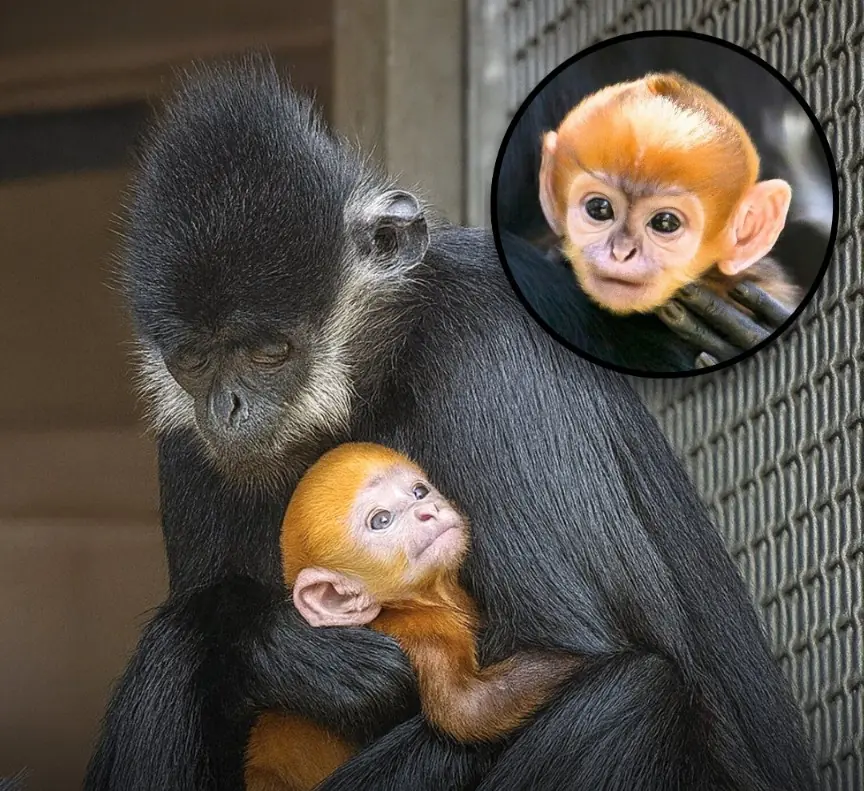
With bright golden-orange fur, enormous curious eyes, and tiny hands clinging tightly to its mother, the baby monkey immediately captured attention across social media — with many people calling it one of the cutest zoo babies seen in years.
Zoo staff described the birth as both exciting and important, especially because the species is considered rare and valuable for conservation efforts.


 7
7
A Tiny Primate With a Huge Internet Following
According to the zoo, the newborn arrived healthy and has already been bonding closely with its mother.
Photos released by caretakers showed the baby safely tucked into its mother’s arms while staring curiously at the world around it.
The contrast between the mother’s dark fur and the infant’s striking golden-orange coloring made the baby especially eye-catching online.
People instantly flooded comment sections with reactions like:
- “That may be the cutest thing on Earth.”
- “Those ears are unreal.”
- “It looks like a tiny cartoon character.”
- “Protect this baby at all costs.”
And honestly, the baby’s expression really does look almost unreal in photos.
Why The Birth Matters Beyond Being Cute
Although the internet mainly focused on how adorable the newborn looked, zoo officials emphasized that the birth also carries conservation importance.
Many monkey species worldwide face threats including:
- habitat destruction,
- illegal wildlife trafficking,
- climate change,
- and shrinking forest ecosystems.
Modern zoos increasingly participate in conservation breeding programs designed to help maintain healthy populations of vulnerable species.
Successful births can contribute to:
- long-term species survival,
- genetic diversity,
- public education,
- and conservation awareness.
For zoo staff who spend years caring for endangered animals, every healthy birth becomes deeply meaningful.

 6
6
The Mother’s Protective Behavior Melted Hearts
Many viewers online were especially emotional watching how carefully the mother monkey held and protected her baby.
In photos and videos, the infant remained pressed closely against its mother’s chest while she calmly watched her surroundings.
Primate experts explain that bonds between monkey mothers and infants are incredibly strong.
Newborn monkeys depend heavily on:
- warmth,
- constant physical contact,
- feeding,
- grooming,
- and protection during their earliest weeks of life.
For many species, babies remain physically attached to their mothers almost constantly during infancy.
That emotional closeness is one reason people often feel strong empathy while watching primate families.
The Baby’s Golden Fur Made It Instantly Famous
One feature especially fascinated viewers:
The unusual golden-orange coloring.
Depending on the species, infant monkeys sometimes display brighter fur during early development before their adult coloration gradually changes later in life.
The bright color may help parents identify infants more easily or simply reflect natural developmental stages.
Regardless of the scientific explanation, the internet collectively agreed on one thing:
The baby looked absolutely adorable.


 7
7
Zoo Babies Always Capture Public Attention
There is something universally powerful about baby animals.
Whether it is elephants, pandas, giraffes, otters, or monkeys, newborn animals often create moments of joy that spread rapidly online.
Part of that reaction comes from instinct.
Humans naturally respond emotionally to:
- large eyes,
- small size,
- vulnerability,
- and nurturing behavior.
Baby primates especially trigger strong emotional responses because their facial expressions and social behaviors often feel surprisingly familiar to humans.
That familiarity creates instant emotional connection.
Conservation Through Connection
Many zoos believe viral moments involving newborn animals can help increase public awareness about conservation.
People who emotionally connect with animals are often more likely to:
- support habitat protection,
- donate to conservation efforts,
- and care about endangered species survival.
In that sense, one tiny monkey can actually have a much larger impact than many people realize.
By simply existing and capturing attention, the baby may inspire thousands of people to learn more about wildlife protection.


 5
5
A Tiny New Life Bringing Joy Around the World
For the Oklahoma City Zoo, the newborn represents a conservation success and an exciting new chapter for the animal care team.
For the internet, however, the baby quickly became something else entirely:
A tiny ball of orange fur capable of instantly improving people’s moods.
At a time when social media often feels overwhelming and stressful, millions of people suddenly stopped scrolling to admire one small monkey safely resting in its mother’s arms.
And honestly?
That may be one of the internet’s best uses possible.