After a Lifetime Inside a Lab Cage, Senior Beagle Feels Sunshine for the First Time
After a Lifetime Inside a Lab Cage, Senior Beagle Feels Sunshine for the First Time
For most dogs, feeling grass beneath their paws or sunlight warming their fur is an ordinary part of life.
But for one senior beagle, that simple moment became something extraordinary.
After spending nearly an entire lifetime inside a laboratory cage, the elderly dog recently experienced the outdoors for what rescuers believe may have been the very first time. And the emotional moment — captured in photos now touching hearts around the world — has become a powerful reminder of both the resilience animals carry and the healing power of compassion.
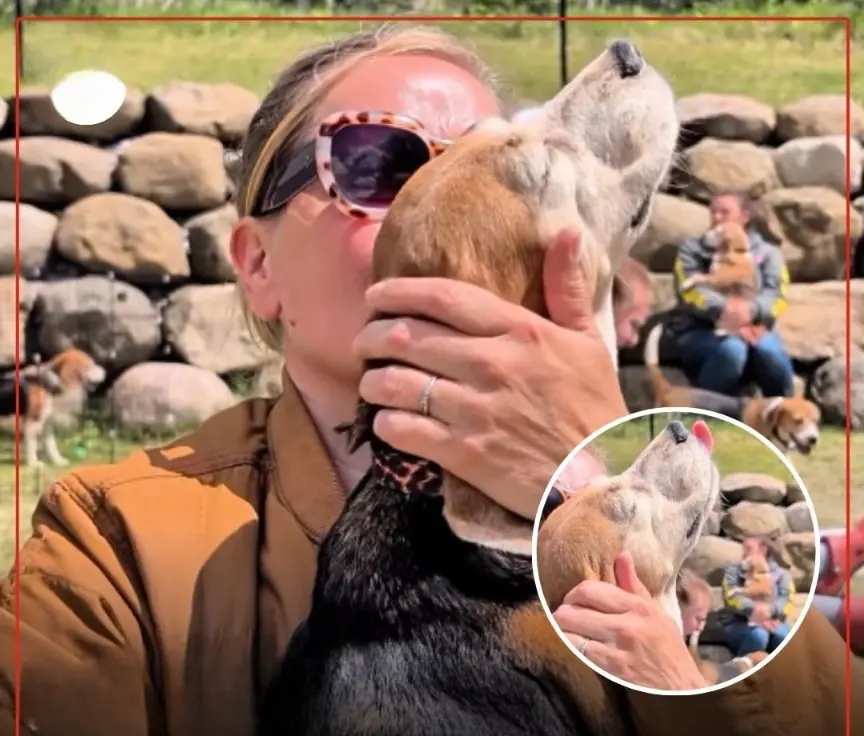
Wrapped gently in the arms of a rescuer, the aging beagle tilted its face toward the sky and quietly absorbed the warmth of the sun. There were no loud reactions. No excitement. No frantic movement.
Just stillness.
Peace.
And a dog finally experiencing a world that had been denied for years.
According to rescue advocates, many laboratory dogs spend most or all of their lives confined indoors for medical or product testing. While regulations vary depending on location and facility standards, countless animals raised in these environments experience extreme isolation, minimal stimulation, and very limited exposure to normal life experiences.
For dogs born into laboratory systems, the outside world can feel completely unfamiliar.
Grass may frighten them.
Open spaces may confuse them.
Even sunlight and wind can become overwhelming sensory experiences.
That is why rescuers say moments like this are so emotional to witness.
Because what appears ordinary to humans can feel miraculous to an animal that has spent years surviving in confinement.
The senior beagle reportedly came from a rescue operation involving former laboratory animals being transferred into rehabilitation programs and adoption networks. Volunteers described the dog as timid but incredibly gentle, showing signs of uncertainty around basic experiences many pets naturally understand.
Walking on grass reportedly took patience.
Hearing birds caused hesitation.
Open skies seemed unfamiliar.
Yet despite everything, the elderly dog slowly began learning what freedom felt like.
And perhaps the most emotional moment came during that quiet afternoon in the sunshine.
Witnesses said the beagle simply stopped moving and leaned into the warmth as if trying to understand it. The dog closed its eyes peacefully while being held, appearing completely calm for one of the first times since rescue.
For many people online, the image became almost impossible to forget.


 6
6
Animal welfare organizations have long advocated for stronger protections and alternatives to animal testing. Beagles, in particular, are frequently used in laboratory settings because of their small size, gentle temperament, and cooperative nature.
Ironically, the very qualities that make them loving family pets have also made them vulnerable within testing industries.
Over recent years, public awareness surrounding former laboratory animals has grown significantly. Rescue groups across several countries have worked to rehabilitate dogs released from research facilities, helping them adjust to normal home environments after years of confinement.
The transition, however, is not always easy.
Many rescued lab dogs have never climbed stairs, played with toys, heard household noises, or interacted socially outside controlled environments. Some initially fear couches, mirrors, televisions, or even human affection because these experiences are entirely new.
Yet what often amazes rescuers most is how quickly many animals still learn to trust.
Despite years of limitation, countless former laboratory dogs begin showing affection once they realize they are finally safe.
Tail wags appear.
Curiosity grows.
Personalities slowly emerge.
And for senior dogs like this beagle, even the smallest freedoms become deeply meaningful.
A soft bed.
Fresh air.
A gentle touch.
The warmth of sunlight on aging fur.
People across social media reacted emotionally to the images, with many expressing heartbreak over the dog’s lost years while also celebrating its second chance at life.
“That dog deserved sunshine from the very beginning,” one commenter wrote.
Another added, “It’s beautiful and devastating at the same time.”
Animal advocates say stories like this matter because they encourage conversations about ethics, compassion, and the emotional lives of animals. Dogs are highly social, emotionally intelligent creatures capable of attachment, fear, joy, anxiety, and trust. Witnessing an elderly animal experience basic freedoms for the first time often forces people to reflect on how deeply animals perceive the world around them.
And yet, despite everything this beagle endured, there was no anger in its eyes.
Only softness.
Only quiet acceptance.
Only gratitude for a moment that arrived many years late.
Rescuers now say the senior dog is slowly adapting to life outside confinement. It reportedly enjoys blankets, calm outdoor spaces, and gentle human affection. Volunteers continue working patiently to help the beagle experience the simple joys most pets know from puppyhood.
Because healing after a lifetime of restriction takes time.
But every peaceful moment matters.
Every act of kindness matters.
And every sunrise experienced in freedom matters.
For many people, the image of this elderly beagle sitting quietly in the sun has become symbolic of something larger than one rescue story. It represents hope after suffering. Compassion after neglect. And the belief that even animals who have lost years of life still deserve comfort, dignity, and love.
The beagle may never fully understand what happened throughout its life.
But perhaps, in that warm moment beneath the sunlight, none of it mattered anymore.
Because for the first time, there were no cages.
Only freedom.