A Tiny Baby Octopus Secretly Snuck Into an Aquarium Tank
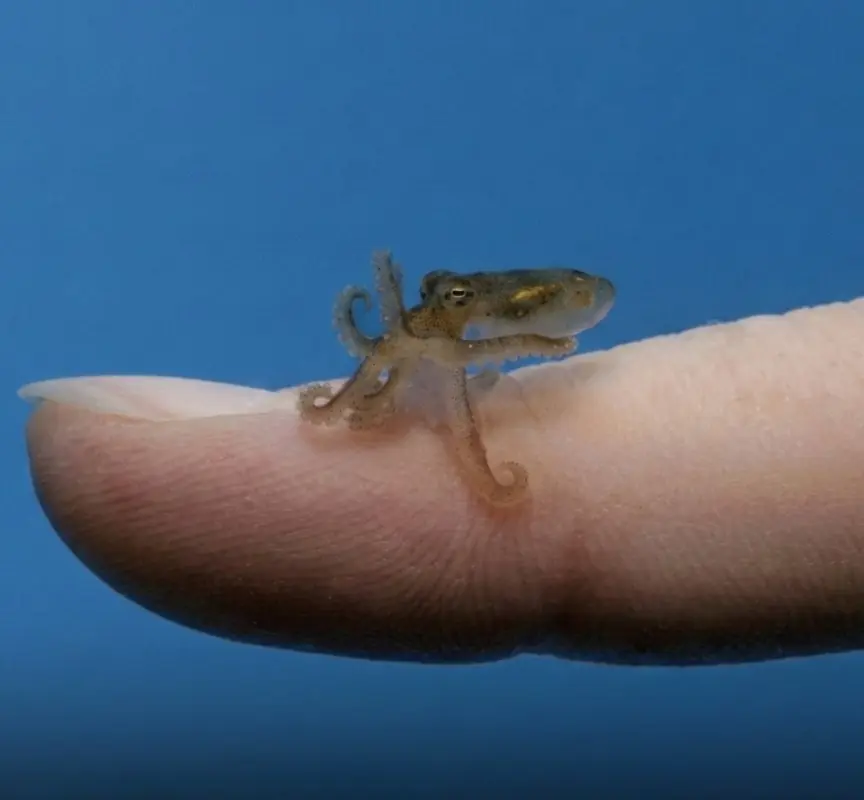
A Tiny Baby Octopus Secretly Snuck Into an Aquarium Tank — And Started Hunting Crabs Like a Mini Ocean Genius
Octopuses already have a reputation for being some of the smartest and sneakiest animals in the ocean.
They escape tanks.
Open jars.
Solve puzzles.
Squeeze through impossible spaces.
And occasionally behave like tiny underwater masterminds plotting secret missions.
But even aquarium experts were surprised when a tiny baby octopus reportedly managed to sneak unnoticed into a tank at Monterey Bay Aquarium — where it quietly began feeding on crabs without anyone immediately realizing what was happening.
The story quickly became internet gold because it sounded less like marine biology and more like the plot of a Pixar movie starring a criminally intelligent little sea creature.


 6
6
The Mystery of the Missing Crabs
According to aquarium staff, something strange began happening inside one of the tanks.
Crabs were disappearing.
At first, caretakers likely considered normal explanations:
- tank conditions
- hidden predators
- animal stress
- accidental movement between systems
But eventually, staff discovered the actual culprit:
a tiny baby octopus that had somehow entered the exhibit unnoticed.
Despite being incredibly small, the octopus had apparently been surviving successfully by secretly hunting crabs inside the tank.
Which honestly feels extremely on-brand for octopus behavior.
How Could an Octopus Sneak Into a Tank?
One reason octopus stories constantly sound unbelievable is because octopuses are biologically built for escape and infiltration.
Unlike animals with rigid skeletons, octopuses can compress their soft bodies through astonishingly tiny spaces. If their beak — the only hard part of their body — fits through an opening, the rest can usually follow.
That means octopuses can:
- squeeze through narrow gaps
- enter filtration systems
- climb surfaces
- manipulate objects
- move between spaces humans assume are secure
Aquarium workers worldwide have countless stories involving octopus escape attempts because these animals constantly explore their environments with extreme curiosity.
A tiny juvenile octopus slipping into a tank may sound impossible — until people remember:
octopuses are basically underwater escape artists.


 8
8
Tiny Body, Giant Intelligence
What makes octopuses so fascinating is not just their flexibility — it is their intelligence.
Scientists consider octopuses among the smartest invertebrates on Earth. Research has shown they can:
- solve puzzles
- recognize patterns
- use tools
- remember solutions
- learn through observation
- display curiosity and play-like behavior
Some octopuses have even been observed:
- escaping aquariums at night
- stealing food from neighboring tanks
- unscrewing lids
- spraying water at lights or humans
The tiny octopus secretly feeding on crabs feels funny because people instinctively recognize the behavior as oddly strategic.
It sounds less like instinct and more like planning.
The Ocean’s Ultimate Little Problem Solver
Octopuses evolved in environments where survival depends heavily on adaptation and creativity.
Unlike heavily armored animals, octopuses rely on:
- camouflage
- intelligence
- flexibility
- stealth
- fast decision-making
Their nervous systems are remarkably advanced, with many neurons distributed throughout their arms. In a strange way, each arm can independently process information while still coordinating with the brain.
That unusual biology contributes to octopuses behaving in ways humans often describe as eerily clever.
And honestly, seeing a baby octopus secretly infiltrate a tank and start hunting crabs feels exactly like something such an animal would do.


 8
8
Why Humans Are Obsessed With Octopuses
Few marine animals fascinate people quite like octopuses.
Part of that fascination comes from how alien they seem:
- eight independently moving arms
- shape-shifting abilities
- color-changing skin
- advanced problem-solving
- enormous intelligence without a social civilization
They feel less like ordinary sea creatures and more like highly curious visitors from another planet.
In fact, scientists frequently describe octopus intelligence as fundamentally different from mammal intelligence because octopuses evolved along a completely separate evolutionary path.
That means nature independently produced a highly intelligent creature in an entirely different way.
And somehow, that intelligence keeps leading to stories that sound almost fictional.
The Internet’s Reaction: “Of Course It Was an Octopus”
Online reactions to the story followed a predictable pattern:
nobody seemed surprised.
People joked:
- “That octopus definitely planned everything.”
- “Tiny criminal mastermind.”
- “Ocean raccoon behavior.”
- “He infiltrated the crab buffet.”
- “Octopuses are way too smart.”
The internet has essentially accepted octopuses as chaotic underwater geniuses at this point.
And honestly, the evidence keeps supporting the theory.


 7
7
A Reminder of How Strange the Ocean Really Is
Stories like this reveal something important:
humans still dramatically underestimate marine life.
The ocean remains filled with creatures displaying behaviors scientists continue trying to fully understand. Intelligence, communication, and problem-solving abilities appear across species in ways far more complex than people once assumed.
And sometimes those discoveries arrive through absurdly adorable situations involving tiny octopuses committing crab theft.
The Tiny Underwater Mastermind
Somewhere inside an aquarium system, a baby octopus quietly slipped into a new environment, adapted successfully, hunted prey, and survived unnoticed long enough to become internet-famous.
No dramatic attack.
No chaos.
Just one unbelievably small sea creature proving once again that octopuses operate on an entirely different level from most animals.
Tiny body.
Eight arms.
Infinite suspicious behavior.