Police Search for Person Who Spray-Painted “PET” on Wild Deer in Bizarre Attempt to Protect It
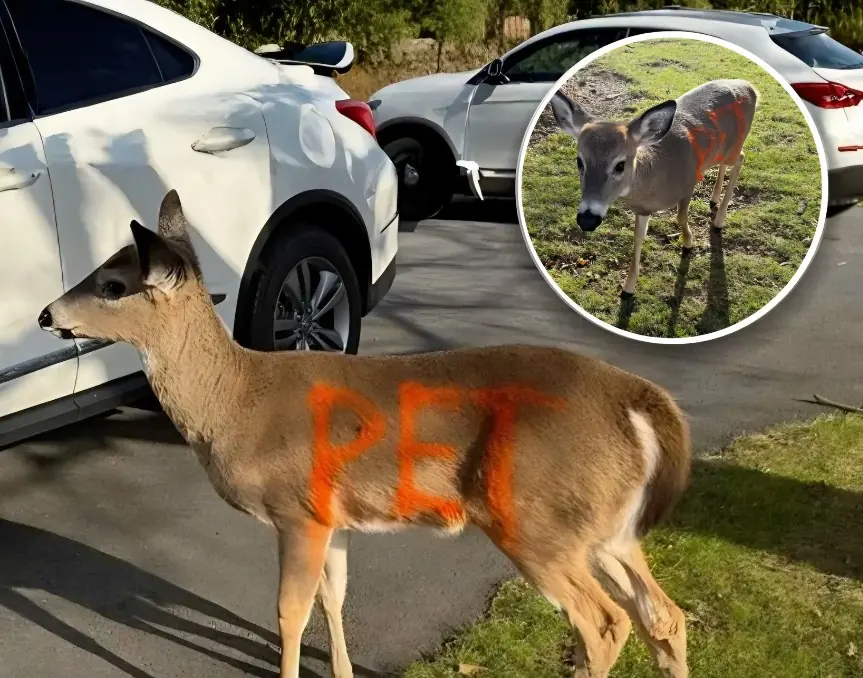
Police Search for Person Who Spray-Painted “PET” on Wild Deer in Bizarre Attempt to Protect It
Residents in a quiet neighborhood were left stunned after spotting a deer wandering through the area with one unusual detail impossible to miss:
The word “PET” had been spray-painted in giant orange letters across its body.
Photos of the deer quickly spread online, triggering confusion, concern, outrage, and debate across social media. Many people initially thought the images were fake. Others assumed it was some kind of cruel prank.
But according to authorities, the deer was very real — and investigators believe the person responsible may actually have been trying to protect the animal from hunters.
Still, despite what may have been good intentions, officials say spray-painting a wild animal is illegal, dangerous, and potentially harmful.


 7
7
The Deer That Became an Internet Mystery
The strange incident began after local residents reported seeing a deer calmly walking near homes and parked cars while bright orange paint covered part of its body.
The large painted word immediately attracted attention.
“PET.”
People online instantly started speculating.
Was the deer actually domesticated?
Did someone raise it illegally?
Was this an attempt to stop hunters from targeting it during hunting season?
Authorities later stated they suspected the paint may indeed have been intended as a warning — a signal trying to tell hunters the deer was not meant to be harmed.
But even if the motive came from emotional attachment or concern, wildlife officials emphasized that humans should never interfere with animals in this way.
Why Someone Might Have Done It
In some rural communities, people become emotionally attached to wild deer that regularly visit neighborhoods, backyards, or farms.
Residents feed them.
Watch them grow over the years.
Sometimes even name them.
Over time, certain deer become locally recognized almost like unofficial community pets despite remaining wild animals.
That emotional connection may explain why someone chose to paint the word “PET” directly onto the animal.
Some social media users sympathized with the idea, saying the person probably wanted to save the deer’s life during hunting season.
Others argued the action crossed an important line.
Because regardless of intent, wild animals are not billboards.
And altering them physically can create stress, confusion, or health risks.

 6
6
Authorities Say the Act Was Illegal
After the story gained national attention, wildlife officials and police launched an investigation to identify whoever painted the deer.
Experts warned that spray paint can potentially irritate an animal’s skin, damage fur, expose it to toxic chemicals, and create additional dangers in the wild.
The incident also raised concerns about human interaction with wildlife more broadly.
Feeding, handling, or domesticating wild deer can create long-term problems not only for the animals themselves but also for surrounding communities.
Deer that lose fear of humans may wander into roads, approach dangerous areas, or become dependent on people for food.
Officials stressed an important point:
Loving wildlife does not mean treating wild animals like pets.
Sometimes the healthiest form of compassion is allowing animals to remain truly wild.
The Internet Split Into Two Sides
As the photos spread online, reactions became deeply divided.
Some viewers were furious.
They called the act irresponsible, selfish, and harmful to the deer.
Others admitted they understood the emotional reasoning behind it, even while acknowledging it was the wrong decision.
Many people focused on one heartbreaking possibility:
What if someone had watched the deer for years and desperately wanted to prevent it from being killed?
That emotional angle made the story surprisingly complicated.
Because unlike stories involving deliberate cruelty, this case appeared rooted more in attachment than malice.
Still, wildlife experts repeatedly reminded the public that emotional intentions do not erase harmful consequences.


 6
6
When Humans Become Too Attached to Wildlife
Stories like this reveal something increasingly common in suburban and rural areas:
The blurry emotional line between wild animals and pets.
As urban development expands into natural habitats, humans encounter wildlife more frequently than ever before. Deer, foxes, bears, raccoons, and other animals often begin living surprisingly close to neighborhoods.
Over time, repeated sightings create familiarity.
And familiarity creates emotional attachment.
People start recognizing individual animals.
Feeling protective toward them.
Treating them almost like members of the community.
But wildlife experts warn that this emotional closeness can sometimes lead people to make harmful decisions without realizing it.
Wild animals have complex ecological roles and survival behaviors that human affection cannot safely replace.
A Deer Caught Between Two Worlds
Perhaps the saddest part of the story is how symbolic the image became.
A wild deer walking through a suburban neighborhood with the word “PET” painted across its body feels almost like a metaphor for humanity’s complicated relationship with nature.
Wild.
Yet surrounded by humans.
Free.
Yet emotionally claimed by people.
The deer itself had no understanding of the debate surrounding it.
It was simply trying to survive.
Meanwhile, humans projected emotions, fear, protection, ownership, and morality onto the animal from every direction.


 6
6
A Story That Sparked Bigger Questions
Although the painted deer story initially went viral because it looked bizarre and almost absurd, the situation ultimately raised deeper questions about wildlife ethics, conservation, and human behavior.
How close is too close when interacting with wild animals?
When does compassion become interference?
And how should people balance emotional attachment with respect for nature?
The answers are not always simple.
But wildlife experts agree on one thing:
Protecting animals should never involve physically altering or marking them.
Because even actions motivated by love can unintentionally place wildlife at greater risk.
The Deer Continues Wandering — And So Does the Debate
As authorities continue searching for whoever painted the animal, the deer itself reportedly continues roaming through local neighborhoods, completely unaware that it has become internationally famous online.
To some people, it is a symbol of misguided compassion.
To others, it represents humanity’s growing emotional connection to wildlife.
Either way, the image of a deer carrying the word “PET” across its side remains unforgettable — strange, emotional, controversial, and deeply reflective of the complicated space where human affection and wild nature collide.