Would You Support Senior Living Homes Adopting Therapy Dogs?
Would You Support Senior Living Homes Adopting Therapy Dogs?
For many elderly residents living in senior care facilities, the hardest part of aging is not always physical pain or medical challenges. Sometimes, it is loneliness.
The quiet rooms.
The long afternoons.
The absence of family visits.
The feeling of being forgotten.
But across nursing homes and assisted living communities around the world, one simple solution has been changing lives in ways many people never expected: therapy dogs.
These gentle animals are bringing comfort, companionship, emotional healing, and even physical health benefits to seniors who need connection the most. And now, more people are asking an important question:
Should senior living homes permanently adopt therapy dogs?
For countless families, caregivers, and healthcare professionals, the answer is becoming a powerful yes.
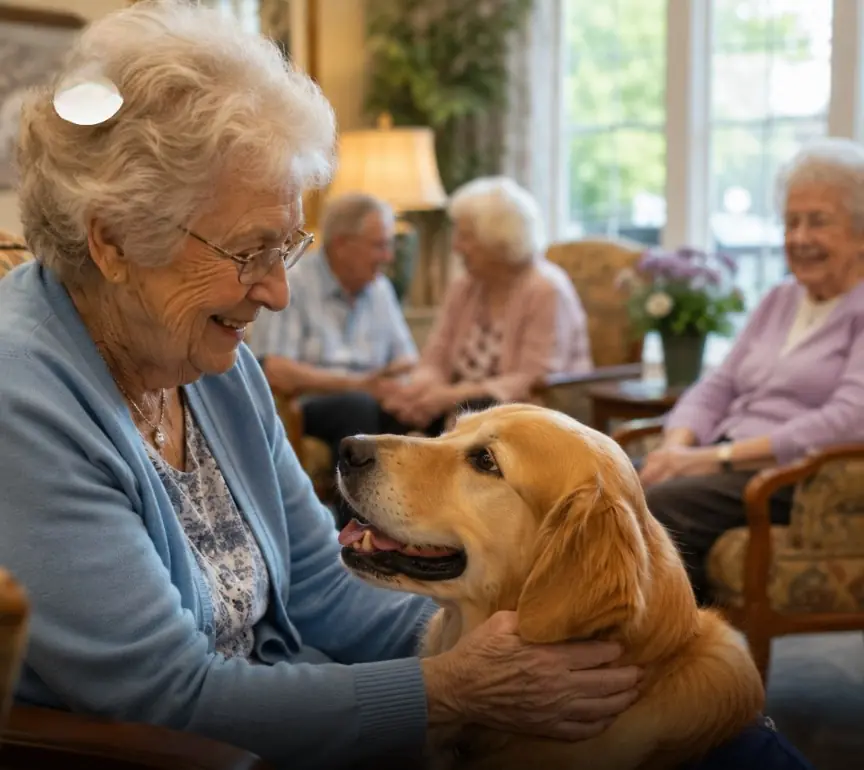
The emotional impact of therapy dogs on seniors can be extraordinary. Residents who rarely speak suddenly begin smiling and engaging in conversation. Individuals struggling with memory loss often become calmer and more responsive when interacting with animals. Seniors battling depression or anxiety may experience moments of peace simply by petting a dog resting beside them.
For some residents, these animals become more than companions.
They become emotional lifelines.
Care workers frequently report remarkable transformations after introducing therapy dogs into elderly care environments. Residents who normally stay isolated in their rooms often begin participating in group activities centered around the animals. Some start walking more regularly just to spend time with the dogs. Others regain small but meaningful routines, like brushing fur, offering treats, or simply waiting excitedly for daily visits.
The dogs bring energy back into spaces that can sometimes feel quiet and emotionally heavy.
And perhaps most importantly, they offer unconditional affection.
Unlike people, dogs do not judge aging, illness, forgetfulness, or physical limitations. They respond to kindness, touch, voice, and presence. For seniors who may feel invisible or emotionally disconnected, that kind of pure companionship can be deeply healing.


 7
7
Research has also suggested that therapy animals may contribute to measurable health benefits in older adults. Studies have linked animal interaction to reduced stress, lower blood pressure, decreased feelings of loneliness, and improved mood. Some experts even believe therapy dogs may help encourage cognitive stimulation in seniors with dementia or Alzheimer’s disease.
A simple interaction — petting a dog, making eye contact, hearing paws walking into a room — can awaken emotions and memories that seemed distant.
Families often notice the difference immediately.
Many relatives say their loved ones appear happier, more engaged, and emotionally lighter after spending time around therapy animals. In facilities where dogs are integrated regularly, residents frequently develop emotional bonds not only with the animals, but also with each other.
The dogs become shared joy.
Shared conversation.
Shared comfort.
In some care homes, therapy dogs have even become beloved “staff members,” greeting residents every morning and visiting those recovering from illness or emotional distress.
Of course, introducing animals into senior living environments also requires responsibility. Facilities must ensure proper hygiene, vaccinations, resident safety, and animal welfare. Not every senior is comfortable around dogs, and some individuals may have allergies or fears that need to be respected.
Experts emphasize that successful therapy dog programs require trained animals with calm temperaments and experienced handlers or caregivers. The dogs themselves must also be protected from stress and overwork.
When done correctly, however, these programs can create incredibly positive environments for both residents and staff.
Healthcare workers often benefit emotionally as well.
Caring for elderly residents can be physically and emotionally demanding. Therapy animals frequently improve morale within facilities, helping create warmer, more uplifting atmospheres for everyone involved.
And in a world increasingly shaped by technology and isolation, many people believe emotional connection has never been more important.
Especially for seniors.
One touching story from a retirement community involved an elderly woman who rarely communicated after losing her husband. Staff members said she spent most days silently sitting alone near a window. But after a therapy golden retriever began visiting regularly, everything changed.
She started smiling again.
Then talking.
Then laughing.
Eventually, she began joining communal meals simply because she wanted to see the dog afterward.
Moments like these are why supporters believe therapy animals are not luxuries — they are meaningful tools for emotional well-being.
For many seniors, especially those without close family nearby, the comfort of a dog’s presence can ease feelings of abandonment and sadness. Animals provide routine, affection, and emotional grounding in ways medication alone often cannot.
That emotional value is difficult to measure.
But easy to see.
Critics sometimes question whether senior facilities have the resources needed for permanent therapy dog programs. Concerns about costs, maintenance, liability, and care standards are valid discussions. However, advocates argue that the emotional and psychological benefits may far outweigh the challenges.
Some organizations are already partnering with shelters to create adoption-based therapy programs, helping both elderly residents and homeless dogs at the same time.
It becomes healing on both sides.
A lonely senior gains companionship.
An abandoned dog gains love and purpose.
And together, they help rescue each other emotionally.
As more retirement communities explore animal-assisted therapy, public support continues growing rapidly online. Videos of seniors hugging therapy dogs, crying tears of happiness, or reconnecting emotionally through animal companionship regularly touch millions of people worldwide.
Because deep down, many recognize something simple but powerful:
No one is ever too old to need love, comfort, or connection.
And sometimes, healing arrives with four paws, warm eyes, and a wagging tail.