Why Support Animals Are Rapidly Increasing Across Canada — And How They’re Transforming Mental Health Care
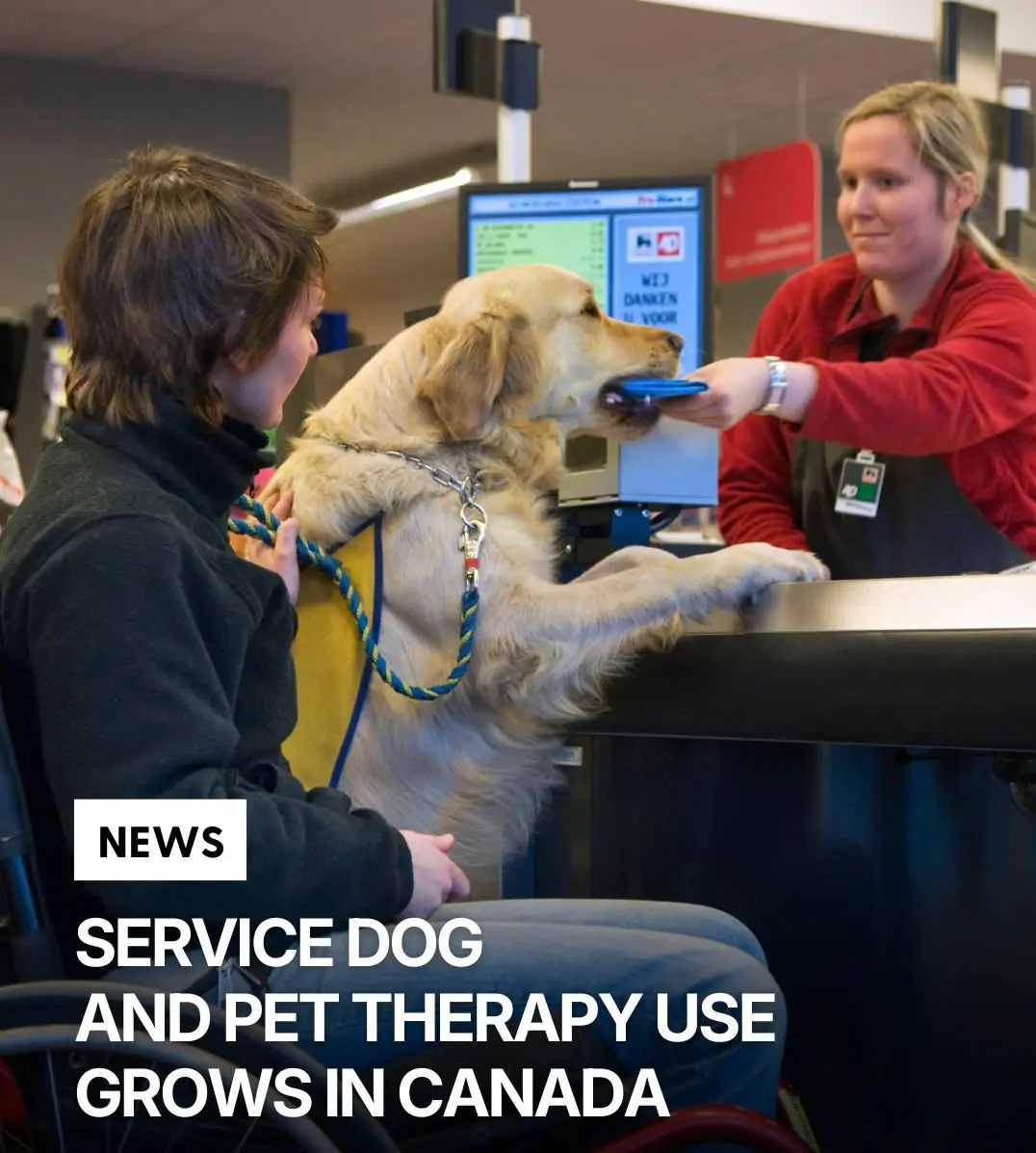
Across Canada, support animals are quietly transforming lives.
From guiding people with disabilities to comforting patients in hospitals and schools, animals are becoming an increasingly important part of the country's healthcare and wellness systems. Recent data shows a steady rise in both service dogs and pet therapy programs nationwide.
Training a service dog alone can take up to 18 months or more, and only a small percentage of dogs that begin training actually qualify for full service work. At the same time, Canada now has more than 100 registered pet therapy organizations, bringing animal-assisted therapy to hospitals, schools, senior care homes and community programs.
Researchers and advocates say this growing movement reflects a powerful shift: Canadians are recognizing the profound benefits animals can offer for mental health, accessibility, emotional support, and quality of life.
As awareness grows, support animals are no longer viewed as a niche service — they are becoming an essential part of modern healthcare and wellbeing across the country.
The Growing Role of Support Animals in Canada
Over the past decade, Canada has seen a significant increase in the use of support animals across many sectors of society.
Support animals can include:
-
Service dogs
-
Therapy animals
-
Emotional support animals
-
Facility dogs working in institutions
Each type serves a unique purpose, but they all share a common goal: improving human wellbeing.
For many Canadians, these animals provide life-changing assistance that cannot easily be replaced by traditional therapies alone.
The growing demand reflects broader societal awareness about mental health, accessibility rights, and holistic healthcare approaches.
Service Dogs: Highly Trained Life Partners
Service dogs are among the most rigorously trained working animals in the world.
These dogs assist individuals with disabilities in performing everyday tasks that might otherwise be impossible or extremely difficult.
Service dogs can help people who are:
-
Blind or visually impaired
-
Deaf or hard of hearing
-
Living with mobility limitations
-
Managing PTSD
-
Experiencing seizure disorders
-
Living with autism spectrum conditions
Unlike therapy animals, service dogs are trained to perform specific tasks tailored to their handler’s needs.
Examples include:
-
Guiding visually impaired individuals safely through public spaces
-
Alerting handlers before seizures occur
-
Retrieving dropped items
-
Opening doors or pressing accessibility buttons
-
Providing grounding during panic attacks
Because of the complexity of these roles, training a service dog is a long and highly selective process.
Why Service Dog Training Takes 18 Months or More
Training a service dog is not simply about obedience.
It involves multiple stages of development that can take 18 to 24 months.
The process typically includes:
Early Socialization
Puppies must be exposed to different environments, sounds, and people from an early age.
This ensures they remain calm and confident in public spaces.
Basic Obedience Training
Dogs must master core commands such as:
-
Sit
-
Stay
-
Heel
-
Come
-
Leave it
Reliability is critical because service dogs work in crowded public settings.
Specialized Task Training
This stage teaches dogs to perform specific tasks depending on their future handler’s needs.
For example:
-
Guiding around obstacles
-
Alerting to medical conditions
-
Interrupting anxiety or PTSD episodes
Public Access Testing
Service dogs must demonstrate perfect behavior in public environments.
Only dogs that remain calm, focused, and reliable pass this stage.
Handler Matching
Finally, the dog is paired with a specific individual whose needs match the dog’s skills and temperament.
This partnership can last many years.
However, not all dogs successfully complete training.
In fact, only a fraction of dogs entering service training programs ultimately qualify.
This makes each successful service dog incredibly valuable.
The Rise of Pet Therapy Programs
While service dogs work with specific individuals, pet therapy animals serve entire communities.
Canada currently has over 100 registered pet therapy agencies, many of which rely on volunteers and specially trained animals.
These programs bring animals into environments where emotional comfort and stress relief are especially important.
Common locations include:
-
Hospitals
-
Rehabilitation centers
-
Schools
-
Universities
-
Long-term care homes
-
Crisis centers
Animal-assisted therapy sessions can dramatically improve emotional wellbeing for patients and residents.
How Therapy Animals Improve Mental Health
Scientific research increasingly supports the benefits of animal-assisted therapy.
Interacting with animals has been shown to:
-
Reduce stress hormones
-
Lower blood pressure
-
Improve mood
-
Increase social interaction
-
Reduce feelings of loneliness
For patients recovering from illness or surgery, the presence of therapy animals can also provide a powerful emotional boost.
In elderly care homes, therapy visits often become the highlight of residents’ weeks.
Many residents who struggle to engage socially may open up when interacting with animals.
Support Animals in Schools
Support animals are also becoming more common in educational environments.
Many schools across Canada now use therapy dogs to support students facing emotional or developmental challenges.
These animals can help children who struggle with:
-
Anxiety
-
Autism spectrum conditions
-
Trauma
-
Behavioral regulation
-
Learning difficulties
Simply sitting with a calm dog while reading, for example, can help children build confidence and reduce anxiety around learning.
Teachers and school counselors report that therapy animals often help create a more supportive classroom environment.
The Mental Health Movement Driving This Trend
Experts say the growth of support animals in Canada is closely linked to increased awareness of mental health issues.
Over the past decade, conversations around mental health have become far more open and mainstream.
As Canadians seek new ways to manage stress, anxiety, depression, and trauma, animal-assisted support has gained popularity.
Unlike traditional therapy, animals provide non-judgmental companionship.
Their presence can help people feel calmer, safer, and more emotionally connected.
For individuals who struggle to open up in clinical settings, animals can serve as a comforting bridge.
Accessibility and Quality of Life
Beyond mental health benefits, support animals also play a vital role in improving accessibility for people with disabilities.
For many individuals, a service dog provides independence that might otherwise be impossible.
Simple daily tasks become manageable.
Public spaces become easier to navigate.
Confidence grows.
For someone living with mobility challenges or visual impairment, a trained service dog can dramatically improve quality of life.
Challenges Facing Support Animal Programs
Despite their growing popularity, support animal programs face several challenges.
These include:
High Training Costs
Training a service dog can cost tens of thousands of dollars.
Many nonprofit organizations rely heavily on donations and grants.
Long Waiting Lists
Because training takes so long and only some dogs qualify, many individuals must wait months or even years to receive a service dog.
Public Awareness
While awareness is improving, many people still misunderstand the difference between service animals, therapy animals, and emotional support animals.
Education remains important.
The Future of Support Animals in Canada
As research continues to demonstrate the benefits of animal-assisted support, experts expect the number of programs across Canada to keep growing.
New partnerships are emerging between:
-
Healthcare systems
-
Universities
-
Animal welfare organizations
-
Mental health advocates
Technology may also play a role in improving training methods and expanding accessibility.
Ultimately, support animals are becoming a powerful part of modern healthcare.
A Powerful Human-Animal Partnership
The relationship between humans and animals has always been special.
But today, that bond is being harnessed in new ways to support physical health, emotional resilience, and social connection.
Across Canada, thousands of trained dogs and therapy animals are already improving lives every day.
From guiding people safely through busy streets to comforting patients in hospital rooms, these animals prove something remarkable:
Sometimes, the best kind of support walks on four legs.