People Told Her To Kill The Frozen Iguanas In Her Yard — But What Happened The Next Day Surprised Everyone
When temperatures suddenly dropped in Florida, something unusual began happening across the state.
Iguanas started falling from trees.
For people unfamiliar with reptiles, the sight was alarming — large green lizards lying motionless on sidewalks, lawns and backyards, appearing completely frozen.
But for one woman, the situation became something much more personal.
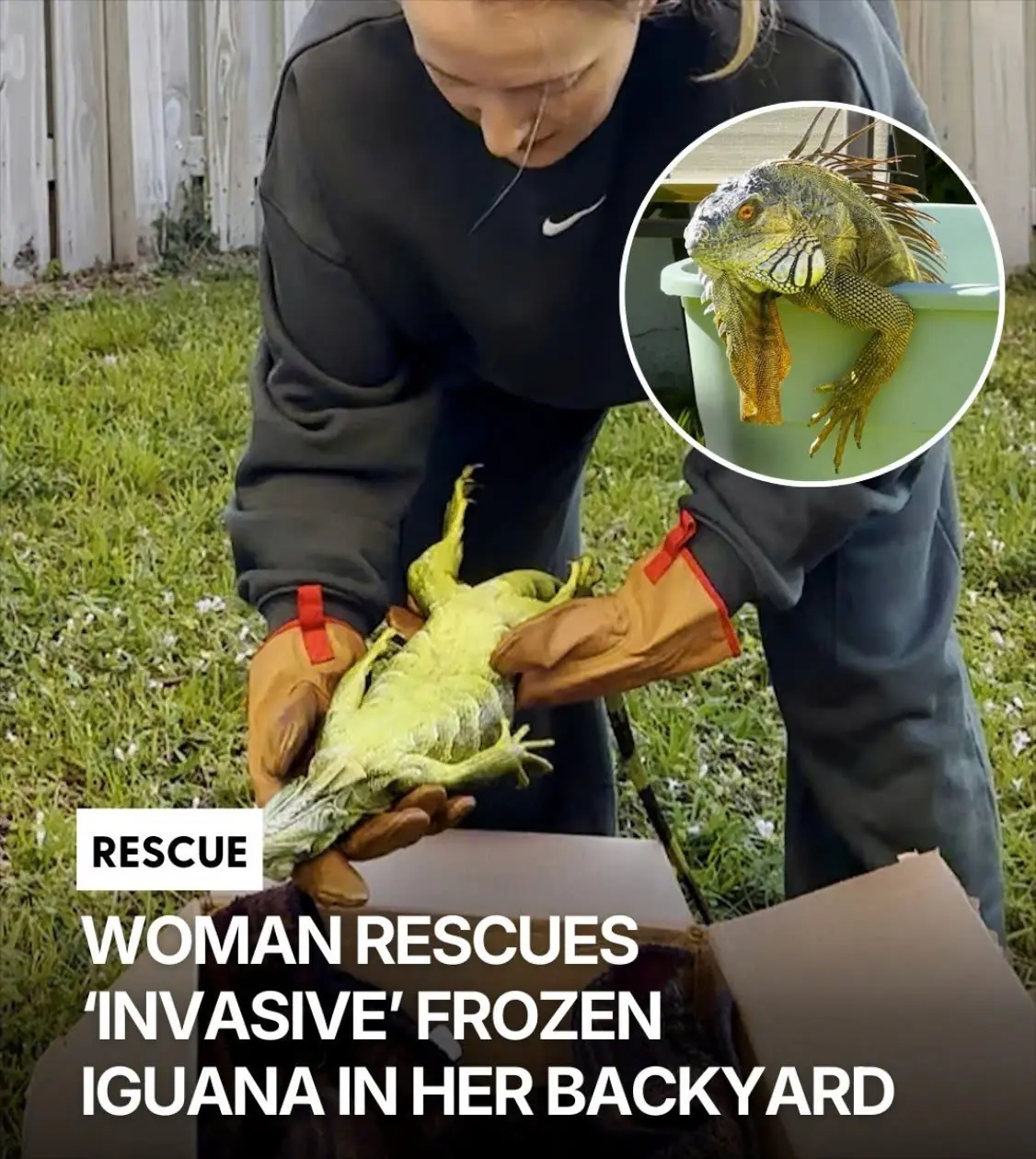
When she stepped into her backyard after a sudden cold snap, she discovered several iguanas scattered across the ground.
They looked lifeless.
Some people told her to get rid of them.
Others said nature should simply take its course.
But she couldn’t look away.
Instead of ignoring them, she decided to do something unexpected — and the next day, something remarkable happened.
A Strange Sight After a Cold Night
Florida is known for its warm, tropical climate. For animals like iguanas, the warm temperatures are essential for survival.
Unlike mammals, reptiles cannot regulate their body temperature internally. They rely entirely on the warmth of their environment to stay active.
When temperatures drop too low, their bodies begin to slow down dramatically.
During severe cold snaps, iguanas can become completely immobilized.
This phenomenon sometimes leads to what locals call “falling iguanas.”
The reptiles lose their grip on tree branches and drop to the ground, where they remain stiff and unresponsive until temperatures rise again.
That’s exactly what happened during one particularly cold night.
When the woman walked outside the next morning, her backyard looked like a strange scene from a wildlife documentary.
Several green iguanas were lying scattered across the grass.
None of them were moving.
People Told Her To Leave Them
Neighbors quickly noticed the situation.
Some suggested she should simply dispose of the reptiles.
Others warned that helping them wasn’t necessary, explaining that cold weather naturally affects reptiles this way.
In fact, local authorities often advise people not to interfere, since many iguanas will recover naturally once temperatures warm up.
But looking at the motionless animals in her yard felt different.
They looked helpless.
Even if they might eventually recover, the cold wind and exposure could make survival harder.
She knew she probably wasn’t “supposed” to help.
Still, she couldn’t ignore what she was seeing.
So she made a small decision that would change the story.
A Simple Act of Kindness
Instead of leaving the iguanas where they had fallen, she gently moved them into a more sheltered corner of her backyard.
The goal wasn’t to interfere with nature — it was simply to protect them from the harsh wind and give them a slightly better chance.
She placed them in an area where they would be shielded from the cold breeze.
Then she waited.
There was no guarantee the animals would recover.
In fact, many of them still appeared completely frozen.
Hours passed without any movement.
The yard remained quiet.
Eventually, she went inside, unsure whether her small act of kindness had made any difference at all.
Something Happened Overnight
The following morning brought warmer temperatures.
Florida’s weather can change quickly, and the rising sun began warming the air and the ground.
When the woman stepped outside again, she noticed something had changed.
One of the iguanas was no longer lying where she had placed it.
At first she wondered if another animal had dragged it away.
Then she heard something unexpected.
A scratching sound.
Coming from the direction of her door.
When she looked closer, she saw one of the iguanas slowly moving nearby.
The reptile had recovered enough to crawl across the yard.
And now it seemed to be scratching at her door.
An Unexpected Visitor
The moment felt surreal.
Just a day earlier, the same iguana had appeared completely frozen and lifeless.
Now it was alert and moving.
The reptile lingered near the house for a while before eventually climbing away.
But later that day, the woman noticed something else.
Looking up toward the roof of her home, she spotted the same green iguana perched calmly in the sunlight.
It had climbed onto the roof tiles, basking in the warmth of the sun — exactly what reptiles need to fully restore their body temperature.
For a moment, the scene almost felt symbolic.
The iguana sat there quietly, soaking in the heat after surviving the cold night.
To the woman watching from below, it looked almost as if the animal had returned to say thank you.
Why Iguanas Freeze During Cold Weather
Events like this are more common in Florida than many people realize.
Green iguanas are not native to the region. They were introduced decades ago and have since established large populations across southern Florida.
Because they evolved in tropical climates, they struggle when temperatures fall below about 40°F (4°C).
When this happens, their muscles stiffen and their nervous system slows dramatically.
The animals enter a temporary state of paralysis.
Although they may appear dead, many iguanas can recover once temperatures rise again.
This is why wildlife experts often advise people not to assume the animals are gone.
Given enough warmth, they frequently regain movement and return to normal activity.
The Internet Loves a Good Animal Story
Stories like this one tend to spread quickly online.
People are fascinated by moments when small acts of kindness appear to create meaningful connections between humans and animals.
Even though the iguana likely recovered simply because temperatures rose, the woman’s decision to protect the reptiles from wind and exposure still made a difference.
More importantly, the story resonated with people because it reflected something simple but powerful.
Compassion.
In a world where wildlife often struggles to survive in urban environments, even a small gesture can feel meaningful.
A Reminder About Kindness Toward Animals
Not every rescue story involves dramatic veterinary care or large organizations.
Sometimes, it begins with something much smaller.
A person noticing an animal in need.
A moment of hesitation.
And a simple choice to help rather than walk away.
The woman in Florida didn’t set out to rescue wildlife or become part of a viral story.
She simply saw animals that appeared vulnerable and decided to give them a little protection from the cold.
Whether the iguana’s visit the next day was coincidence or curiosity doesn’t really matter.
What stayed with her was the feeling that she had done the right thing.
Final Thoughts
Wildlife and humans cross paths every day.
Sometimes those encounters are brief and forgettable.
Other times they create stories that remind us how connected we are to the natural world.
For one Florida woman, a cold morning in her backyard turned into a surprising reminder that even small acts of kindness can have unexpected outcomes.
One frozen iguana eventually climbed back to safety.
And for a brief moment, perched high on a rooftop in the Florida sun, it looked almost as if the reptile had returned to say thank you.