The Extremely Rare Pink Platypus That Left Scientists Amazed
The Extremely Rare Pink Platypus That Left Scientists Amazed
Australia has always been home to some of the strangest animals on Earth.
Kangaroos leap across open landscapes. Koalas sleep in eucalyptus trees. Echidnas look like living fossils covered in spikes. And then there is the platypus — an animal so bizarre that early scientists once believed it had to be fake.
A mammal that lays eggs.
A creature with a duck-like bill.
Webbed feet.
Venomous spurs.
Electroreception abilities.
Even a normal platypus already sounds unbelievable.
But recently, something even more extraordinary appeared in Australian waters:
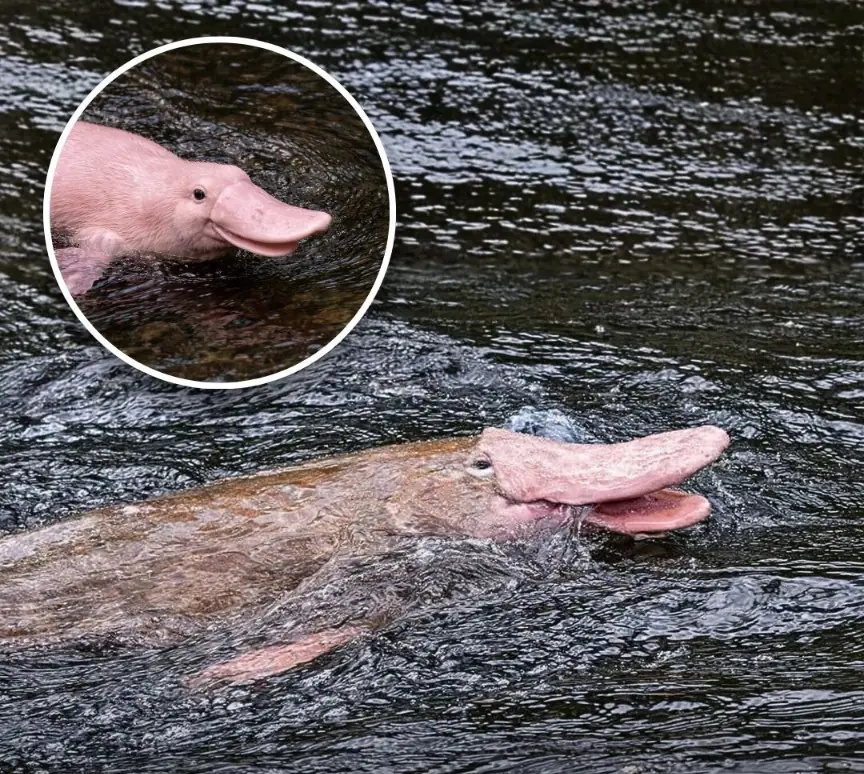
a rare pink platypus captured on camera by a fisherman near Melbourne.
The sighting immediately stunned wildlife enthusiasts because pink platypuses are incredibly rare — documented only a handful of times over many decades.


 6
6
A Creature That Already Feels Unreal
Before even discussing the pink coloration, it is important to understand how unique platypuses truly are.
The platypus belongs to one of the oldest and strangest mammal groups on Earth called monotremes — mammals that lay eggs instead of giving birth to live young.
Only a few monotreme species still exist today:
- platypuses
- echidnas
That alone makes them evolutionary rarities.
But platypuses also possess features rarely found together in a single animal:
- waterproof fur
- highly sensitive electroreception in the bill
- webbed swimming feet
- ability to hunt underwater with eyes closed
- venomous ankle spurs in males
When European scientists first received preserved platypus specimens centuries ago, some believed pranksters had stitched different animals together.
That is how strange they looked.
Why Was This Platypus Pink?
The unusual pink appearance likely comes from a rare genetic condition affecting pigmentation.
Scientists believe such coloration may result from:
- leucism
- albinism-related genetics
- pigment dilution mutations
Unlike true albinism, which completely removes pigmentation and often causes red eyes, some animals retain partial coloration while developing pale or pinkish fur.
In the case of the platypus, the pink tone created an almost surreal appearance, making the animal look unlike anything most people had ever seen before.
Because platypuses are naturally elusive and mostly active around dawn or night, encountering any individual in the wild is already special.
Encountering a pink one is extraordinarily rare.


 6
6
One of Earth’s Most Mysterious Mammals
Platypuses remain among the most scientifically fascinating animals alive today.
One reason researchers continue studying them is because they challenge many assumptions about evolution and biology.
For example:
- they produce milk but have no nipples
- they detect electrical signals from prey underwater
- they evolved features resembling reptiles, birds, and mammals simultaneously
In many ways, the platypus appears like a living bridge between ancient evolutionary branches.
And despite decades of research, scientists still continue discovering surprising things about them.
That ongoing mystery makes rare sightings like the pink platypus especially important.
Why Platypuses Are So Hard to See
Unlike large visible wildlife, platypuses are shy, solitary, and highly adapted to aquatic life.
They spend much of their time:
- swimming quietly through rivers
- hiding in burrows along riverbanks
- hunting underwater for insects and crustaceans
- remaining active during low-light hours
Their smooth movements and secretive behavior make them difficult to observe even in regions where they naturally exist.
Many Australians go their entire lives without seeing a wild platypus.
That is why unexpected footage of a pink individual spread rapidly online — it felt almost mythical.

 7
7
The Internet’s Fascination With Rare Animals
People are naturally drawn toward rare variations in nature because they reveal how unpredictable evolution can be.
Occasionally, genetics produces animals with unusual appearances:
- white moose
- black penguins
- golden zebras
- blue lobsters
- pink dolphins
These rare individuals often feel almost magical because they challenge what humans expect the natural world to look like.
The pink platypus triggered that same reaction.
Many viewers online initially thought the footage was fake or digitally edited because the coloration appeared so unusual against the dark river water.
But sometimes reality becomes stranger than fiction.
The Importance of Protecting Platypus Habitats
Although platypuses are iconic Australian animals, they face increasing environmental pressures.
Threats include:
- river pollution
- drought
- habitat destruction
- climate change
- fishing-related injuries
- water management changes
Healthy rivers are essential for platypus survival because the animals depend heavily on aquatic ecosystems for feeding and shelter.
Conservation groups continue working to protect waterways and monitor platypus populations across Australia.
Rare sightings like the pink platypus also help raise public awareness and appreciation for these extraordinary creatures.


 7
7
Nature Still Holds Secrets
One of the most beautiful things about stories like this is what they reveal about the planet itself.
Even in the modern age — with satellites, smartphones, drones, and endless information — nature still surprises humanity.
Somewhere in a quiet Australian river, an incredibly rare pink platypus swam unnoticed through the water while most of the world had no idea such an animal even existed.
That mystery matters.
It reminds people that Earth remains full of hidden wonders waiting to be discovered.
The Animal That Looks Like Evolution’s Wild Experiment
The platypus already seemed impossible before this rare sighting.
An egg-laying mammal with a duck bill and venomous claws sounds like something invented by science fiction writers.
Then nature added a soft pink coloration and somehow made the creature even more unbelievable.
And maybe that is exactly why people cannot stop staring at it.
Because the pink platypus feels like proof that evolution has an imagination far stranger than humans ever could.