Calyx: The Cat We Took Home for What We Thought Would Be His Final Days
Calyx: The Cat We Brought Home to Die
Adopting for Peace, Not Time
We didn’t adopt him to live a long life. We adopted him to have a peaceful ending. We adopted him knowing he was probably going to die soon, and it’s important to be honest about that upfront—because the rest of this story does not make sense otherwise.
The shelter had labeled his file Hospice Foster, a designation for animals whose prognosis is too uncertain for standard adoption but who deserve to spend whatever time they have left somewhere better than a kennel.
Calyx was a fifteen-year-old black cat with cloudy eyes, a grey muzzle, and the slow, deliberate movements of someone who had been conserving energy for a very long time. His previous family had surrendered him three weeks earlier. The intake form said he slept too much and struggled to get around. The shelter volunteer didn’t comment, but her expression said everything we needed to know.
Preparing a Gentle Landing
We brought him home on a Saturday. We set up soft beds in three rooms and a heated blanket near the window that caught the afternoon sun. We bought food that was easier on old teeth and cleared the lower shelves so he wouldn’t have to jump.
We prepared ourselves, in the practical and quietly heartbreaking way you prepare for things you cannot stop, for a few gentle weeks and then a goodbye. We thought we were giving an old black cat a soft place to land at the end.
Calyx slept for the first seven days with the depth and totality of an animal that had not felt safe in a very long time.
A Subtle Shift
The second week, something shifted. He began moving through the house with more intention, pausing in doorways, investigating corners, relearning a space that was beginning to feel permanent rather than temporary. He had lived in enough places to know the difference, and something about this one was starting to feel different. I noticed it first in the way he positioned himself near us in the evenings, closer than he had been, as if he was running a calculation—and the numbers were starting to come out in our favor.
The Toy Mouse That Changed Everything
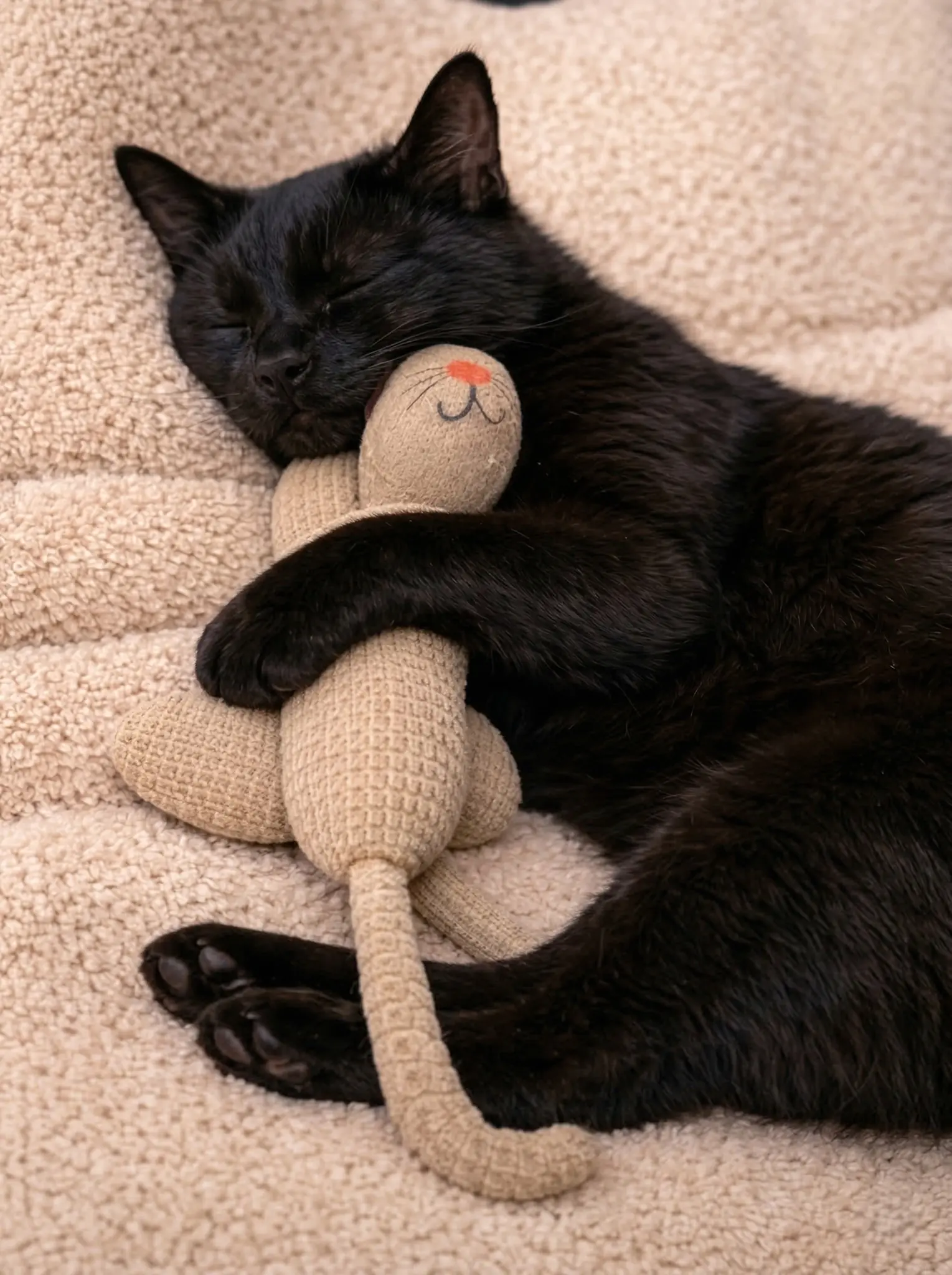
The third week, he found the toy mouse. It was small, worn, and unremarkable—the kind of thing that gets passed around until it falls apart. Calyx discovered it behind the couch and carried it to the center of the living room floor, sitting beside it for a long moment as if deciding something.
That evening, he brought it to bed. The next morning, he carried it to the kitchen. Within a week, it had become the axis of his day—present at meals, at naps, waiting at the door when we came home. The cat who had been documented as barely able to walk was now trotting through the hallway with the mouse in his teeth and tail held high, the purposeful energy of an animal who remembered it had things to do.
Rediscovering Life
He started arriving in the kitchen before us every morning. He rediscovered that the counter near the stove was reachable if he was sufficiently motivated—and he was almost always sufficiently motivated.
I have been thinking about his intake form a lot lately. Calyx was not dying from age. He was disappearing from loneliness, cold floors, temporary spaces, and the specific exhaustion of living somewhere that did not intend to keep him. His body registered that distinction, and we mistook the damage for decline. We thought we were watching a cat approach the end. We were actually watching a cat wait to find out if this time was different.
Not Young, But Alive
He is still fifteen. The cloudy eyes have not cleared. The grey muzzle has not darkened. He is old, and that is simply the truth. But the toy mouse never leaves his side. He still beats us to the kitchen every single morning. The cat we brought home to die quietly has not received that memo—and has shown no interest in acting on it.
Calyx did not just survive. He remembered how to live.