Why Punch Shared His Watermelon With a Toy: The Psychology Behind a Monkey’s Emotional Bond
At first glance, the moment seems simple.
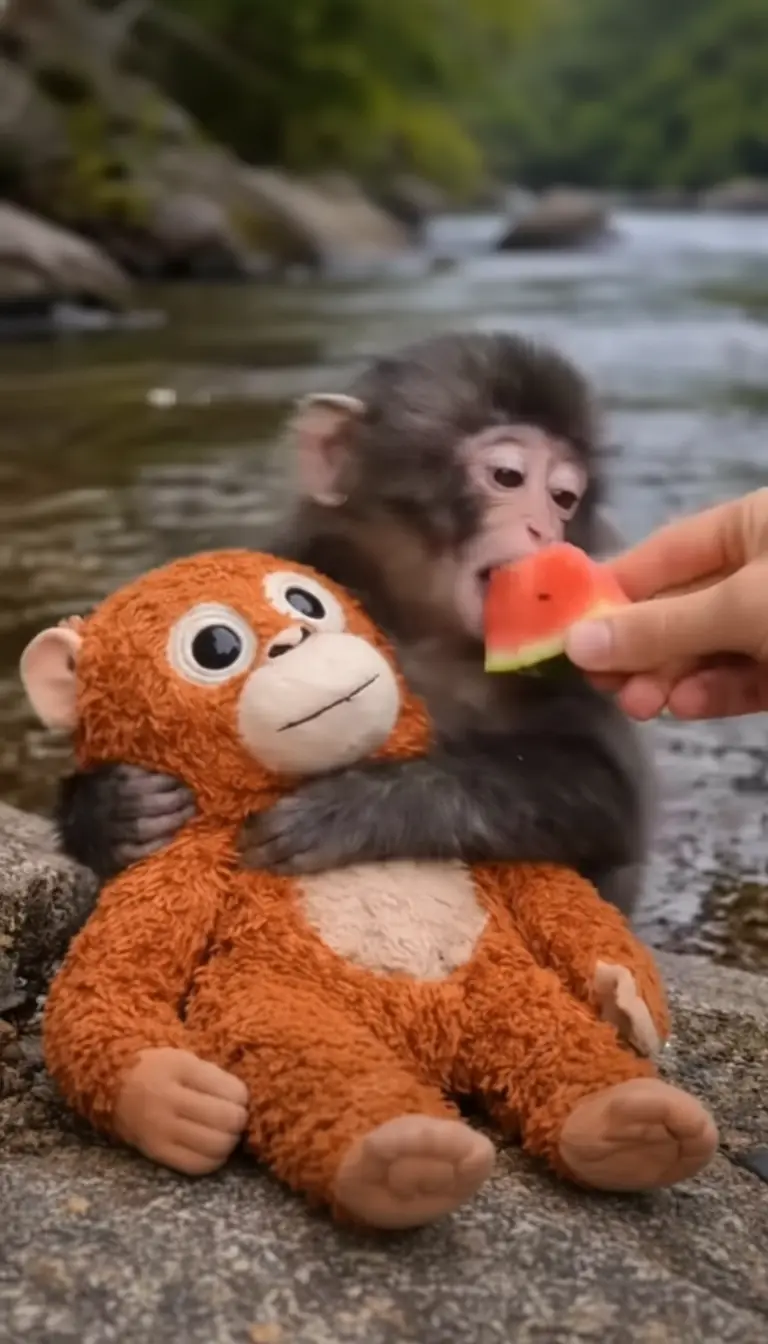
A young Japanese macaque named Punch is given a piece of watermelon.
Bright. Sweet. Refreshing.
A treat most animals would eagerly devour alone.
But Punch does something unexpected.
He takes a bite…
Then gently lifts the fruit…
And “feeds” his stuffed monkey toy.
Again.
And again.
As if the toy were alive.
As if it needed to eat too.
🍉 A MOMENT THAT FEELS SMALL — BUT ISN’T

To many viewers, it’s adorable.
To others, it’s confusing.
Why would a monkey — especially one that experienced early hardship — share food?
Food is survival.
Food is instinct.
Food is usually not shared casually.
So why did Punch do it?
🧠 THE PSYCHOLOGY BEHIND THE BEHAVIOR
To understand this, we need to look beyond the action…
And into the emotional history behind it.
💔 1. EMOTIONAL NEED: SAFETY AFTER ABANDONMENT

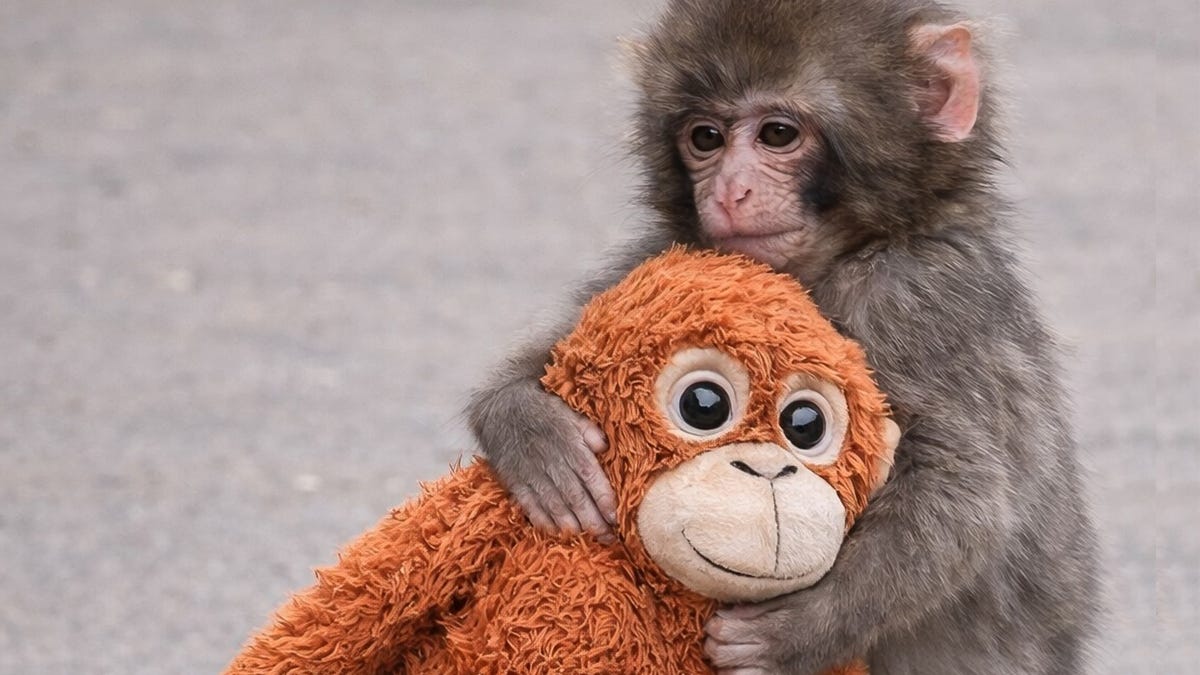
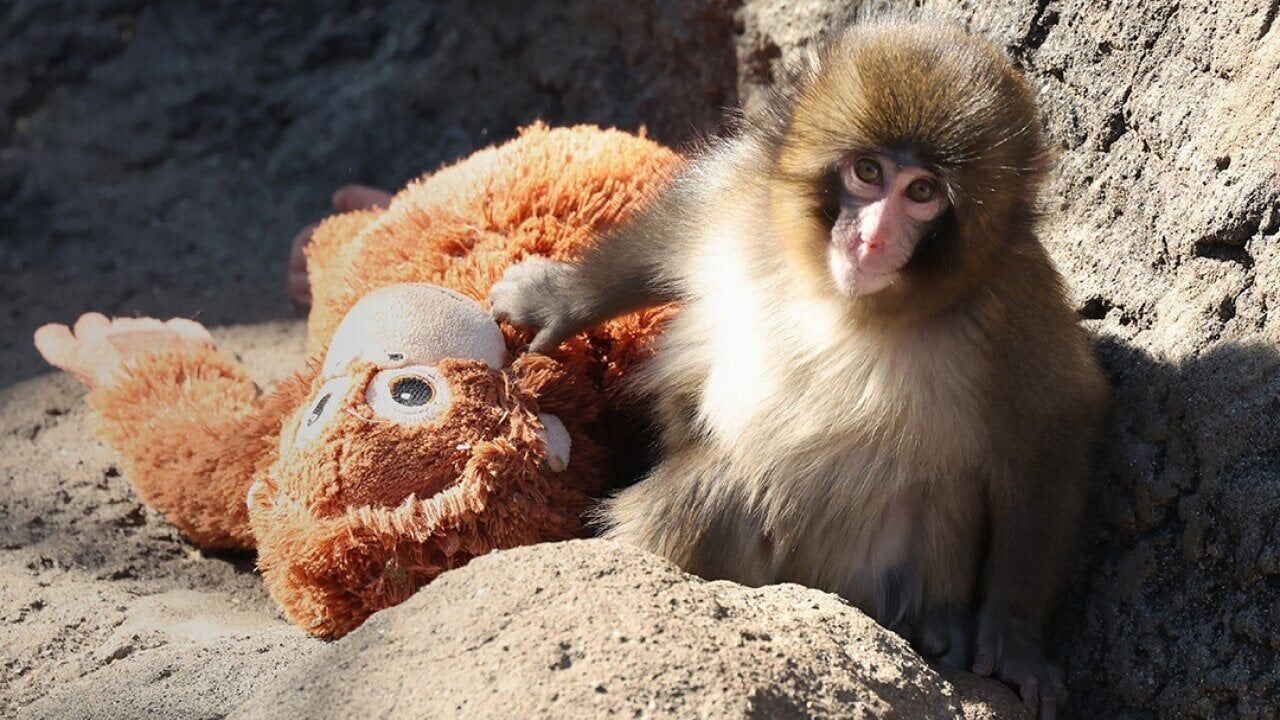
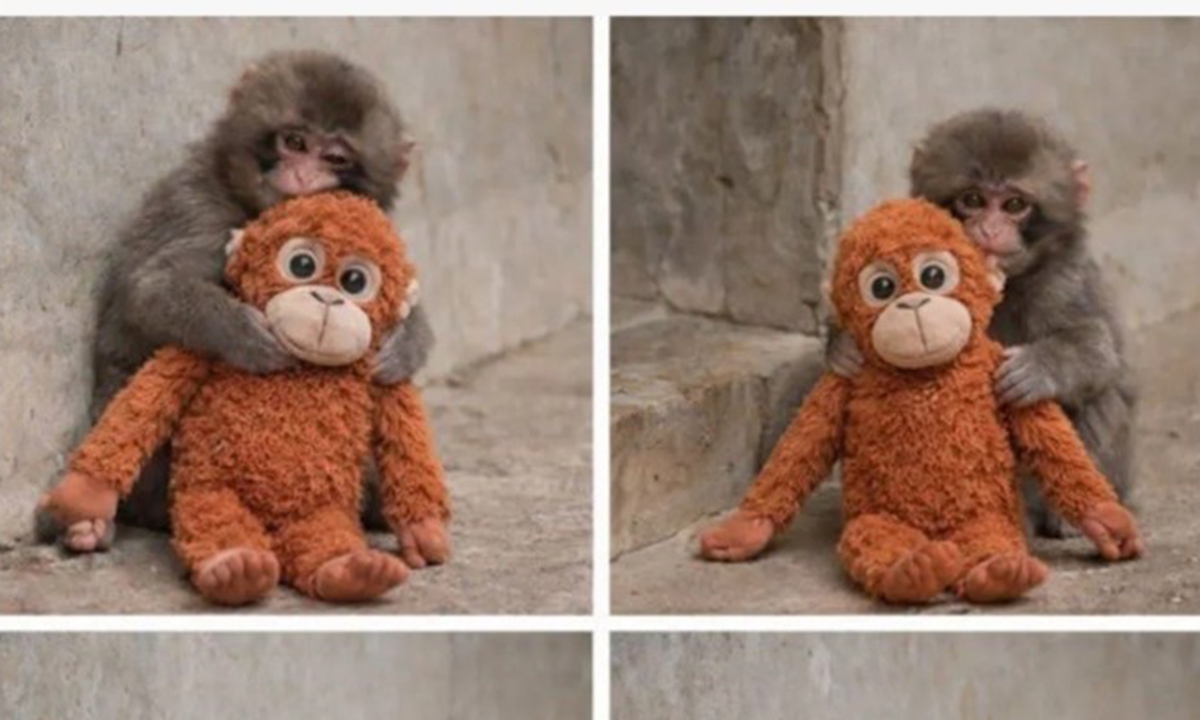
Punch was abandoned at birth.
For a primate, this is one of the most critical disruptions possible.
Because early in life, monkeys depend on:
-
Constant physical contact
-
Warmth
-
Eye contact
-
Emotional regulation through the mother
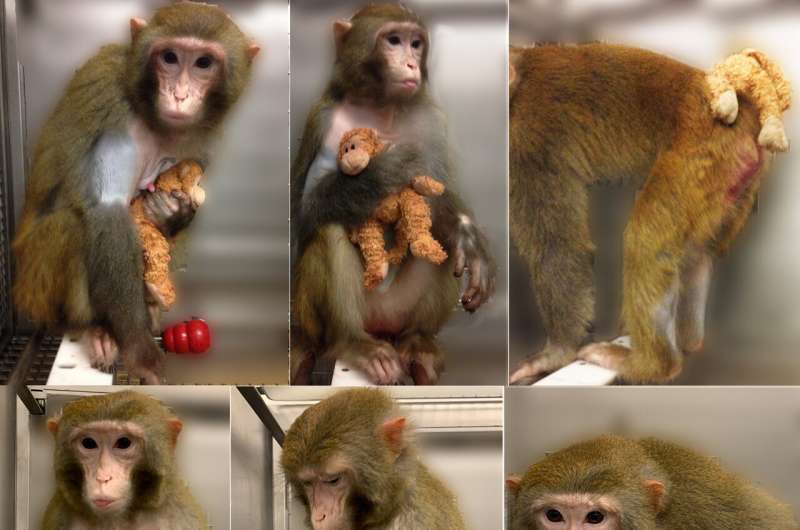
Without this, the brain seeks replacement anchors of safety.
In Punch’s case:
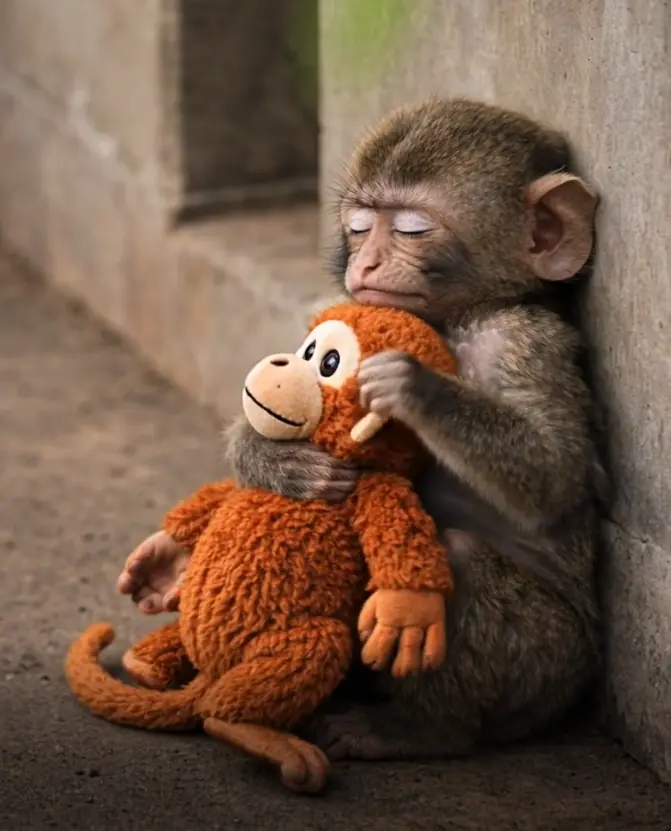
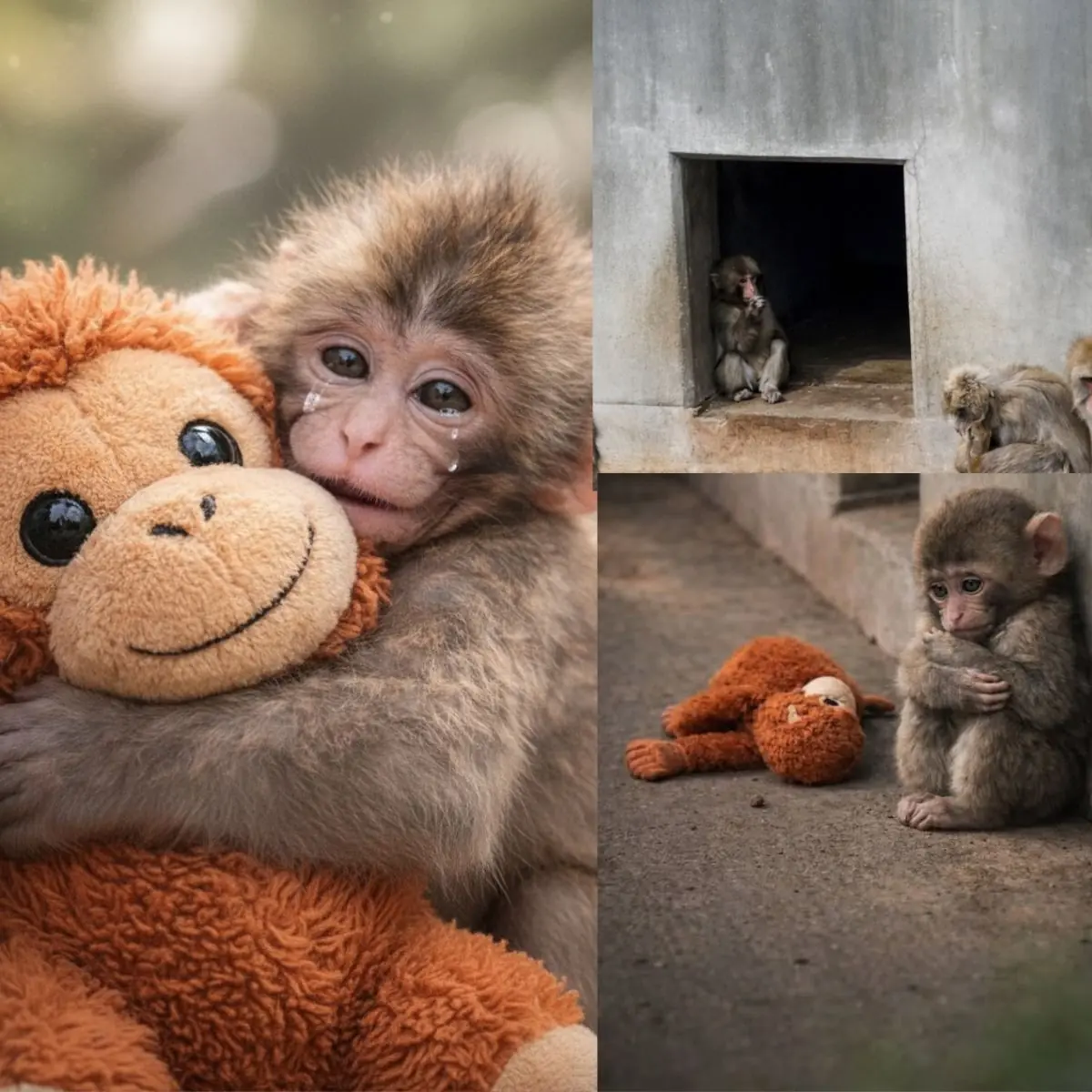
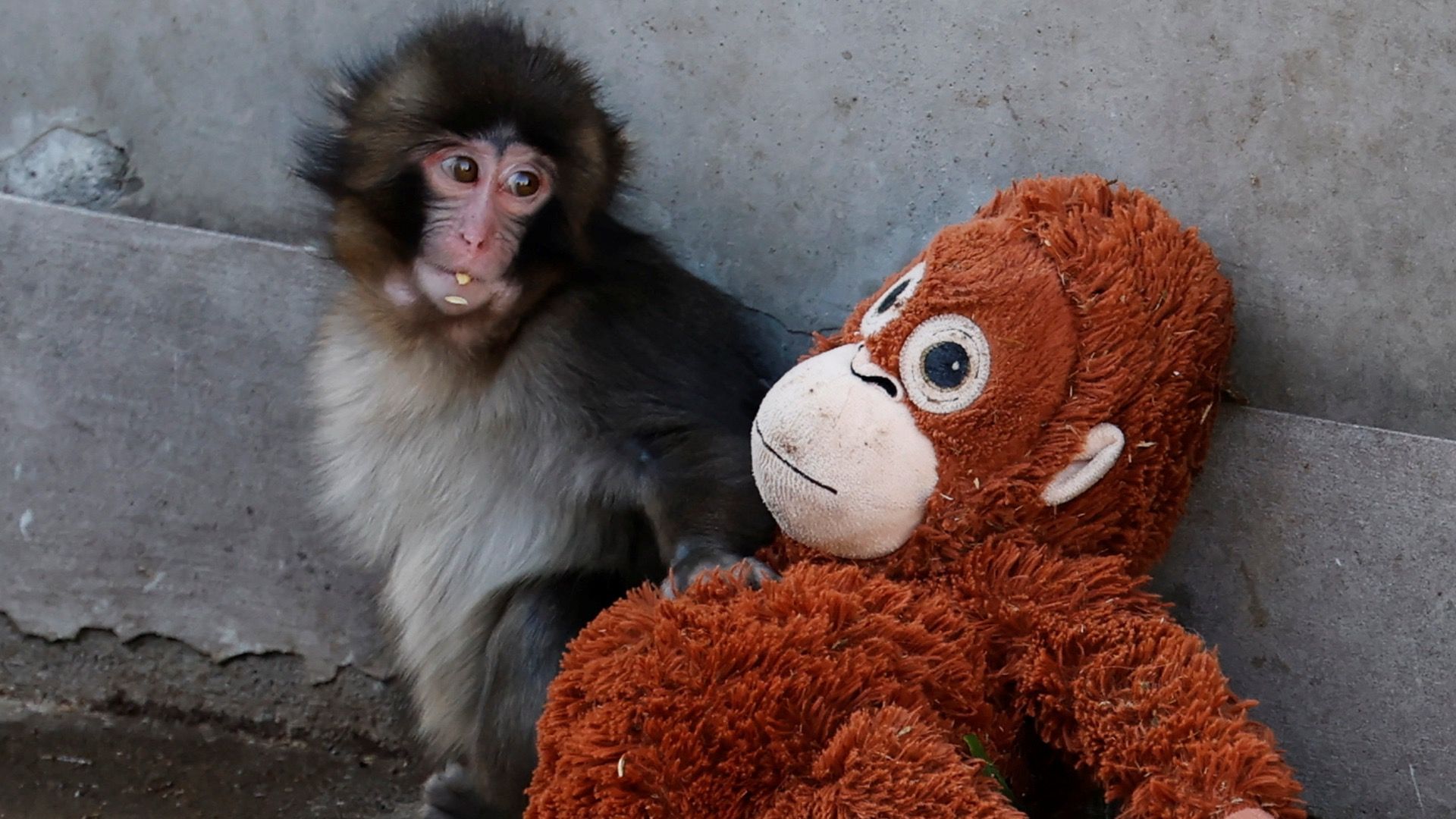
👉 That anchor became the stuffed toy.
It wasn’t just an object.
It became:
-
A source of comfort
-
A symbol of presence
-
A psychological “safe space”
🤝 2. SHARING AS A WAY TO REDUCE LONELINESS

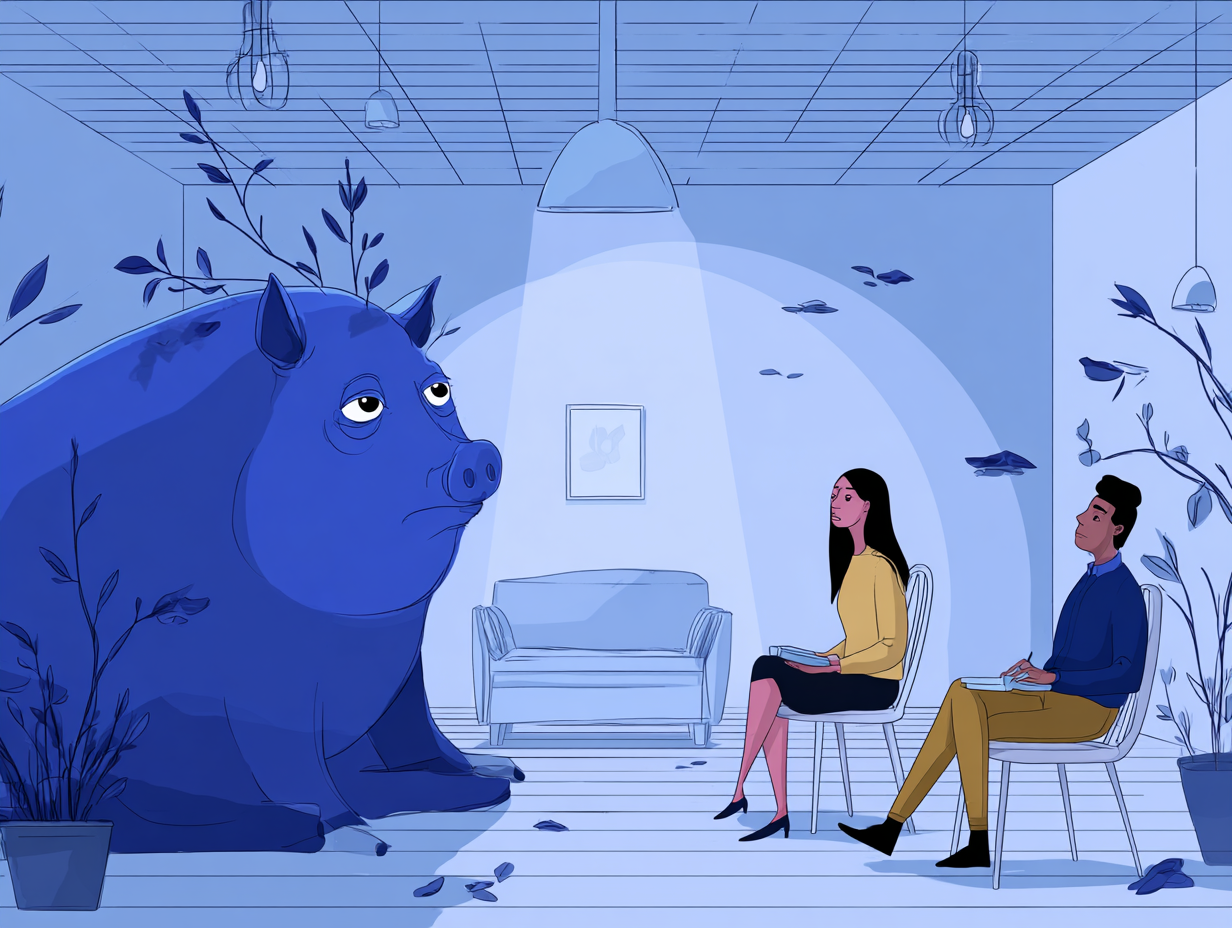
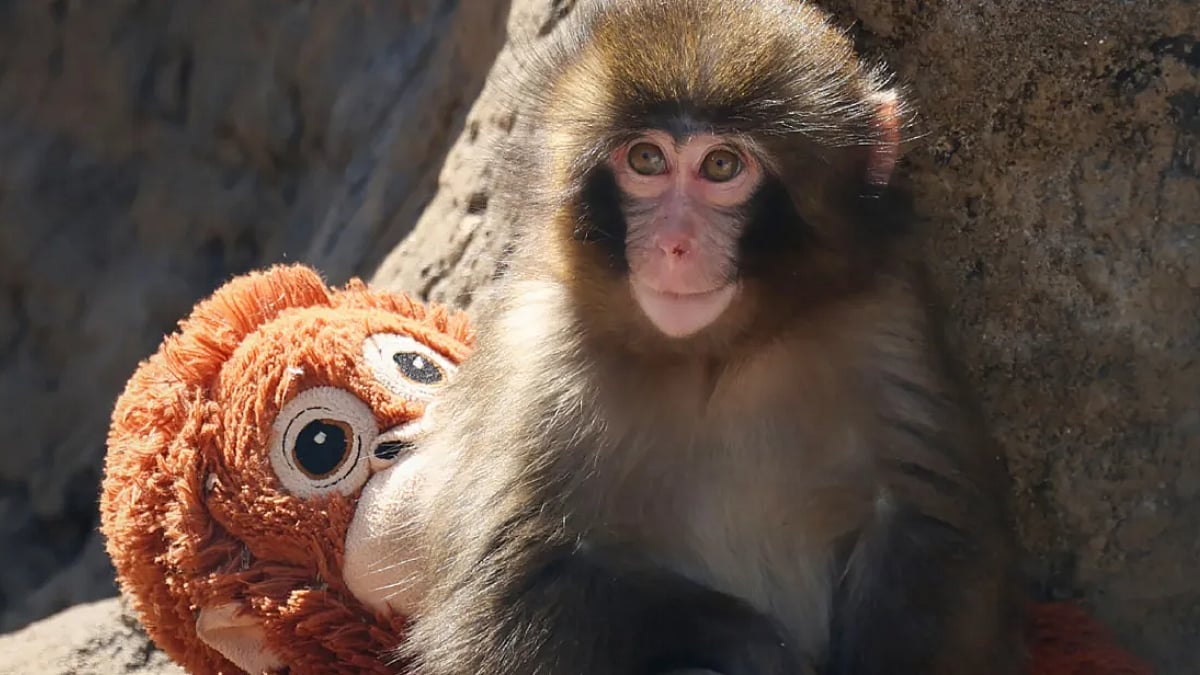

Sharing food is not just about nutrition.
In social species, it is also about:
👉 Connection
When Punch shares food with the toy, he is not feeding it.
He is doing something deeper:
👉 He is not eating alone
Because eating alone can trigger:
-
Isolation
-
Vulnerability
-
Emotional discomfort
By “feeding” the toy, Punch creates an illusion:
👉 “I am not alone.”
🧬 3. SOCIAL INSTINCT: BUILT INTO HIS NATURE

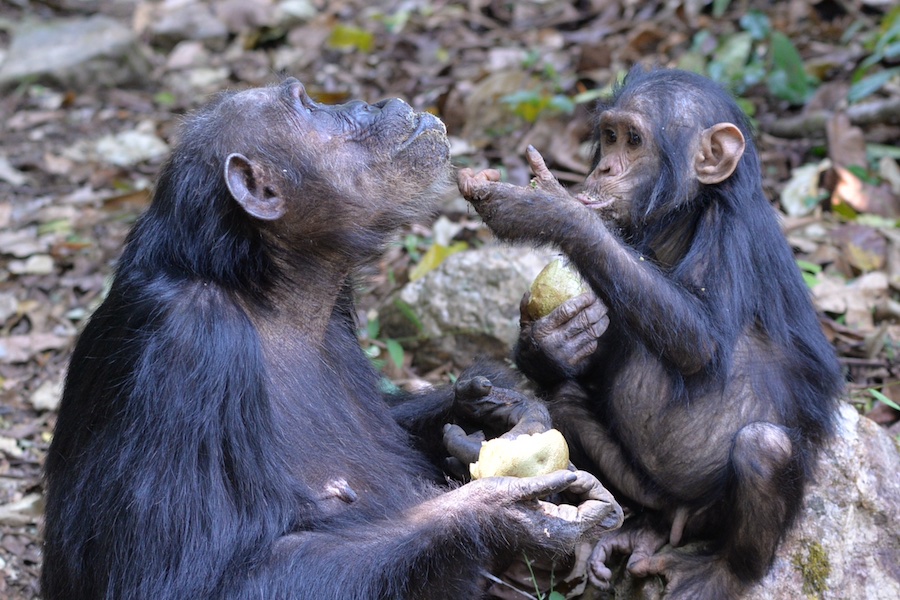
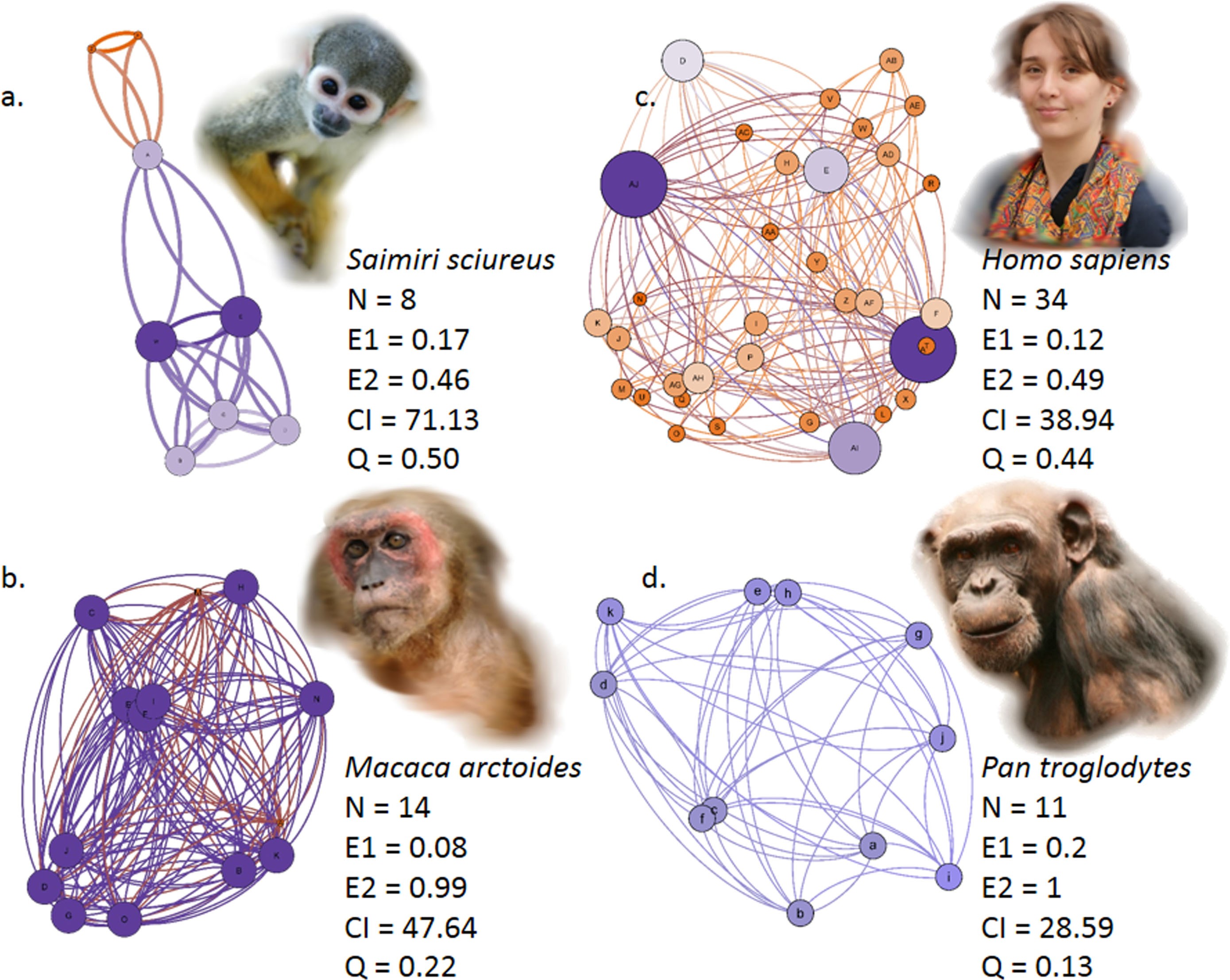
Monkeys are not solitary animals.
They are deeply social.
In the wild:
-
They eat together
-
Groom each other
-
Stay physically close
This behavior supports:
-
Survival
-
Emotional stability
-
Group cohesion
Even without a real group at the beginning of life…
👉 Punch’s brain still expects connection.
So it creates one.
Even if it’s with a toy.
🧠 4. TRUST AND ATTACHMENT
Sharing food also signals something important:
👉 Trust
In animal behavior, giving up food — even partially — indicates:
-
Reduced fear
-
Emotional security
-
Bond formation
Punch is not just acting out of habit.
He is expressing:
👉 “This is mine… but I want to share it with you.”
Even if “you” is not real.
The feeling is.
🌍 THE HUMAN PARALLEL
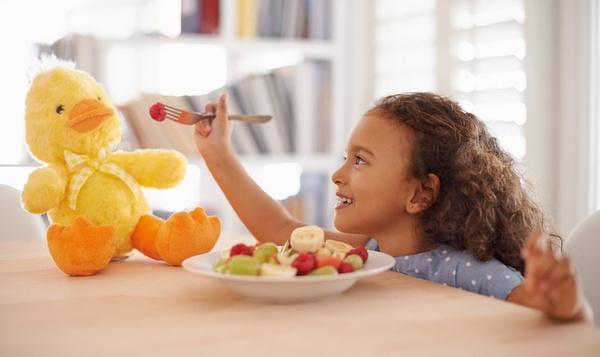

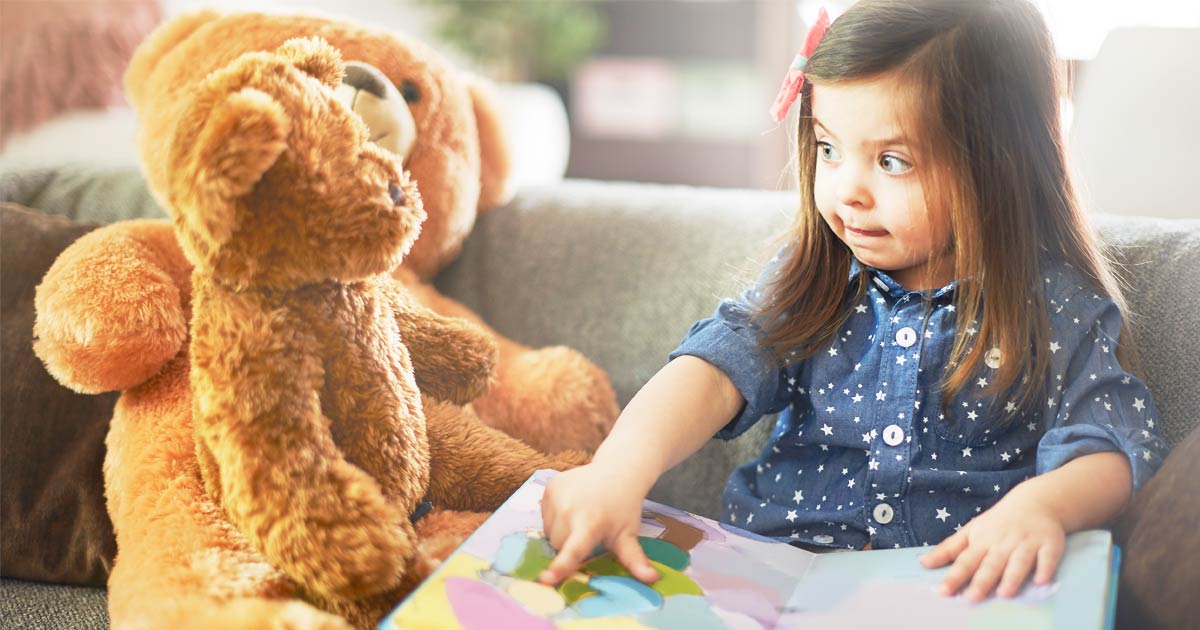

What Punch does may seem unusual.
But humans do similar things all the time.
-
Children talk to imaginary friends
-
People eat while watching videos to avoid silence
-
Adults hold onto objects for comfort
Why?
👉 Because loneliness is uncomfortable.
And connection — even symbolic — helps regulate emotion.
💭 WHY WE RELATE TO PUNCH
Punch’s story resonates because it reflects something universal:
👉 The fear of being alone
👉 The need to feel connected
👉 The desire to share — even when we don’t have to
📊 A BEHAVIORAL INTERPRETATION
From a scientific perspective, Punch’s behavior combines:
-
Attachment theory (seeking safety after loss)
-
Social bonding instinct (desire for connection)
-
Emotional regulation (reducing stress through interaction)
It is not random.
It is adaptive.
💬 THE MESSAGE
Punch didn’t share the watermelon because he had to.
He shared it because:
👉 He didn’t want to feel alone
👉 He wanted to feel safe
👉 He wanted connection
❓ A QUESTION FOR YOU
Have you ever:
-
Shared something not because you needed to…
-
But because you didn’t want to experience it alone?
👉 A meal
👉 A moment
👉 A feeling
Is that weakness?
Or is it something deeply human?
💭
❤️ FINAL THOUGHT
Punch’s story is not just about a monkey and a toy.
It’s about something much bigger:
👉 The need to belong
👉 The need to connect
👉 The need to not face the world alone
And maybe that’s why this moment feels so powerful.
Because deep down—
we all understand it.