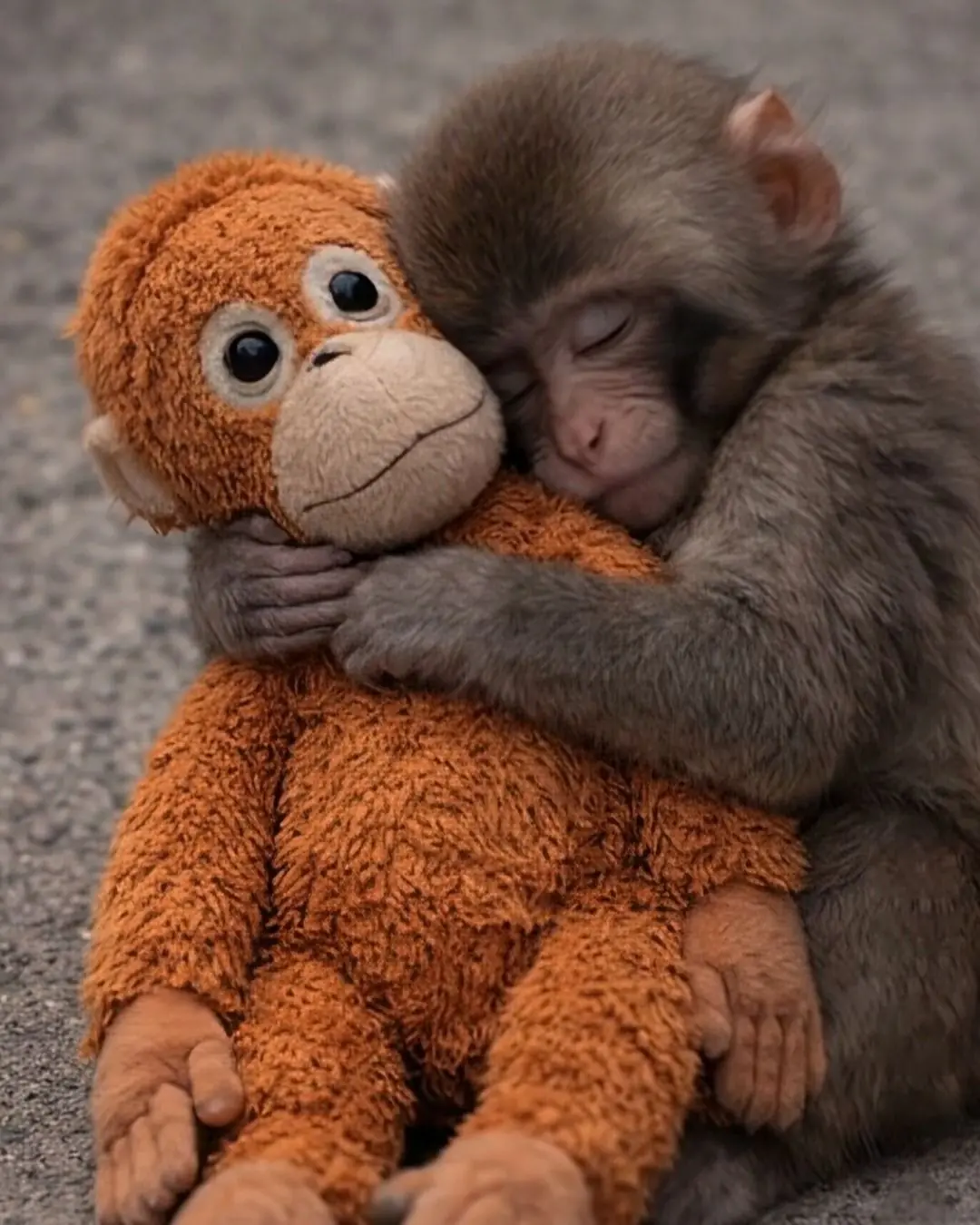
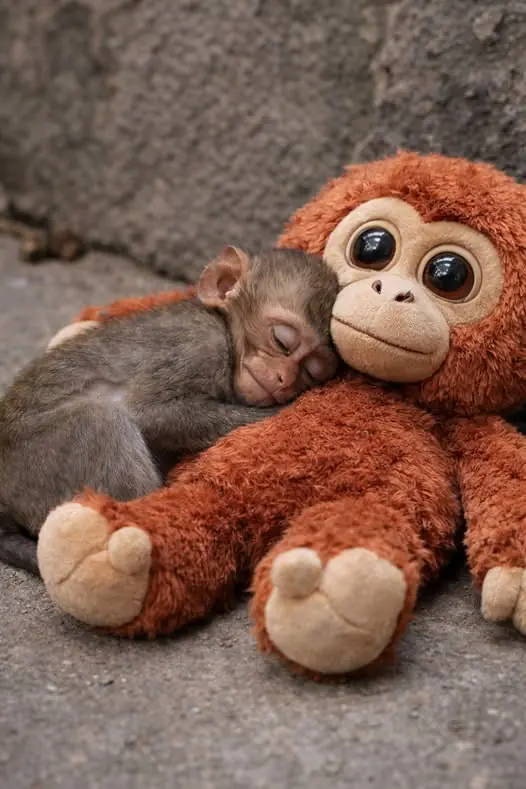
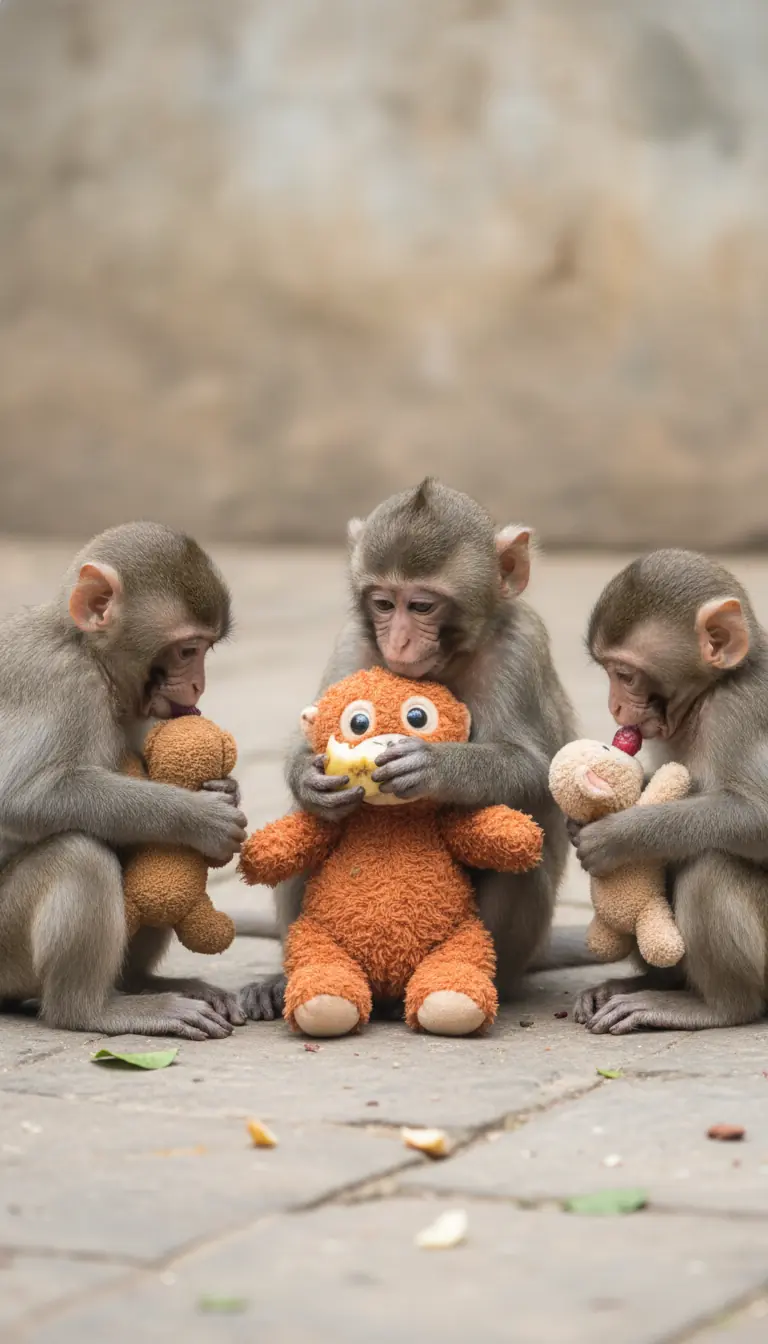
Why Does Punch Cling So Tightly? The Truth Behind His Behavior
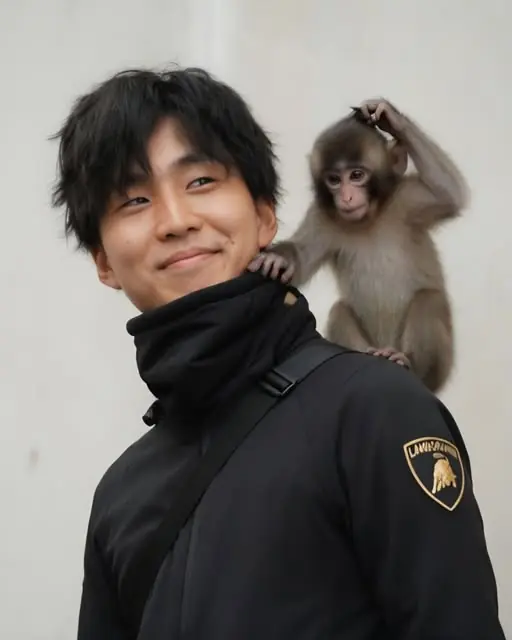
Why Punch Always Clings to His Caretaker: It’s More Than Just Habit


At first glance, it looks adorable.
A tiny monkey wrapping himself tightly around a caretaker’s leg, refusing to let go.
But for Punch the monkey, this behavior is not just cute—it is deeply rooted in instinct, attachment, and early life experience.
1. The Instinct to Hold On Never Disappears
In the wild, baby monkeys survive by clinging to their mothers:
-
They hold onto fur constantly
-
They sleep while attached
-
They rely on contact for safety
Punch was abandoned at birth.
But the instinct to cling did not disappear.
Instead, it redirected itself.
👉 The need remained—only the “person” changed.
2. The Caretaker Becomes a “Safe Base”


The caretaker became everything Punch needed:
-
The one who feeds him
-
The one who protects him
-
The one who stays
In psychology, this is called a “safe base”—a figure that provides stability and security.
To Punch, the caretaker is not just a human.
He represents:
👉 Safety
👉 Continuity
👉 Survival
3. Clinging Creates Immediate Safety


When Punch holds onto the caretaker:
-
His anxiety decreases
-
His environment feels controlled
-
His body relaxes
This is not a conscious decision.
It is a biological response:
“If I stay close, I am safe.”
4. A Subtle Fear of Losing That Safety


Because Punch experienced early loss, his attachment carries something deeper:
-
A need for closeness
-
Sensitivity to separation
-
A quiet fear of losing safety again
This does not mean constant fear.
But it explains why he holds on tightly.
👉 Not because he is weak—
but because he has learned what it feels like to lose.
5. This Is Not Dependency—It Is Trust


It is easy to misunderstand this behavior as “clingy.”
But in reality, it represents something much stronger:
👉 Trust
Punch does not hold on because he cannot let go.
He holds on because:
-
He knows where safety is
-
He recognizes who protects him
-
He chooses to stay close
Conclusion
Punch clinging to his caretaker is not just a habit.
It is:
-
A survival instinct
-
A result of early separation
-
A sign of deep attachment
-
A reflection of trust
It is a behavior shaped by both biology and experience.
Final Reflection
Sometimes, we hold onto people not because we are weak—
but because they make us feel safe.
💬 If you found someone who made you feel this safe…
would you let go easily?