The Photo That Touched Millions: Why This Image of Punch and His Caretaker Feels So Powerful
The Photo That Touched Millions: Why This Image of Punch and His Caretaker Feels So Powerful


 5
5
Some photographs do more than simply capture a moment.
They capture emotion.
Connection.
Trust.
Love without words.
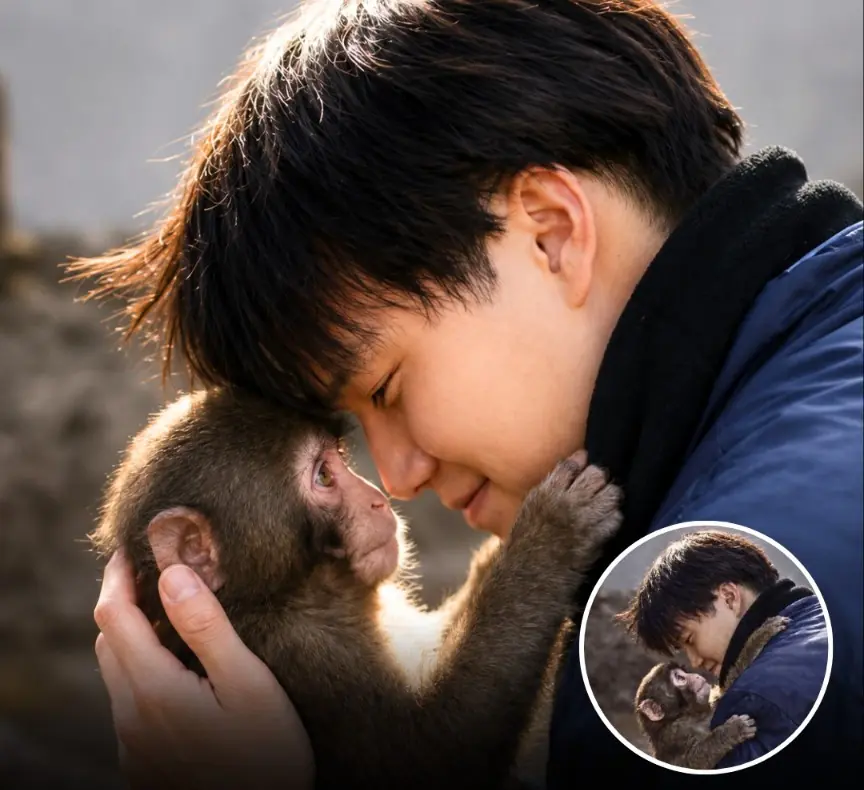
The image of a young caretaker gently pressing his forehead against a baby monkey named Punch has touched thousands of people online because it represents something deeply human: the bond between vulnerable creatures and the people who choose to protect them.
Even though the image is labeled as AI-generated for illustration, the emotional reaction it creates is very real. Viewers across social media describe the picture as “heartwarming,” “beautiful,” and even “picture of the year.”
And honestly, it is easy to understand why.
The tiny monkey looking directly into the caretaker’s eyes creates a moment that feels intimate, innocent, and completely pure. There is no fear visible in the animal’s expression — only trust.
That single detail changes everything.
Why Humans Are So Emotionally Drawn to Animal Bonds
Humans naturally respond to emotional connection, especially when it involves animals.
Scientists believe people are biologically wired to react strongly to vulnerable faces, eye contact, and caregiving behavior. That is one reason images of rescued animals or close human-animal relationships often spread rapidly online.
But this photo goes beyond simple cuteness.
It tells a silent story.
The caretaker’s expression feels protective and gentle. The baby monkey appears calm and emotionally attached. Their foreheads touching together creates a visual language of affection that needs no explanation.
People do not just see an animal and a human.
They see care.
Safety.
Compassion.
Belonging.
The Power of Trust Between Humans and Animals


 7
7
Trust between humans and wild animals is not easily earned.
Many rescued animals arrive traumatized, frightened, injured, or separated from their families. Rehabilitation often requires patience, consistency, and emotional sensitivity.
Caretakers working in wildlife rescue centers frequently dedicate months or years to helping animals recover physically and emotionally.
For baby primates especially, emotional attachment plays a major role in survival and development.
Young monkeys rely heavily on touch, closeness, warmth, and reassurance. Without care, many struggle emotionally after losing their mothers or being separated from their natural environment.
That is why photographs like this resonate so strongly.
People instinctively recognize the emotional comfort being shared in the image.
The Internet’s Growing Love for Rescue Stories
Over the past decade, animal rescue content has become one of the most emotionally engaging categories online.
Videos of injured dogs being saved, orphaned animals recovering, or unlikely friendships forming between humans and wildlife regularly attract millions of views.
Why?
Because these stories offer something people desperately crave in modern life: hope.
In a world often dominated by conflict, negativity, and stress, moments of compassion feel refreshing and meaningful.
The image of Punch and his caretaker reminds people that gentleness still exists.
And sometimes, that emotional reminder is enough to deeply affect someone’s day.
What Makes a Photograph Truly Powerful?


 7
7
A technically perfect image is not always memorable.
Sometimes the most powerful photographs are the ones that make people feel something instantly.
This image works emotionally for several reasons:
1. Eye Contact
The monkey and caretaker are fully focused on each other, creating emotional intensity.
2. Physical Closeness
Their foreheads touching symbolizes comfort, affection, and trust.
3. Vulnerability
The baby monkey appears small and dependent, activating protective emotions in viewers.
4. Soft Lighting
The warm lighting creates a peaceful, intimate atmosphere.
5. Simplicity
There are no distractions. The emotional connection becomes the entire story.
These elements combine to create an image that feels cinematic and emotionally authentic.
The Ethics Behind Human-Wildlife Relationships
Of course, images involving wild animals also raise important conversations.
Wildlife experts often remind the public that monkeys and other primates belong in natural habitats whenever possible. Ethical rescue centers focus on rehabilitation, conservation, and minimizing harmful dependency on humans.
Unfortunately, illegal wildlife trade and exploitative animal tourism still exist in many parts of the world. Baby monkeys are sometimes separated from their mothers and used for entertainment or social media content.
That reality makes ethical caregiving especially important.
Responsible sanctuaries and rescue organizations prioritize:
- Medical care
- Rehabilitation
- Safe environments
- Species-appropriate treatment
- Possible reintroduction into nature
So while emotional images can inspire compassion, experts encourage people to support legitimate rescue organizations rather than exploitative wildlife businesses.
Why Small Moments Often Mean the Most

 6
6
One reason this image feels so special is because nothing dramatic is happening.
There is no action scene.
No special effect.
No loud performance.
Just a quiet moment of connection.
Ironically, those moments are often the ones people remember longest.
A forehead touch.
Gentle hands.
Calm eyes.
Silent trust.
In many ways, the simplicity makes the image feel even more genuine.
Animals Have a Unique Way of Reaching Human Emotions
People frequently describe emotional experiences with animals in ways similar to human relationships.
Animals can offer:
- Comfort during loneliness
- Emotional support during grief
- Nonverbal connection
- Unconditional affection
- A sense of calm and safety
For some individuals, interactions with animals become deeply healing experiences.
That emotional reality explains why rescue workers, veterinarians, sanctuary staff, and foster caregivers often form strong bonds with the animals they protect.
The connection shown in this image reflects something many animal lovers already understand firsthand.
Compassion creates attachment.
Could This Really Be “Picture of the Year”?


 8
8
Calling something “Picture of the Year” is obviously subjective.
But emotionally?
This image absolutely succeeds.
Not because it is shocking.
Not because it is controversial.
Not because it is tragic.
But because it reminds people of tenderness.
In a fast-moving digital world filled with outrage and noise, images centered around empathy stand out more than ever.
The photo of Punch and his caretaker captures a universal emotion that transcends language, culture, and geography:
The desire to protect something fragile.
And maybe that is why so many people cannot stop looking at it.
Because beneath the image itself lies a message people still want to believe in — that kindness, patience, and gentle connection still matter.