This is Loki—he hates car rides because they usually end with vet visits and shots.
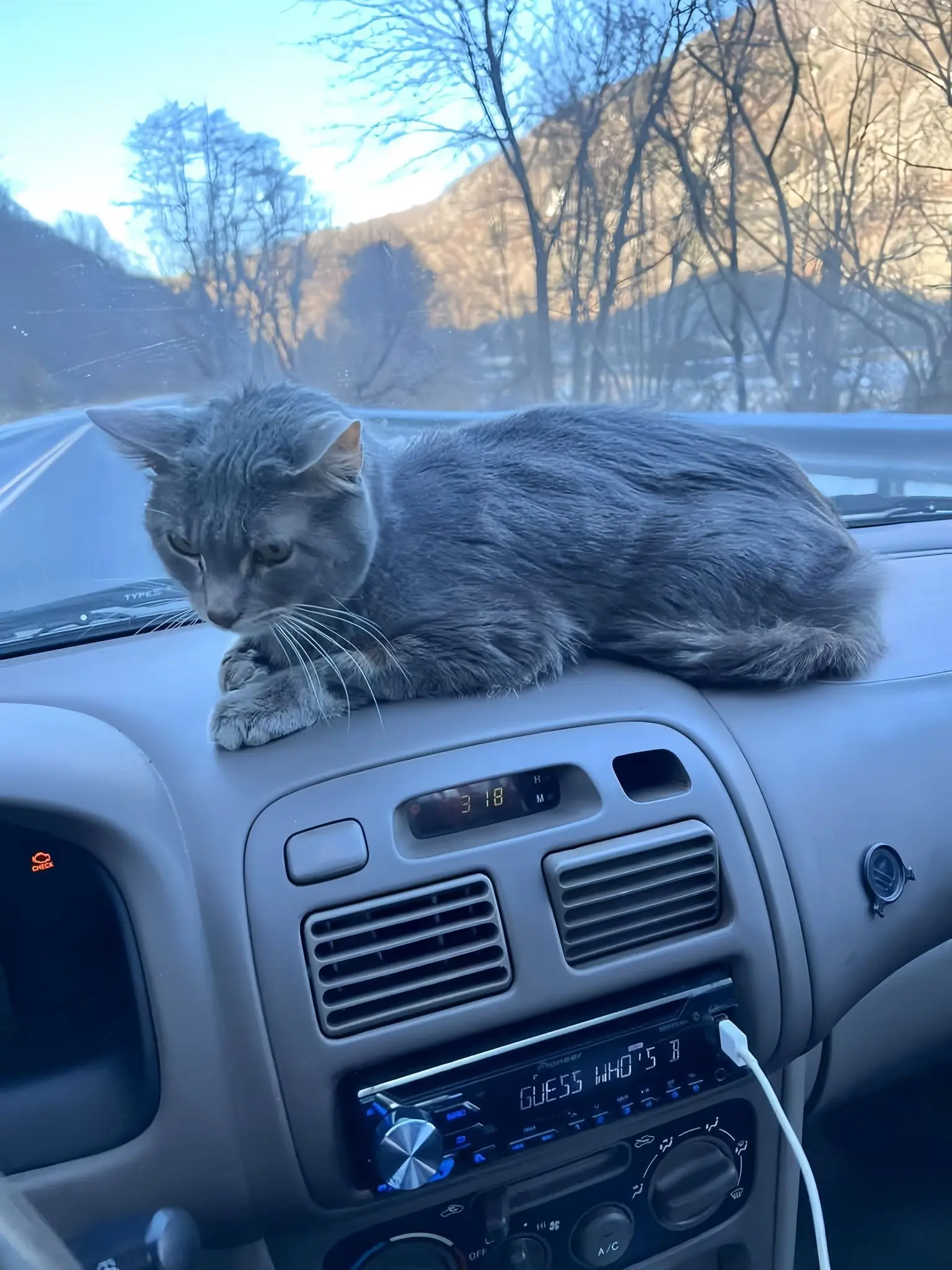

That “particular car ride” started with disbelief. I was walking the neighborhood again, calling his name into frozen air that burned my lungs, when I saw a shape under a neighbor’s deck. Thin. Still. Watching me. I almost didn’t let myself believe it was him because hope had become too heavy to carry. But then the shape shifted, and I saw the familiar tilt of his head—the same judgmental angle he gives me when dinner is five minutes late. I said his name once, softer this time, and he answered. Not a full meow. More like a cracked little rasp. I dropped to my knees in the snow without thinking about the cold soaking through my jeans. He didn’t sprint away. He didn’t even pretend to be aloof. He staggered toward me like an exhausted old prizefighter who’d gone one round too many. When I picked him up, he felt wrong—too light, bones sharper than I remembered, fur dull and clinging to a frame that had clearly been surviving, not living. I kept whispering, “I’ve got you, I’ve got you,” more for me than for him. In the car, he didn’t yowl like he usually does. He just curled into the seat, pressed against my leg, and closed his eyes. That silence scared me more than his usual protests ever had. Every red light felt like an insult. Every second between finding him and getting home stretched impossibly long. But he was there. Breathing. Warm enough. Alive. And for the first time in ten days, I let myself cry.
At the vet, I braced for the worst. I expected complicated words, worried looks, maybe even regret. Instead, after exams and gentle prodding and a scale that confirmed what I already knew, the verdict was almost anticlimactic: dehydrated, underweight, but strong. “He’s tougher than he looks,” the vet said, and I laughed because Loki has always looked like a menace, never fragile. The relief hit me in waves—so intense it left me dizzy. For ten days I had replayed the moment he slipped out, over and over, torturing myself with what-ifs. I had imagined him freezing, alone, and I had blamed myself for every terrible possibility. Bringing him home that day felt like being handed back something I didn’t deserve a second time. Now he eats like a king—wet food, extra treats, fresh water always within reach. He sleeps longer, tucked into blankets instead of snowdrifts. He’s still grumpy about car rides, still swats at me when I annoy him, still very much an asshole in the most affectionate sense of the word. But when he hops onto my chest at night and settles his weight there—lighter than before, but steady—I feel it: forgiveness. Trust. Maybe even gratitude. He survived ten brutal days in temperatures that should have broken him. He found his way back. And every time I look at him now, I see not just my cat, but a stubborn, resilient old man who refused to quit—and somehow made it home.