The day my dog disappeared was the day i realized how much he held our family together
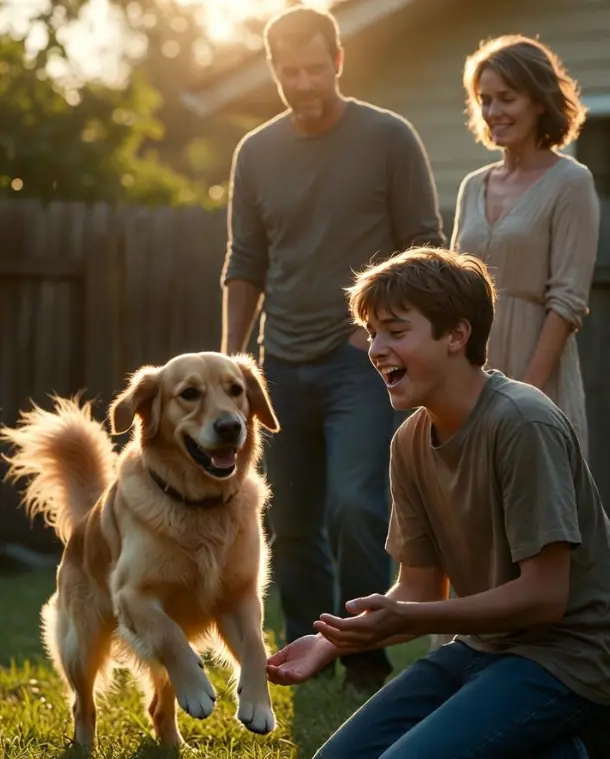
The day my dog disappeared was the day i realized how much he held our family together
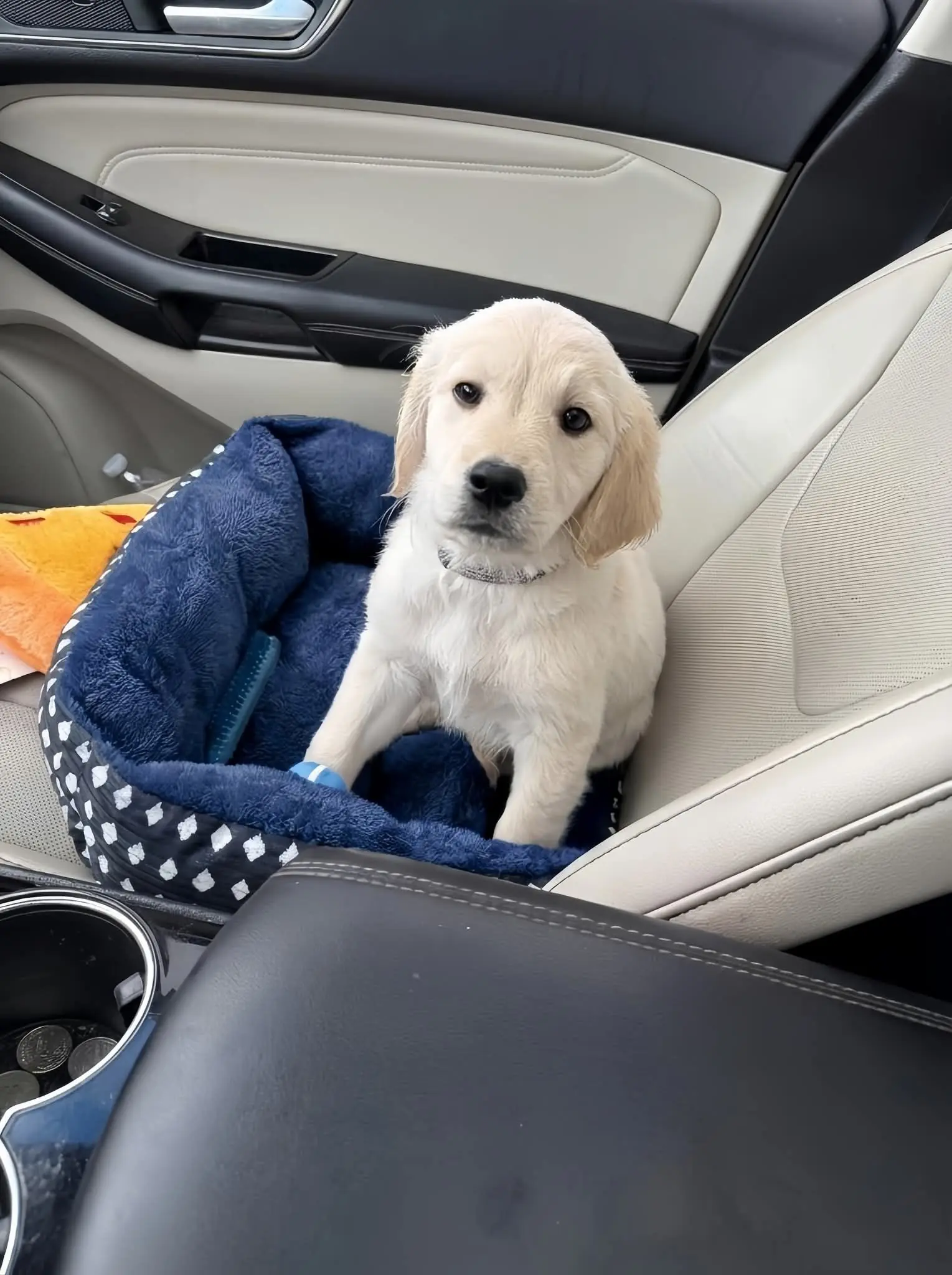
The gate was swinging in the wind, a rhythmic clack-clack against the fence post that sounded like a ticking clock. It was a Tuesday in early March, the kind of day that felt caught between the gray of winter and the promise of spring. I had come home from work early, expecting the usual chaotic greeting—the frantic scratching of paws on the hardwood and the high-pitched yaps of a Golden Retriever mix who believed every arrival was a national holiday.
But the house was silent.
"Buster?" I called out, my voice echoing off the kitchen tiles. Nothing. No thud of a tail, no jingle of a collar. I walked to the backyard and saw it: the side gate, usually secured with a heavy bolt, was wide open. A loose latch, a gust of wind, or perhaps a moment of human carelessness had turned our world upside down in an instant.
The panic was immediate and visceral. It was a cold, sharp blade of adrenaline that made my hands shake as I grabbed my keys. By the time my husband, Mark, and our teenage son, Leo, arrived home twenty minutes later, I had already circled the neighborhood twice, my voice raw from calling a name that the wind seemed to swallow.
The disappearance didn't just cause a search; it caused a collapse.
As the sun began to dip behind the pines, the emotional unraveling of our family became painfully visible. In our house, Buster was more than a pet; he was the social glue. He was the one who sat between Mark and me on the sofa when we were too tired to talk. He was the one Leo retreated to after a bad day at school, whispering secrets into soft, velvet ears. Without him, we didn't know how to be in a room together.
The blame started small, like a leak in a dam.
"Who let him out last?" Mark asked, his voice tight with a frustration that had nothing to do with the dog and everything to do with the stress of his job.
"I did," Leo snapped, his eyes red. "But I locked the gate. I know I did. Maybe if you’d fixed the latch like Mom asked you to three months ago, this wouldn't have happened."
The air in the living room turned brittle. Old, unresolved tensions—ignored repairs, perceived laziness, the feeling of not being heard—rose to the surface. For two hours, we weren't a family searching for a dog; we were three people pointing fingers to avoid facing the crushing weight of our own guilt. We argued over the route of the search, the wording of the social media posts, and the "irresponsibility" of whoever had been the last to see him.
By 10:00 PM, the house was a war zone of silence. We sat in the kitchen, the empty water bowl in the corner looking like a silent accusation. The suspense was a heavy, physical presence. Every time a car drove by or a branch scraped the window, we all froze, hoping for the sound of a bark that never came.
"We should go to bed," Mark said, though he didn't move.
"How can we sleep?" Leo whispered, his head in his hands. "He’s out there in the dark. He’s probably scared. He’s probably wondering why we haven't found him yet."
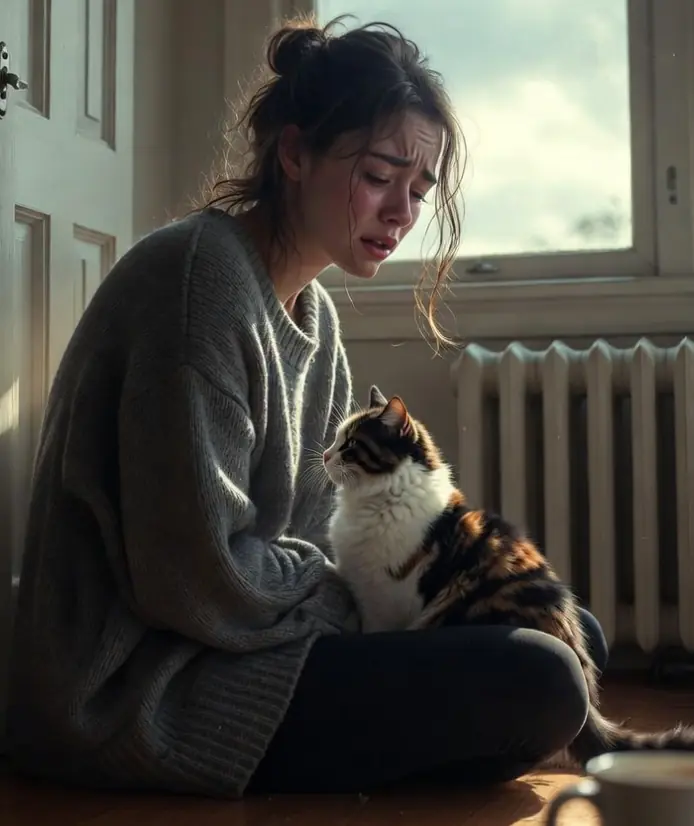
The guilt was a suffocating shroud. We all felt it—the realization that we had taken for granted the one creature who loved us without condition. Buster didn't care about the broken latch or the unfinished chores; he just cared that we were there. And now, he wasn't.
The next morning was even worse. The fading hope was a tangible thing, a gray mist that settled over the breakfast table. We spent the day handing out flyers, our faces weary and our hearts sinking with every "No, sorry" from a neighbor. By the second night, the arguments had stopped, replaced by a hollow, aching sadness. We weren't fighting anymore because we didn't have the energy. We were just three people grieving a loss we weren't ready to accept.
The emotional turning point came on Thursday morning, forty-eight hours after the gate had swung open.
I was standing on the porch, staring at the empty driveway, when my phone rang. It was an unknown number. I answered with a trembling "Hello?"
"Is this the owner of a Golden mix named Buster?" a woman’s voice asked. She sounded kind, but cautious. "I think he’s here. At the elementary school."
The elementary school was six blocks away, but it was currently closed for renovations. We piled into the car, a frantic, silent unit, and sped toward the construction site. When we arrived, a woman in a high-vis vest pointed toward the old playground equipment that had been pushed into a corner of the field.
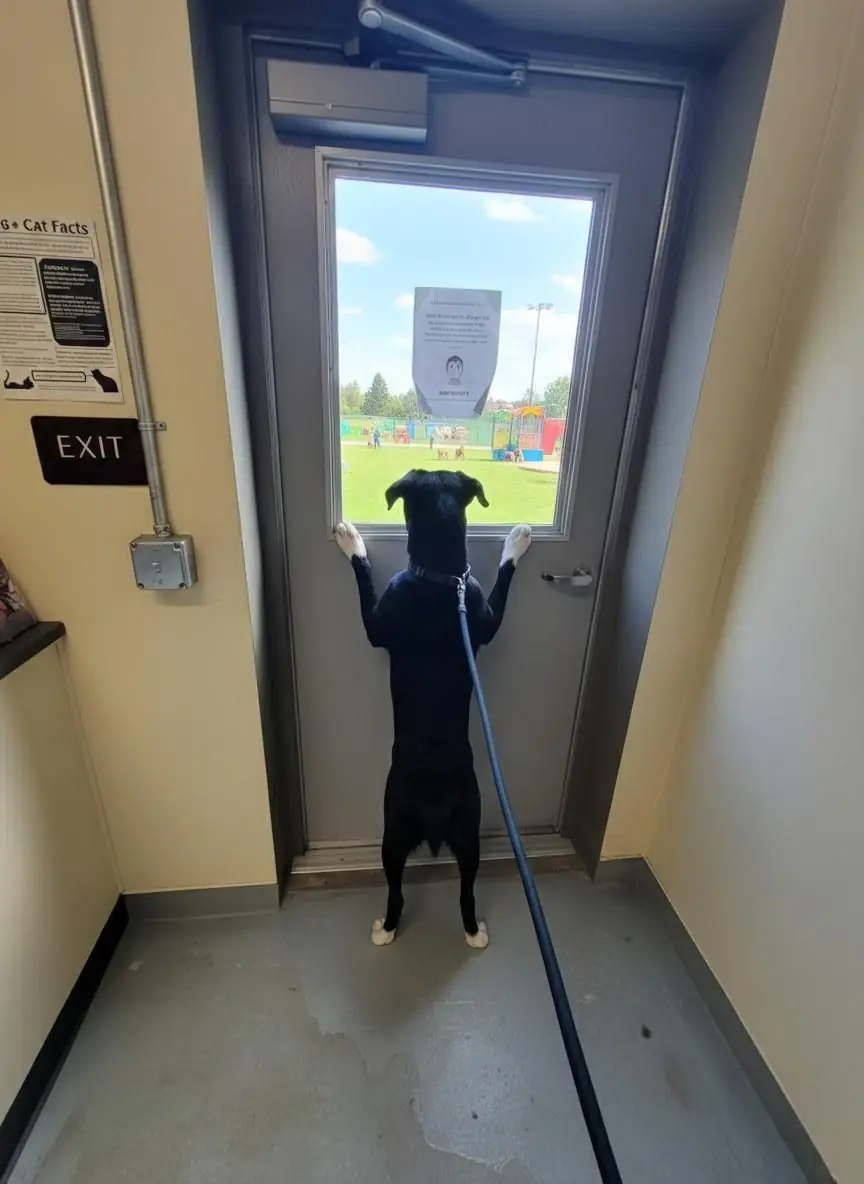
"He showed up this morning," she said. "He wouldn't let us near him, but he wouldn't leave, either. He just sat there by the slide."
And there he was.
Buster was sitting under the old plastic slide, his fur matted with burrs and his tail tucked between his legs. He looked smaller, somehow, and incredibly tired. When he saw our car, his ears perked up. When Leo stepped out and called his name, the change was instantaneous. The "tucked" tail began a cautious wag, then a frantic, full-body wiggle that nearly knocked him over.
We didn't run to him all at once. We walked, slowly, as if afraid he was a mirage that would vanish if we moved too fast. When we finally reached him, the reunion was a chaotic, tearful heap of fur and humans on the muddy grass.
Leo was sobbing into Buster’s neck, and Mark was kneeling in the dirt, his hand resting on Buster’s back, looking at me with an expression of profound, silent apology. In that unexpected place—a dusty construction site by an old slide—the tension of the last few days simply evaporated.
As we drove home, Buster snoring loudly in the backseat with his head on Leo’s lap, I realized something I hadn't understood before.
Animals don't just occupy space in our homes; they occupy the gaps between us. They are the neutral ground where we can all meet when we are too angry or too tired to speak. When Buster was gone, those gaps became chasms. We had relied on his presence to soften our edges and to remind us that, at the end of the day, we were a pack.
The disappearance had exposed our cracks, but the reunion forced us to see how much we needed to mend them. We had spent so much time blaming each other for the open gate that we had forgotten to be grateful for the house the gate was meant to protect.
That evening, the house felt different. The "silent war" was over. Mark spent an hour in the garage, and I heard the steady thwack of a hammer as he finally installed a new, heavy-duty latch on the gate. Leo helped me brush the burrs out of Buster’s fur, and for the first time in weeks, we talked—really talked—about things other than the dog.
"I’m sorry I snapped at you, Dad," Leo said quietly.
"I’m sorry I didn't listen about the gate, son," Mark replied, joining us on the floor.
Buster looked from one to the other, his tongue lolling out in a goofy, satisfied grin, as if he knew exactly what he had accomplished. He had led us on a terrifying chase just to show us that we were still a team.
I reflect on that Tuesday often. It was the day I realized that family unity is a fragile thing, easily broken by the winds of life. But I also realized that sometimes, it takes a lost dog and an open gate to remind us that the most important things in life aren't the ones we say to each other, but the ones we feel in the quiet moments when a cold nose nudges our hand. Buster is home now, and the gate is locked tight, but the lesson he taught us remains: we are stronger together, and sometimes, the best leader of the pack is the one with four legs and a heart of pure gold.