Should Dogs Spend Their Lives on Chains? Norway’s Law Offers a Clear Answer
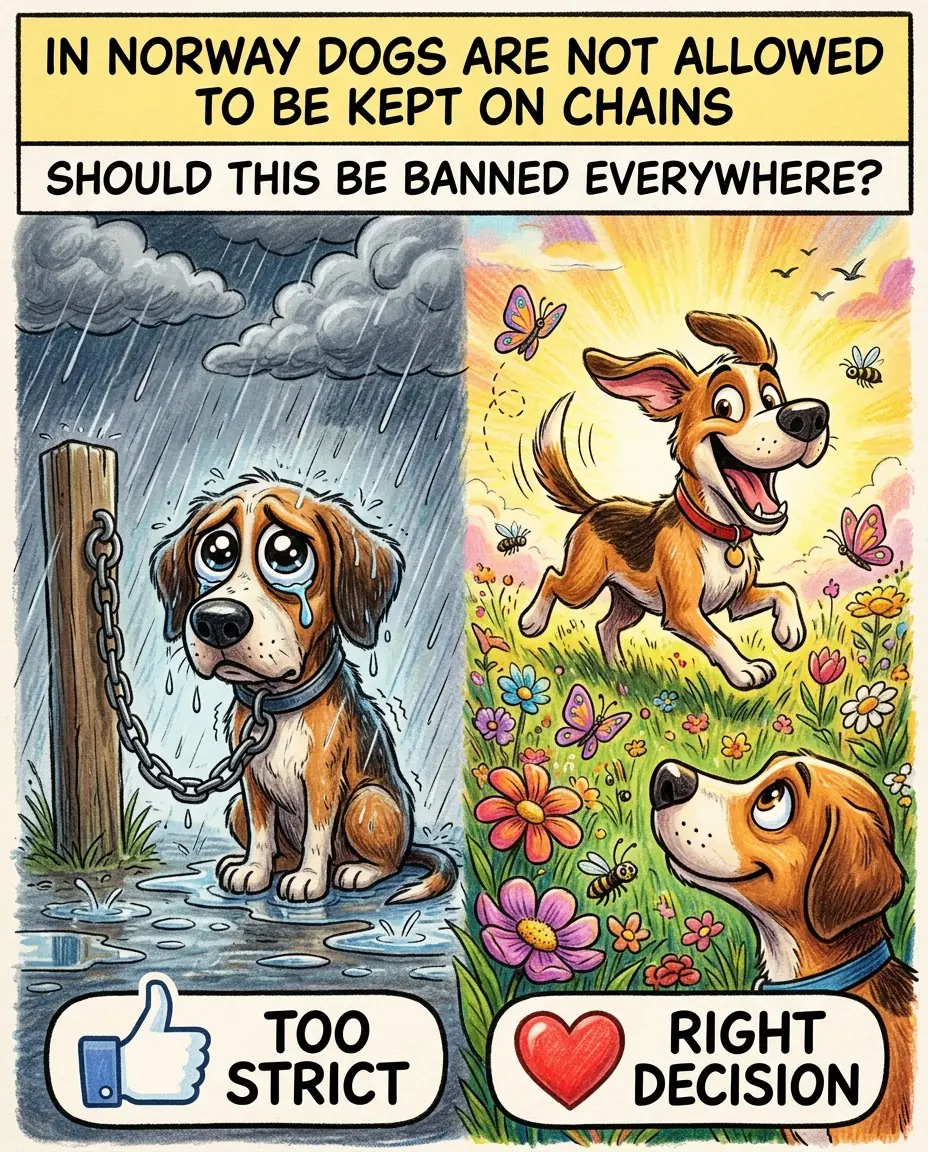
A Simple Question with a Powerful Meaning
Should a dog ever spend its life tied to a chain?
For many people, the idea immediately feels wrong. Dogs are widely known for their loyalty, intelligence, and deep emotional connection with humans. They are animals that thrive on companionship, movement, and interaction.
Yet in some places, it is still common to see dogs living most of their lives tied to a short chain in a yard, unable to move far beyond a few meters.
In Norway, the law has already addressed this issue with a clear position.
Keeping dogs permanently chained is illegal.
Why Norway Banned Permanent Chaining
Norway’s animal welfare laws are based on a simple principle: animals deserve a life that meets their physical and emotional needs.
Dogs are highly social animals. They evolved alongside humans and depend on interaction, mental stimulation, and physical activity. Restricting them to a chain for long periods can severely limit these needs.
When a dog is permanently tethered, its world becomes extremely small. It cannot explore its environment, interact freely with people, or express natural behaviors such as running, playing, and socializing.
Over time, this restriction can lead to both physical and psychological problems.
By banning permanent chaining, Norway aims to ensure that dogs live in environments where they can move freely and experience a fuller quality of life.
The Emotional Side of the Debate
For many animal lovers, the issue is not only about laws but also about empathy.
When people look into the eyes of a dog, they often see something deeply familiar: trust.
Dogs depend on humans not only for food and shelter but also for companionship. They seek closeness, affection, and attention from the people around them.
A chain cannot provide those things.
While it may physically restrain an animal, it cannot replace the emotional connection that dogs naturally seek. For many advocates, this is why permanent tethering feels incompatible with responsible pet ownership.
They believe a dog deserves more than a confined space and minimal interaction.
It deserves a life that includes freedom, care, and meaningful contact with people.
Animal Welfare as a Social Responsibility
Norway’s approach reflects a broader trend in animal welfare policies across parts of the world.
Many societies are beginning to recognize that animals are sentient beings capable of experiencing stress, comfort, and emotional bonds. This understanding has led to stronger regulations designed to protect animals from neglect or harmful living conditions.
In this context, banning permanent chains is not seen as a radical measure but rather as a basic standard of humane treatment.
The law encourages owners to provide dogs with proper housing, space to move, and opportunities for interaction.
It also sends a clear message: animals deserve more than the minimum required for survival.
An Example for Other Countries
For many observers, Norway’s law serves as an example of how societies can raise standards for animal welfare.
By clearly defining unacceptable practices, governments can encourage more responsible treatment of animals and create environments where pets are valued as companions rather than property.
Supporters of such laws believe that improving animal welfare ultimately reflects a society’s broader values.
How people treat animals often mirrors how seriously they take compassion, responsibility, and respect for vulnerable lives.
More Than a Legal Issue
At its heart, the discussion about chained dogs is not only about regulation.
It is about understanding what animals need in order to live healthy and meaningful lives.
Dogs are not meant to spend their existence confined to a small circle of metal and ground. They are meant to move, explore, and form connections with the people around them.
Norway’s law recognizes that reality.
By banning permanent chaining, the country has chosen to prioritize the well-being of dogs and acknowledge the responsibility humans carry toward the animals they care for.
For many animal lovers, it is a reminder that compassion can be written into law—and that even simple changes can make a significant difference in the lives of animals.