Little Punchy Is Already Bored of Sitting in the Zoo — And Everyone Can See It
Little Punchy Is Already Bored of Sitting in the Zoo — And Everyone Can See It


 5
5
There is something deeply emotional about watching a young animal slowly lose its curiosity.
At first glance, Little Punchy may just look like another baby monkey spending a quiet afternoon inside a zoo enclosure. But the moment people started paying closer attention to his behavior, the internet began reacting with concern, sympathy, and heartbreak.
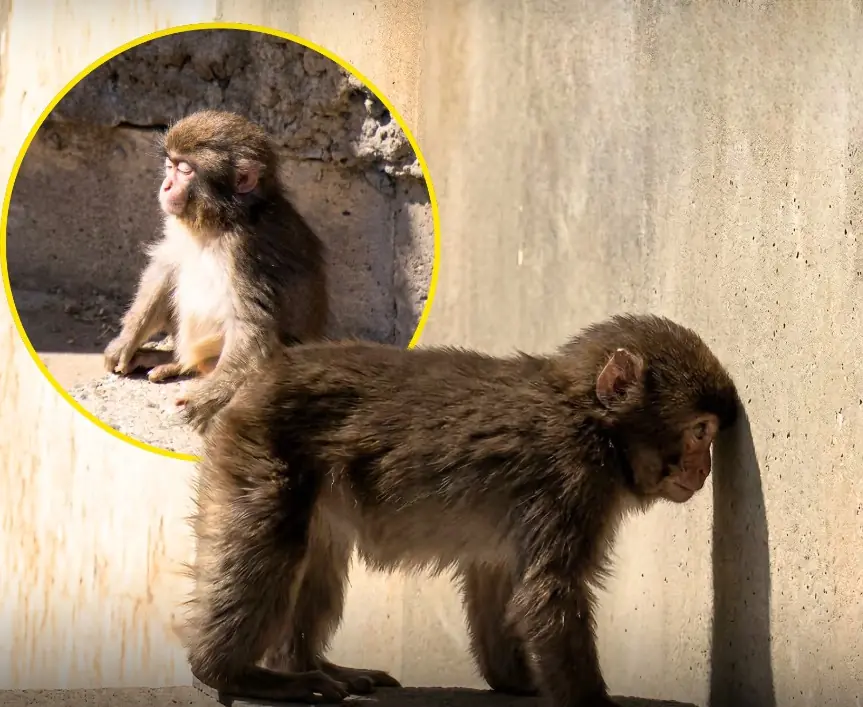
Instead of climbing, playing, or interacting with his surroundings like most energetic young macaques, Little Punchy has repeatedly been seen standing still for long periods, staring blankly at walls, sitting alone in corners, or resting motionless under the sunlight.
And honestly, the contrast is impossible to ignore.
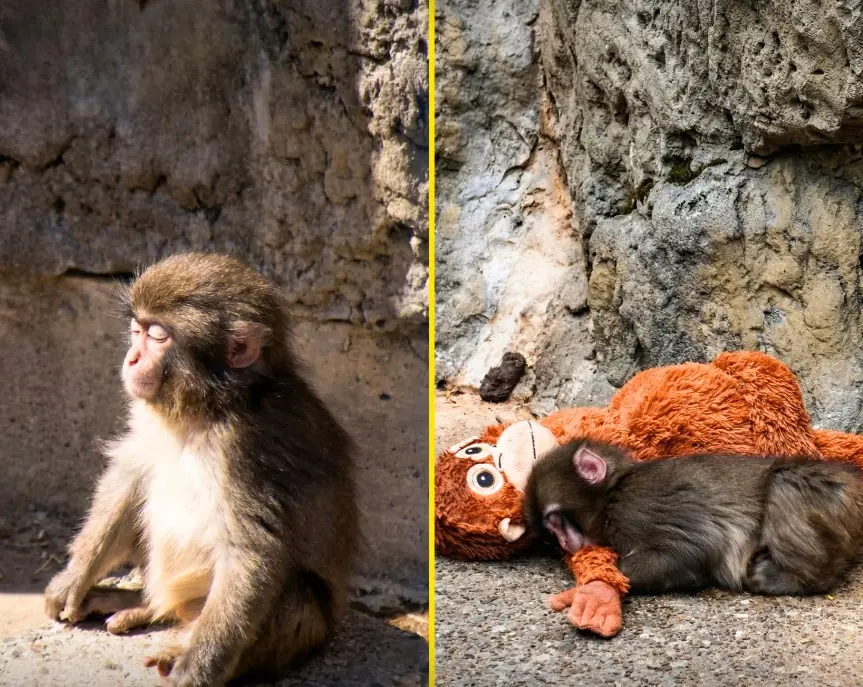
The image that has now gone viral captures two very different moments of the tiny monkey’s day. In one frame, he appears isolated and emotionally drained, leaning toward a concrete wall as if searching for something beyond it. In the other, he sits quietly with his eyes closed, soaking in a patch of sunlight like it is the only comforting thing in his environment.
For many viewers, the photos feel less like “cute zoo content” and more like a silent cry for stimulation, freedom, and connection.
A Baby Monkey Should Be Full of Energy
Young monkeys are naturally chaotic little creatures.
They jump endlessly, chase each other, wrestle, explore objects, steal food, climb structures, and constantly test boundaries. Curiosity is one of the strongest instincts primates possess, especially at such a young age.
That is exactly why Little Punchy’s behavior has sparked so many conversations online.
People expected to see a playful baby monkey.
Instead, they saw exhaustion.
Not physical exhaustion — emotional exhaustion.
His posture looks heavy. His movements seem slow. Even the way he rests against the wall gives the impression that he has already become mentally detached from the limited world around him.
And for animals with high intelligence and emotional awareness, boredom is not a small issue.
It can become a serious psychological problem.
When Captivity Becomes Mentally Draining


 6
6
Experts have long warned that intelligent animals require constant enrichment.
Primates especially need:
- Social interaction
- Mental stimulation
- Physical activity
- Environmental complexity
- Emotional bonding
Without those things, many animals begin developing abnormal behaviors.
Some pace in circles.
Some stop interacting entirely.
Others become unusually quiet and withdrawn.
That is why so many people instantly recognized something unsettling in Little Punchy’s expression.
There is a strange emptiness behind his eyes that viewers cannot stop talking about.
Of course, a single photograph never tells the entire story. Animals rest. Animals have moods. Animals experience calm moments too.
But repeated images showing the same withdrawn body language started creating a bigger narrative online — one centered around emotional well-being in captivity.
And suddenly, Little Punchy became more than just a monkey.
He became a symbol.
The Internet Fell in Love With Him Almost Immediately
Social media users quickly flooded comment sections with emotional reactions.
Some called him “the saddest little monkey ever.”
Others joked that he already looked like an exhausted office worker dealing with burnout at age three.
But beneath the humor, there was genuine empathy.
People connected with him because his expression felt strangely human.
That tired stare.
That silent sitting.
That feeling of wanting something more without knowing how to reach it.
Millions of people understand that emotion personally.
And maybe that is why Little Punchy’s photos spread so quickly online. Not because they were shocking, but because they felt relatable in a strangely painful way.
Animals Feel More Than People Realize


 6
6
Scientific research has repeatedly shown that primates experience complex emotions.
They form friendships.
They grieve losses.
They develop attachments.
They recognize unfair treatment.
Some studies even suggest certain monkeys display symptoms similar to anxiety and depression when isolated or deprived of stimulation for long periods.
That reality forces people to ask difficult questions about captivity.
Is physical safety enough?
Or do intelligent animals also need emotional freedom?
The debate surrounding zoos has existed for decades, but stories like Little Punchy’s continue pushing the conversation into the spotlight again and again.
Many modern zoos now invest heavily in enrichment programs, expanded habitats, climbing structures, social grouping, and behavioral care precisely because mental health matters for animals too.
Still, viral moments like this remind people how easily emotional distress can become visible — even through a single photograph.
Why The Sunlight Photo Hit People So Hard
Among all the images shared online, one specific moment captured hearts the most.
Little Punchy sitting quietly with his eyes closed in the sunlight.
There is no chaos.
No movement.
No excitement.
Just silence.
For many viewers, it looked like he was trying to escape mentally, even if only for a few seconds.
The warmth of the sunlight almost felt symbolic — like the only small piece of comfort in an otherwise empty environment.
People began creating emotional captions about him:
“Bro is spiritually somewhere else.”
“He’s already tired of capitalism.”
“Someone take this baby on vacation.”
Funny comments kept appearing, but the emotional undertone never disappeared.
Everyone could sense it.
Something about him felt deeply lonely.
Could Enrichment Change Everything?


 8
8
The hopeful side of this story is that animals can recover emotionally when given stimulation, companionship, and engaging environments.
Many rescue centers and wildlife sanctuaries have documented incredible behavioral transformations in primates after improving living conditions.
Monkeys that once sat silently for hours eventually became playful again.
Some learned social behaviors after years of isolation.
Others regained curiosity once new enrichment activities were introduced.
That is why so many people hope Little Punchy eventually receives more opportunities to explore, socialize, and express natural behaviors.
Because underneath the tired expression, there is still a young monkey with instincts to play, climb, discover, and connect.
And maybe that version of him is still waiting to come back out.
The Bigger Conversation
Little Punchy’s story is not just about one monkey.
It reflects a broader discussion about how humans care for intelligent animals in controlled environments.
Modern audiences are becoming more emotionally aware of animal welfare than ever before. People no longer judge conditions based only on food and shelter. They also pay attention to emotional health, stimulation, and behavioral signs.
That shift matters.
Because animals cannot verbally explain sadness, frustration, or boredom.
Their behavior becomes their language.
And sometimes, one quiet photograph says more than words ever could.
Little Punchy May Never Know He Went Viral


 6
6
He does not know millions of people are discussing him.
He does not know strangers across the internet suddenly care about his happiness.
He does not know his tired little face sparked conversations about empathy, captivity, and emotional well-being.
But maybe that attention matters anyway.
Because every time the world pauses long enough to recognize emotion in another living creature, compassion grows a little stronger.
And perhaps that is the real reason Little Punchy’s story touched so many hearts.
Not because he looked dramatic.
Not because he was performing.
But because, for one brief moment, a tiny monkey leaning against a wall reminded people what loneliness can look like — even without words.