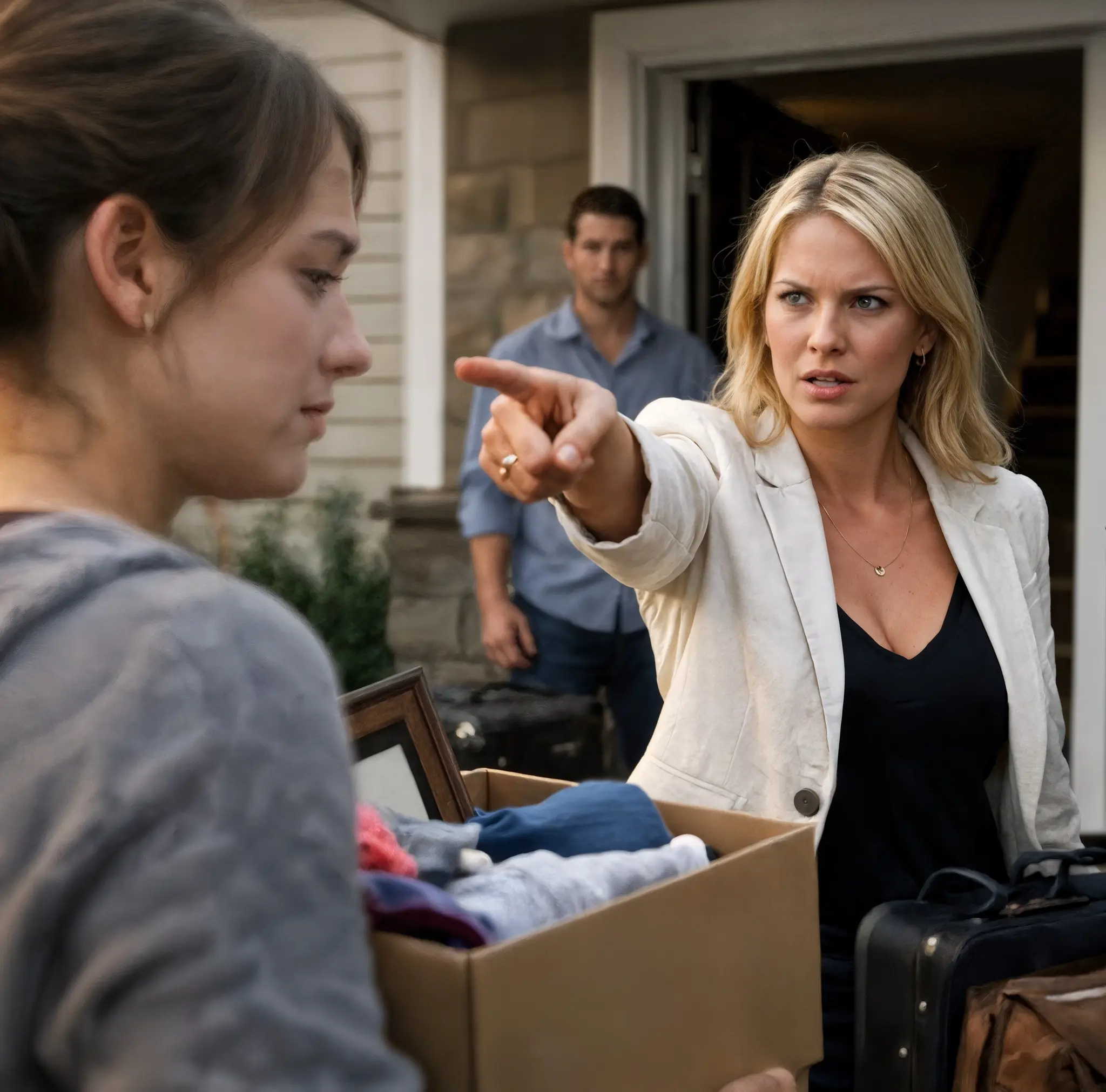
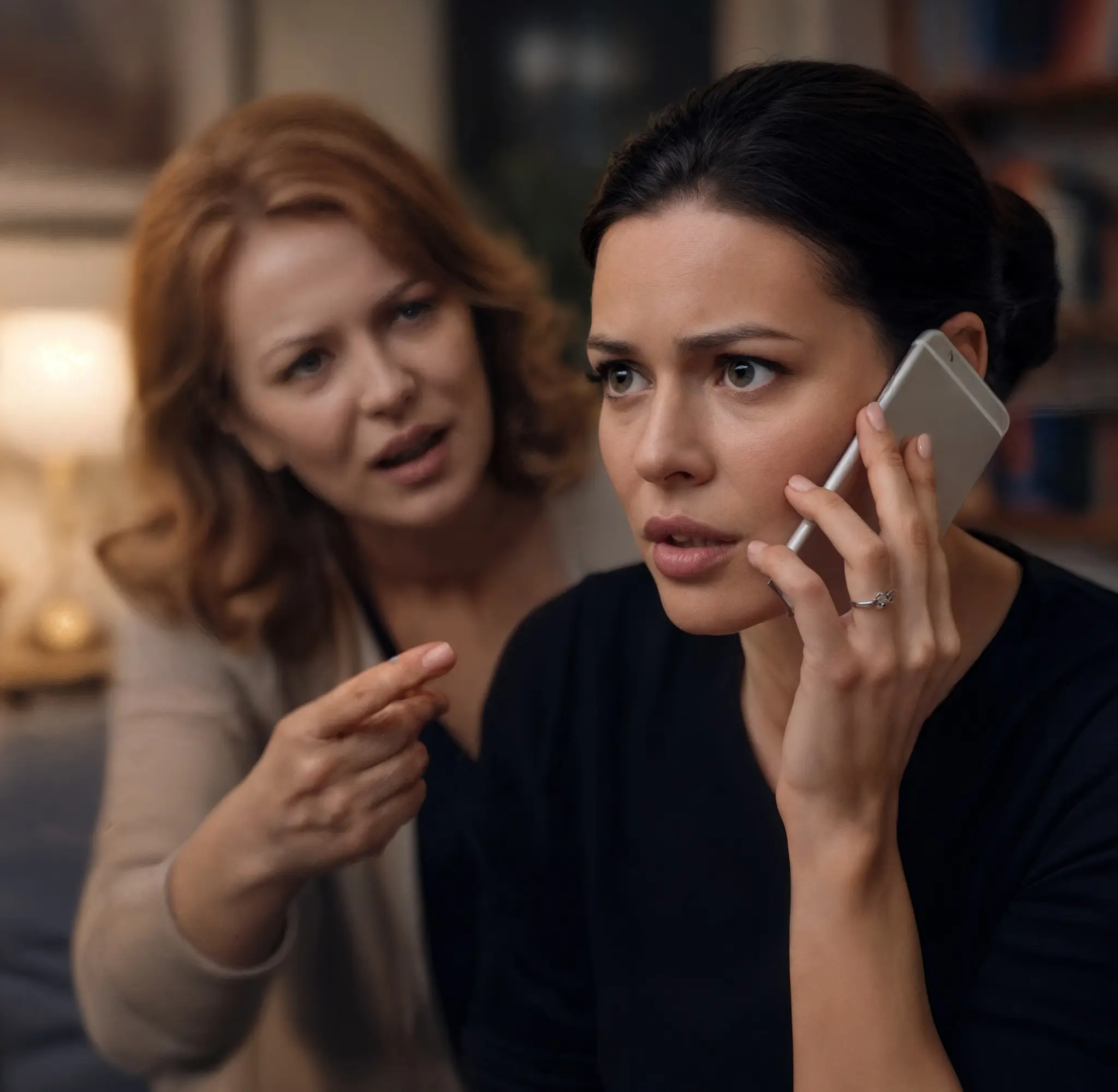
— Don’t go to work tomorrow. Just trust me and stay home. — my neighbor warned me, shaking with fear.
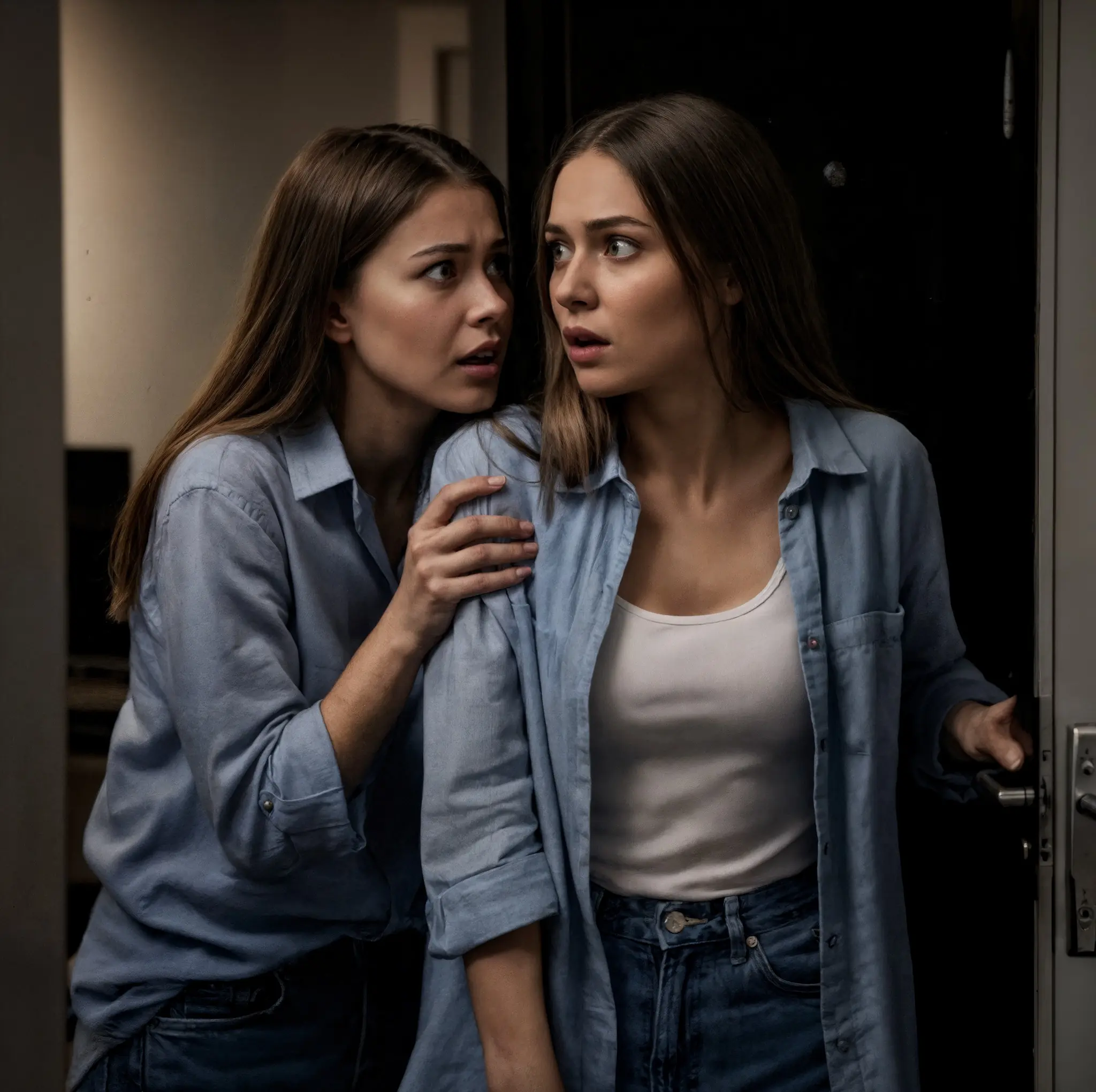
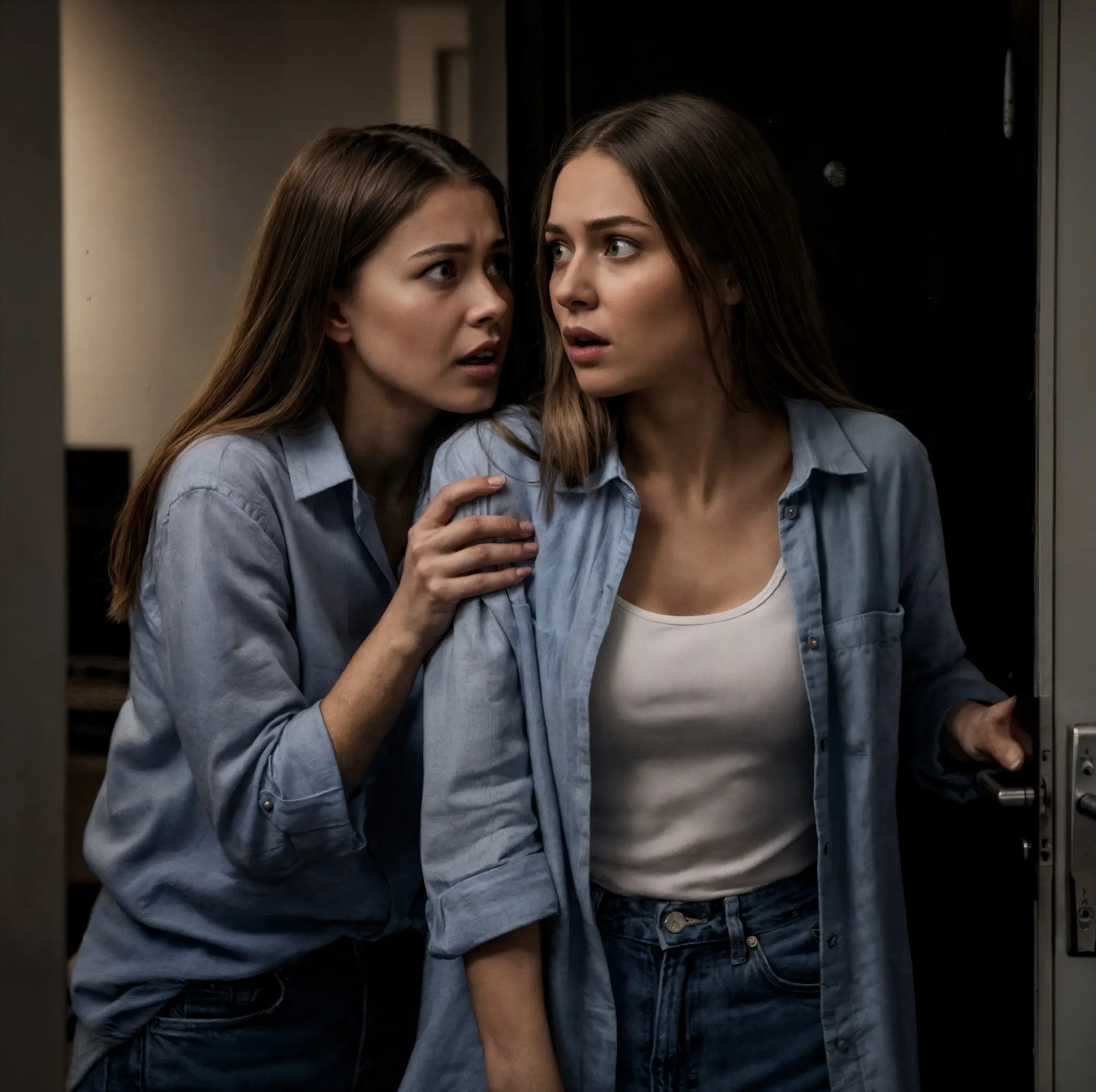
The knock on my door came exactly at midnight. I knew it for sure—I’d just checked my phone. I couldn’t fall asleep again, rolling from side to side for almost an hour, thinking about tomorrow’s team briefing.
At first I decided not to answer. Who comes by at a time like that? But the knocking came again—insistent, yet not aggressive. More frantic than anything.
“Liza, it’s me—Katya. Please open.”
My neighbor from the fifth floor…
We’d greeted each other in the elevator, sometimes traded a couple of words about the weather or the building repairs, but we weren’t close. She was an ordinary thirty-something Muscovite, always rushing somewhere with a phone pressed to her ear. She worked—if I remembered right—in some IT company.
I slipped on a robe and opened the door. Katya stood there in pajamas and slippers, hair messy, eyes red-rimmed. Her phone was clenched in her hand like a lifeline.
“Sorry to wake you,” she started, not even waiting to be invited in. “I know how this looks, but I have to tell you something. It’s important.”
“What happened?” I let her into the entryway. “You look like you’ve seen a ghost.”
“Don’t go to work tomorrow,” Katya blurted, staring straight at me. “Just trust me and stay home!”
I blinked. It was the last thing I expected to hear.
“What? Katya, are you alright? Should I call a doctor?”
“I’m fine, it’s just…” She swallowed, still shaking. “You’ll understand closer to lunch. Liza, I’m serious. Don’t leave the apartment tomorrow. At all. Call in sick, invent whatever you need—but don’t go to work.”
We stood facing each other in the narrow hallway, and for the first time I really looked at her. Normally she seemed calm and steady. Now she looked disoriented and terrified.
“Why are you telling me this?” I asked. “We barely know each other.”
“Because…” Katya faltered and rubbed her forehead nervously. “Because I have to. You’re a good person. You always smile in the elevator, and once you helped me carry my bags when I’d done a big grocery run for the week. Remember? About two months ago.”
I vaguely did. The elevator had broken, we climbed the stairs, and she’d had enormous grocery bags. I’d just done the neighborly thing.
“Katya, explain properly. What’s supposed to happen tomorrow?”
She shook her head.
“I can’t. But please believe me. Just stay home. And tomorrow evening—if you want—come over. I’ll tell you everything.”
“Do you realize how that sounds?” I said. “I have an important meeting tomorrow. I’ve been preparing for it for three weeks. A new project, a big budget…”
“Liza!” Katya grabbed my hand. Her fingers were icy. “I’m begging you.”
We were silent for several seconds. I studied her face, trying to figure out what I was dealing with. A panic episode? A breakdown? Or did she truly know something I didn’t?
“Alright,” I said finally. “I’ll try.”
Katya exhaled, visibly relieved.
“Thank you. Really—thank you so much.”
She turned and headed for the door.
“And don’t go outside at all. Not until evening. Promise?”
“I promise I’ll do my best.”
After she left, I lay awake for a long time, replaying her words and that look in her eyes.
What could she possibly know that I didn’t? Maybe my company was planning layoffs? But what did that have to do with “don’t go out at all”?
At six in the morning, my alarm rang as usual.
I got up, made coffee, sat down for breakfast—and caught myself checking my phone every few minutes. The unease wouldn’t let go.
At 7:30 I finally messaged my boss that I was feeling unwell and wouldn’t come in. I hate lying, but something about Katya’s behavior had hooked into me.
Maybe instinct…
The day dragged, painfully slow.
I tried to keep busy: sorted through my closet, washed the windows, even started reading a book I’d bought last year and never opened.
But my thoughts kept snapping back to the midnight visit.
At ten, my friend Oksana called.
“Why are you sitting at home? Sick?”
“Something like that. How do you know?”
“Because I work near your office. I wanted to have lunch together, stopped by to invite you—and you weren’t there.”
“Listen… is everything calm in your area? Nothing strange happening?”
“Seems like a normal day. Liza, are you sure you’re okay? You sound tense.”
I didn’t tell her about Katya. I didn’t fully understand what was going on myself.
By noon I couldn’t stand it anymore. I decided I’d get dressed and go to the office. I mean—what could possibly happen in broad daylight in central Moscow?
But then someone knocked again.
This time it was Aunt Zina, the elderly neighbor from the third floor, carrying a tray of pies.
“Lizochka, dear, I heard you weren’t feeling well. Here—cabbage pies, still hot.”
“Thank you so much. Come in.”
Aunt Zina walked into the kitchen, set the tray on the table, and gave me a strange look.
“Katya came to you last night, didn’t she?” she asked suddenly.
“How do you know?”
“I heard the door slam. My sleep is light these days,” she said, then added after a pause, “Good thing you listened to her.”
A shiver ran down my spine.
“Aunt Zina… do you know something?”
The old woman shook her head.
“I don’t know anything. But Katya is… special. She has this… how do I put it… a sense. Remember two months ago when she told everyone in the building to stock up on water? Said it would be shut off for a week. Nobody believed her—she was hauling three-liter jars upstairs. And then a pipe really did burst, and we went four days without water.”
I vaguely remembered the story. Everyone had joked about Katya’s “overreacting.”
“So what—she’s psychic?”
“Oh no, don’t be silly. She’s just a normal girl, works as a programmer. Only sometimes… she knows things she shouldn’t. Her intuition is very strong.”
After Aunt Zina left, I felt completely thrown. One thing was a bizarre request from a neighbor I barely knew; another was realizing people who’d known her for years actually believed her.
At one o’clock, an unknown number called.
“Elizaveta Sergeyevna Volkova? This is Senior Lieutenant Petrov, police. Could you come in to give a statement?”
My heart dropped into my shoes.
“A statement? About what?”
“This morning there was an incident in the building where your office is located. No one was hurt, but we need to speak with employees of Alliance-Project.”
“What kind of incident?”
“We don’t discuss details over the phone. When can you come?”
I looked at the clock: exactly 1:00 PM.
“What happened?” I pressed. “I’m on sick leave today—I’m at home.”
“All the better. Then it didn’t affect you directly. But we still need to talk. Would tomorrow morning work?”
“Yes.”
After the call, I sat at my kitchen table for half an hour, staring at nothing. Katya knew. Somehow she knew something would happen at my office—and she warned me.
But how? And why me?
I tried calling my coworkers, but their phones either went unanswered or were unreachable. The corporate chat was silent too—the last messages were from last night.
At four, I couldn’t take it anymore and went up to the fifth floor.
Katya opened quickly, as if she’d been waiting for me. She looked much better than she had at midnight, but there was still a guarded tension in her eyes.
“Come in,” she said simply. “Tea?”
“Yes, please. The police called me,” I said, sitting on her couch. “Something happened at our office.”
Katya nodded, pouring tea from a thermos.
“A collapse. A floor slab on the eighth level couldn’t hold. Right above your office.”
“What?!” I shot to my feet. “And people? Was anyone hurt?”
“No. They got lucky. The building was evacuated at 9:30, right after an engineer noticed cracks in the ceiling. The slab fell at 11:40.”
I sank back onto the couch, trying to process it. If I’d gone to work like usual…
“How do you know all this?” I asked. “And how did you know beforehand that something would happen?”
Katya was quiet for a moment, then sat down across from me.
“I didn’t know exactly what would happen. But I knew something would. And I knew it would involve your building.”
“So you’re… clairvoyant?”
“No.” Katya gave a bitter half-smile. “I’m a hacker. Or I used to be. Now I work in information security.”
“And what does that have to do with a collapse?”
“A month ago I was working on a project—doing a security audit for an insurance company. During that job I had to study their real-estate database. And I stumbled onto something… interesting.”
Katya stood up, went to one of her computers, and pulled something up on the screen.
“See these documents? Building condition assessments. The official conclusions say everything is fine. But these files—these are the real engineers’ reports. They were buried inside archives, but I found them.”
Tables, diagrams, photos of cracks in concrete flickered across the monitor.
“Your building had been classified as high-risk for two years. Microcracks in the slabs, loads beyond the allowable limits, reconstruction violations. But the management company and the insurers buried it. It was cheaper to pay off experts than to do a proper overhaul.”
“You’re saying they knew a collapse was possible and stayed quiet?”
“Exactly!” Katya turned to me. “And last night I learned that today a commission from city hall was supposed to come—an unscheduled inspection. Someone finally decided to push an investigation through.”
I listened, feeling cold spread through me.
“So the collapse wasn’t an accident?”
“Hard to say. Maybe a coincidence. Or maybe someone decided it was better for the building to ‘fail on its own’ than to have it shut down for violations. Fewer questions that way.”
“And you knew all of that ahead of time?”
“Not all of it. I only knew the building was dangerous—and that something could happen today. That’s why I came to you.” Katya looked toward the window. “Honestly, I thought you wouldn’t believe me and would tell me to get lost.”
We sat in silence.
I tried to swallow everything she’d just told me. Someone had been gambling with people’s lives for years to save money. And my neighbor—the one I barely knew—had risked looking insane just to keep me alive.
“Why did you help me?” I finally asked. “We’ve hardly spoken.”
“I don’t know,” Katya admitted. “Maybe because you’re the only person in this building who greets me like you actually mean it. Or maybe because when you have information that can save someone, staying silent feels like a crime.”
“And what are you going to do with those documents?”
Katya smiled, and for the first time I saw something close to satisfaction in her eyes.
“I already sent them. To the prosecutor’s office, to the Investigative Committee, and to journalists. Anonymously, of course. I think tomorrow or the day after, things are going to get very… interesting.”
The next day I went to the police station anyway.
Our office building was cordoned off. People in hard hats moved around, taking photos, measuring things. It was unsettling—especially when you realized that yesterday morning you could have been inside.
Senior Lieutenant Petrov looked me over carefully and motioned for me to sit.
“Tell me about your job at the company,” he said. “How long you’ve worked there, whether you knew anything about problems with the building.”
I told him everything I knew: that I’d sometimes heard creaks above the ceiling, that a crack had appeared in the restroom wall last year but was quickly plastered over, that the management company always brushed off tenants’ complaints.
“And why didn’t you come to work yesterday?” Petrov asked. “Your note says you had a respiratory infection, but you don’t look sick.”
I hesitated. I didn’t want to mention Katya—I was afraid it could hurt her.
“I really didn’t feel well. By evening it got better.”
“I see,” the investigator said, writing something down. “If you remember anything else important, call us.”
On my way out, Oksana called.
“Liza, have you seen the news? They’re writing about your building!”
At home I opened the internet. Several major outlets had already published pieces about the incident. But they weren’t just short updates about an emergency—reporters were digging deeper.
“Collapse in central Moscow: negligence or intent?” one headline read.
“Sources in law enforcement say there are documents indicating that the building’s condition had raised concerns as far back as two years ago…”
Another article was even harsher: “A cover-up scheme: how management companies hide violations at the expense of human lives.”
It listed specific numbers, names—even photos of the very assessments Katya had shown me.
That evening I went back upstairs.
“Did you read the news?” I asked when she let me in.
“I did,” Katya said. “And yes—I sent everything.”
“And you know what? It’s already working. Investigators searched the management company this morning. By evening, the director was placed under travel restrictions.”
Katya looked energized, but I noticed her hands tremble slightly.
“Aren’t you scared?” I asked. “What if they figure out it was you who leaked it?”
“I am,” she admitted. “But I couldn’t stay quiet. And it’s not only your building. They’ve got about twenty other sites across Moscow in the same condition—apartment blocks, offices, malls. If no one raised the alarm now, sooner or later somebody would really get hurt.”
“So what happens to those buildings now?”
“They’ll inspect all of them. Where needed, they’ll close them for repairs. In some cases, people may have to be relocated. Yes, it’ll be messy—but they’ll be alive.”
“You know what shocked me the most?” I said. “Not that you found out about the building. But that you chose to warn me. That was risky. I could’ve thought you were crazy, or worse—I could have told someone you were digging around in private databases.”
Katya shrugged.
“What else could I do? Know someone is walking toward possible death and say nothing? I’d blame myself for the rest of my life.”
“Not everyone would do that.”
“I think everyone would,” she said softly. “It’s just that not everyone has the information.”
Right then her phone rang. Katya glanced at the screen and frowned.
“Hello?” Her voice turned cautious. “Yes, it’s me… What? When?.. I see. Thank you for warning me.”
She ended the call and looked at me with frightened eyes.
“That was a former colleague from the insurance company. He says there was a search there today too. And he overheard people in the smoking area—someone in management mentioned my last name.”
The next few days passed in tense ожидание.
Katya barely left her apartment, and I kept going up to check on her—sometimes with pies, sometimes just to ask how she was holding up. In that single week we became closer than we had in months of being mere neighbors.
On Wednesday evening she opened the door glowing.
“Liza, news!” she practically pulled me inside. “The Investigative Committee called me—officially. They want a statement. I’m being brought in as a witness.”
“Is that good or bad?”
“Great,” she said. “It means the case is serious if they’re not afraid to involve a hacker. And also… they offered me a job.”
“Where?”
“At the prosecutor’s office. Computer crime specialist!” Katya laughed. “Can you imagine? I spent my whole life afraid I’d end up in prison for hacking, and now they’re inviting me to help catch real criminals.”
We celebrated with a bottle of wine I brought from my stash. Snow fell outside, and Katya’s apartment felt cozy despite the glow of all those screens. For the first time in months I felt like I had a real friend.
“And what about our company?” I asked. “Where are we supposed to work now?”
“You already are,” Katya said. “They rented a temporary office across town. Oksana told me—she asked your boss.”
And sure enough, the next day Mikhail Petrovich called and gave me the new address.
“Liza, do you happen to have contacts in the press?” he asked at the end of the call. “Reporters somehow learned all our internal details—even about the project we discussed at a closed briefing.”
“No,” I lied. “How would I have press contacts?”
A month later the case had grown huge. Not only the director of the management company was detained, but several officials who had covered up violations as well. The city launched mass inspections, and they found seventeen more buildings in dangerous condition.
Katya looked genuinely happy. She loved the new job. She told me how she helped investigators untangle digital fraud, how she found hidden documents and traces of cybercrime.
“You know what feels best?” she said one evening as we drank tea in her kitchen. “I finally feel like my skills matter. Before, I hacked systems just because I could. Now I do it to restore fairness.”
“Aren’t you scared dealing with people like that?”
“At first I was. Then I realized they’re just regular people like us—just with a different job. And they really do want criminals to answer for what they’ve done.”
In early spring, the trial took place.
Katya was called as a witness. She was very nervous. Of course I went with her to support her.
The director received a suspended sentence and a massive fine. His deputy got two years. The officials were convicted too. And most importantly, the court ordered the company to pay for repairs to all the problem buildings out of its own funds.
“Justice won,” Katya said as we left the courthouse. “Honestly, I didn’t fully believe it would turn out like this.”
“I did,” I said. “I believed in you.”
We laughed and walked home.
Ordinary life waited ahead: work, friends, plans for the future. But now I knew for sure—when something goes wrong, there will always be someone who refuses to look away. Sometimes that person lives one floor above you and is willing to risk their own peace of mind for your safety.
And that, I think, is the best thing you can know about the world you live in.