Woman Discovers Husband’s Long-Hidden Secret After Years as His Caregiver
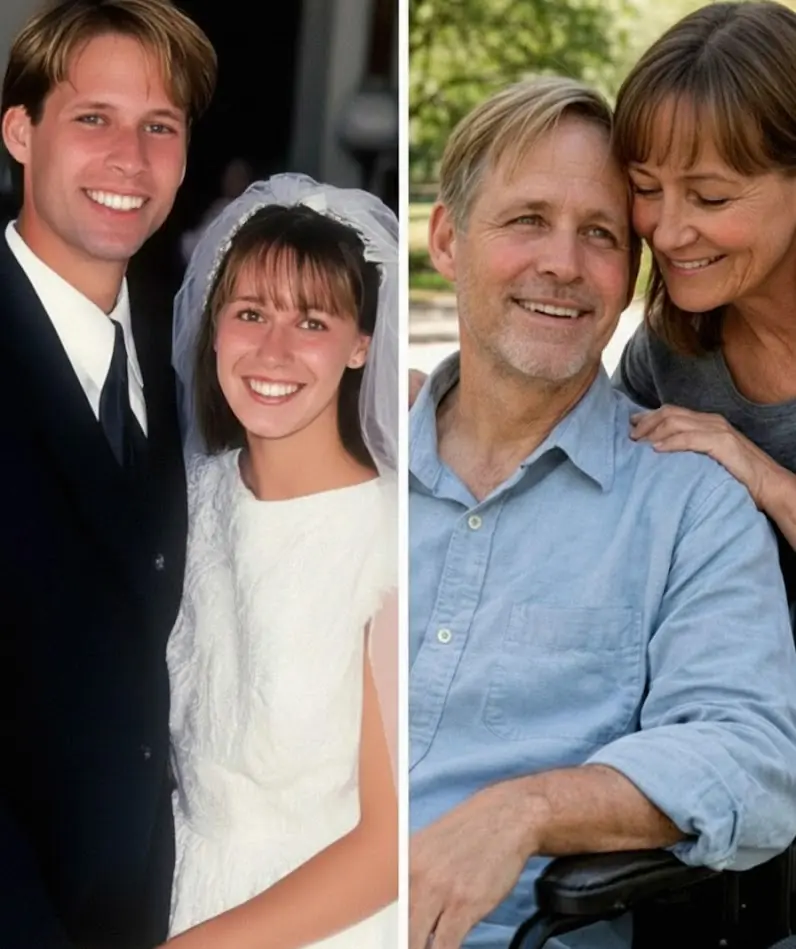
A woman has shared a deeply personal story of betrayal after discovering that the husband she had cared for over decades had been concealing his true physical condition.
Now 57, she recalls how her life changed when she was 28, shortly after her husband, Robert, fell from a ladder while repairing a gutter on their garage roof. The accident resulted in a cracked vertebra and nerve damage, leaving him in chronic pain and with limited mobility.
Doctors warned of a long recovery and possible permanent impairment. Physical therapy followed, along with years of medical appointments and medication schedules. Over time, the woman became her husband’s primary caregiver.
“I learned how to manage his prescriptions and organize our lives around his pain,” she said. “I supported him when he felt he had lost his independence.”
Friends described her as devoted, and family members praised her selflessness. The couple decided not to have children, believing it would be unfair to raise a family while managing constant health challenges. She structured her work schedule and daily routine entirely around her husband’s limitations.
“He used a cane most days and sometimes a wheelchair,” she said. “We installed a stair lift. I built my world around what he could and couldn’t do.”
Last Thursday, everything changed.
After leaving work early due to a cancellation, she returned home expecting to find her husband resting upstairs. Instead, she heard unfamiliar sounds.
“They weren’t the slow, uneven steps I knew,” she said. “They were normal footsteps.”
From the hallway, she watched as her husband walked down the stairs without a cane, without hesitation, and without visible pain. He moved easily and laughed as he spoke with another woman inside their home.
“I stood there frozen,” she said. “In that moment, I realized the life I had organized around his illness might not have been real.”
The woman has not shared what she did immediately after the discovery, but says the emotional impact was overwhelming.
“For years, I believed caring for him was love,” she said. “Now I don’t know where devotion ended and deception began.”
Her story has sparked discussion online about emotional manipulation, caregiver burnout, and the unseen burden placed on partners who assume long-term medical responsibility.
Relationship counselors note that trust is central to caregiving partnerships. When illness becomes part of a marriage, honesty is critical, they say, because the healthy partner often reshapes their entire life around the other’s needs.
“This isn’t just about walking,” one therapist commented. “It’s about whether the foundation of the relationship was truthful.”
The woman says she is now questioning not only her marriage, but the years she devoted to supporting a man she believed could not live independently.
“I don’t regret loving him,” she said. “But I regret not knowing the truth sooner.”
Her story continues to resonate with many who see it as a warning about how easily love and sacrifice can be exploited when trust is broken.