We Brought Walter Home to Say Goodbye—He Chose to Stay
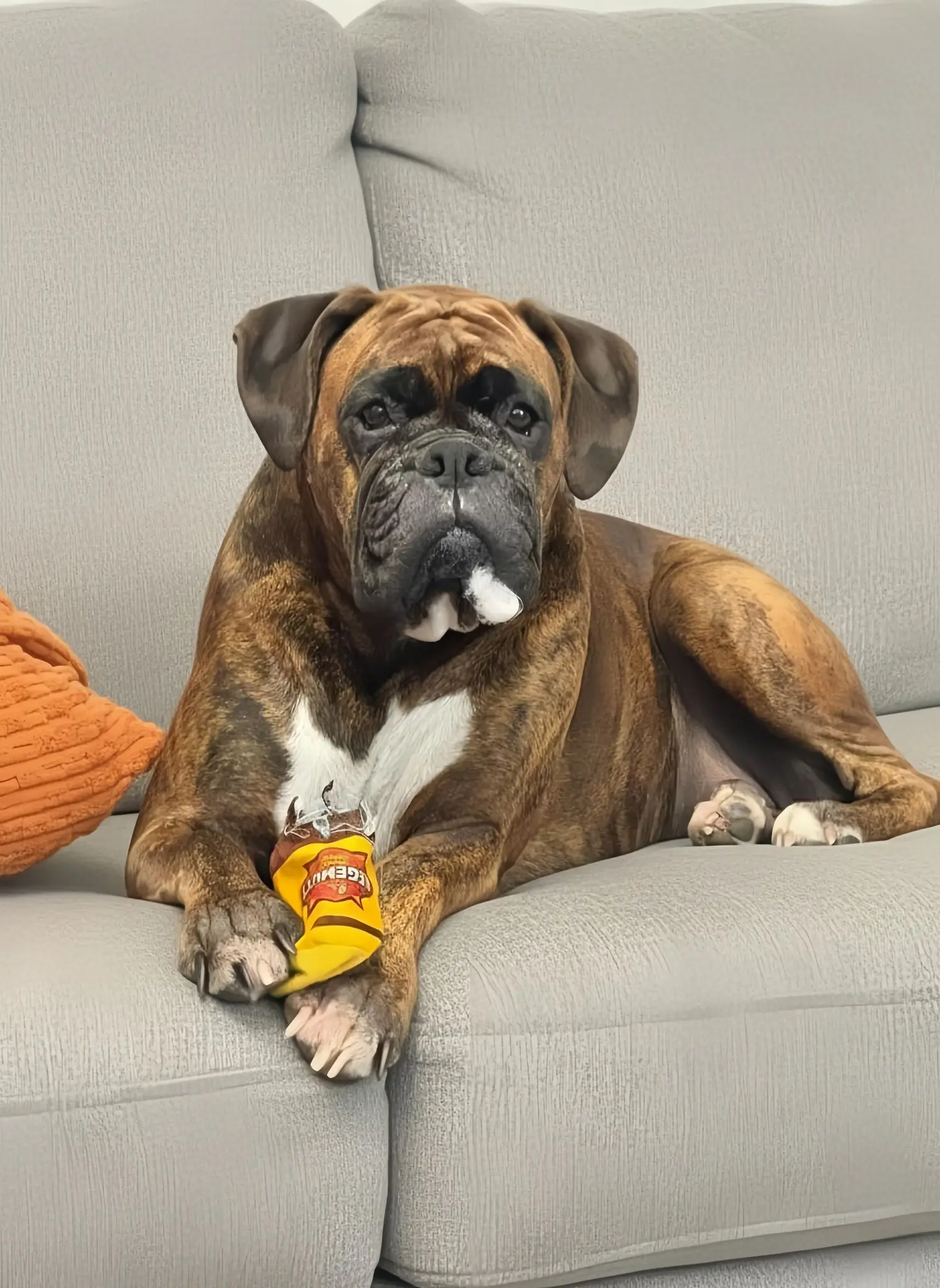
We adopted him to say goodbye.

He was 15.
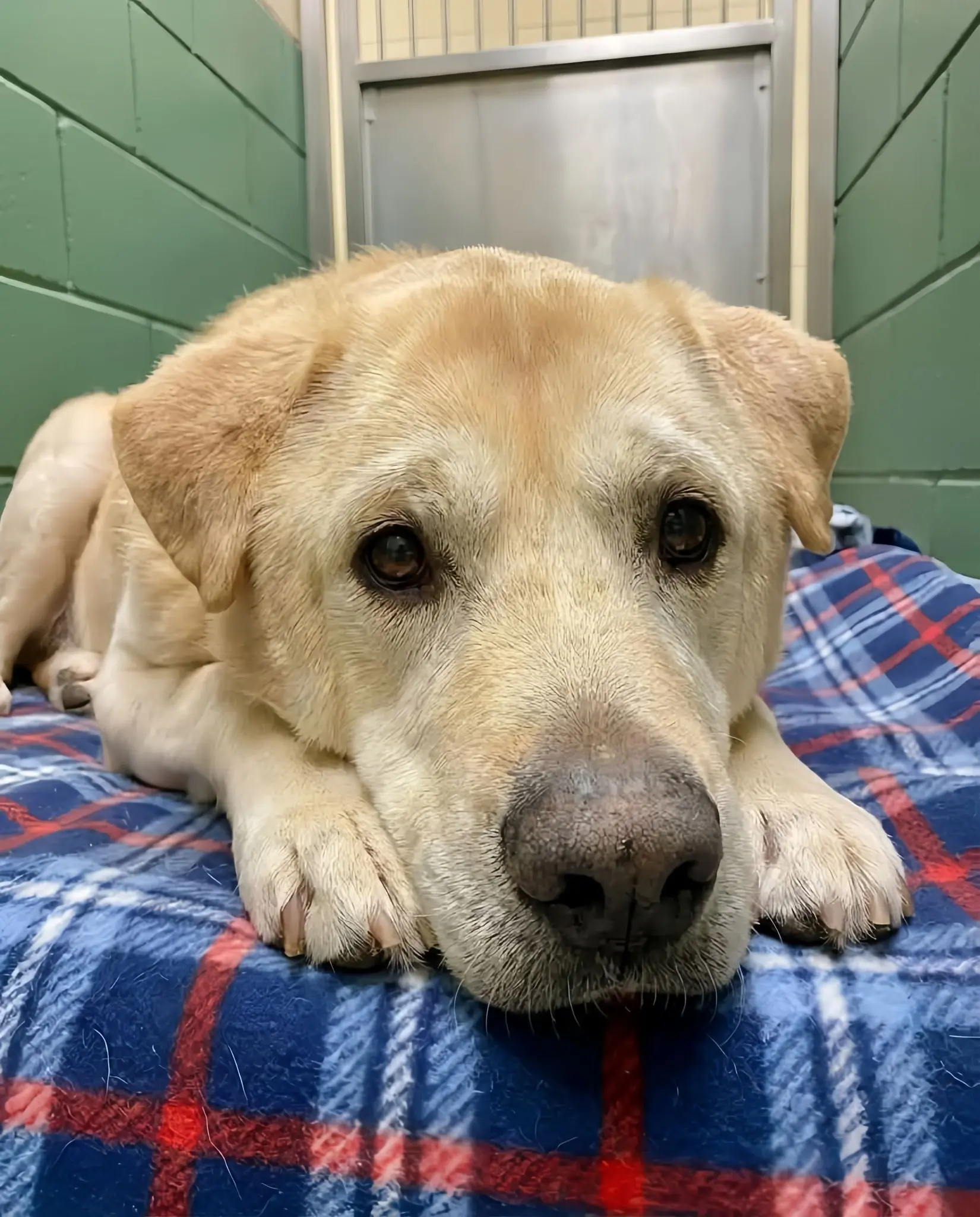
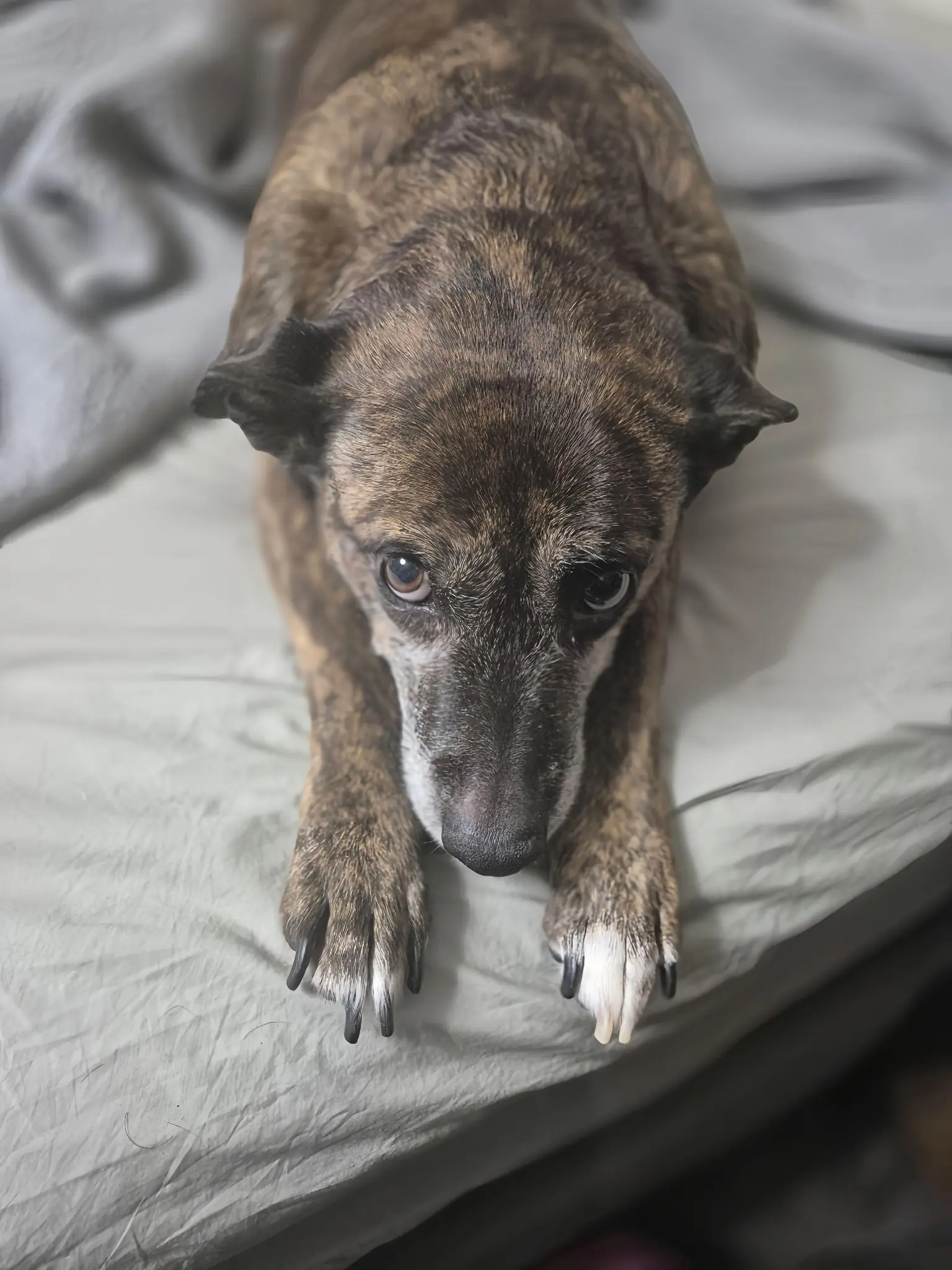
A senior brindle Boxer with tired eyes and slow, careful steps.
The shelter labeled him “hospice foster.”
His family said he slept too much. That moving was hard for him.
So we adjusted our home for an ending.
Soft beds everywhere.
Ramps instead of stairs.
Quiet days. Peaceful nights.
We thought we were giving him comfort for his final chapter.
But Walter wasn’t done yet.
The first week, he slept deeply — the kind of rest that comes when fear finally disappears.
The second week, something shifted. He understood this place wasn’t temporary.
This was home.
Then he found the toy.
Old. Faded. Soft.
From that moment on, it never left his side.
Suddenly, the “fragile” dog was gone.
In his place was a Boxer trotting proudly through the house, toy in his mouth like a trophy.
The dog who “slept all day” now woke us early, ready to live.
At night, he held that toy close, as if it were proof this life was real.
That’s when we realized the truth.
Walter wasn’t dying.
He was lonely.
He was tired of cold floors and being forgotten.
Now, at 15, he steals food when we turn our backs.
He races to the yard — and sometimes beats me.
And he still carries that same toy.
We didn’t fail hospice fostering.
We did something better.
We gave an old dog a reason to stay —
and he showed us that love doesn’t just add days to a life.
Sometimes, it brings life back.

The shelter staff warned us not to expect miracles. “Comfort care,” they said gently. “Make him comfortable. Keep his days soft.” We nodded, prepared for heartbreak. Walter arrived quiet and watchful, stepping carefully into our house as if unsure how long he’d be allowed to stay. We spoke in low voices. We moved slowly around him. We let him set the pace. The first few days, he barely explored. He chose a bed near the living room window and slept like someone who hadn’t felt safe enough to truly rest in a very long time. It wasn’t the restless sleep of decline. It was deep, restorative, healing. We began to notice small things. His appetite improved. His eyes followed us with curiosity instead of resignation. When he realized the ramps weren’t obstacles but invitations, he used them confidently. Every morning he seemed just a little stronger, a little more certain that this was not a stopover. This was permanence.
And then came the spark. The toy wasn’t fancy — just a worn, forgotten thing in a basket. But the moment he picked it up, something in him ignited. He carried it everywhere like a declaration. Not fragile. Not finished. Alive. The hospice label quietly faded into irrelevance. What he needed wasn’t an ending; it was belonging. We stopped counting his days and started celebrating them. He greets us at the door now, tail wagging with determination. He insists on supervising meals. He naps in sunbeams with the satisfied sigh of someone who has claimed his space. Walter didn’t need us to prepare him for goodbye. He needed us to remind him that he was still wanted. And in return, he taught us something profound — that sometimes what looks like decline is just loneliness. What looks like frailty is simply a heart waiting to feel safe again. At fifteen, Walter is not surviving his final chapter. He is writing a new one.