The Dog Who Learned That Safety Can Begin With Patience
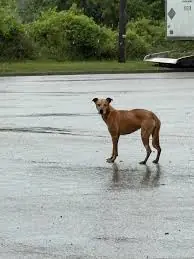
At first, Dobby would not let anyone touch him.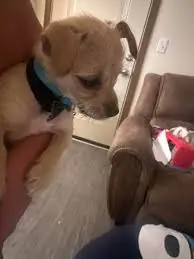
He hovered at a distance, ribs showing through patchy fur, eyes locked on every movement. Hunger pulled him forward, fear dragged him back. He would inch closer for food — just one step, sometimes two — then panic and run away again as if he had crossed an invisible line.
For rescuers, it was immediately clear: Dobby had not learned that humans could be kind.
He had learned the opposite.
A Body Showing What Words Never Could
No one knows exactly where Dobby came from.
What rescuers did know was written across his body. His fur was thin and broken, missing in places where skin showed through. His frame was painfully light. His movements were sharp and reactive, as if the world itself felt dangerous.
Dogs are social animals by nature. They are wired to seek connection, guidance, and safety from others. When a dog avoids people despite starvation, it suggests a history shaped by fear rather than neglect alone.
Dobby wanted food.
But he expected harm.
The Hardest Kind of Rescue
Rescuers often say the most difficult animals to help are not the aggressive ones — but the terrified ones.
Dobby did not growl.
He did not bark.
He did not snap.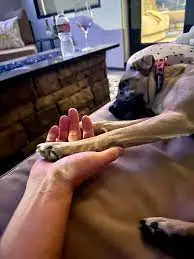
He simply fled.
Every attempt to get closer made him retreat. Every movement caused his muscles to tense. His entire body was always ready to escape.
So the team changed their approach.
They stopped trying to move toward him.
Patience Instead of Pressure
Rescue work is often imagined as dramatic — nets, urgent interventions, quick saves. But with Dobby, urgency would have destroyed any chance of trust.
Instead, rescuers slowed everything down.
They placed food down and stepped back.
They avoided eye contact.
They sat on the ground and waited.
Sometimes, they left entirely.
Progress was measured not in steps forward, but in moments where Dobby did not run quite as far away as before.
Days passed like this.
Then more days.
The Quiet Language of Respect
Dogs communicate constantly through body language. They read posture, tension, breathing, and intention far more clearly than words.
By backing off whenever Dobby panicked, rescuers sent a powerful message — one he had likely never received before.
You are allowed to say no.
You are allowed space.
You are safe here.
At first, Dobby did not believe it.
But slowly… he noticed something strange.
No one chased him.
Hunger Without Trust
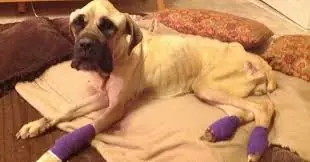
Dobby’s hunger never disappeared overnight.
He would approach the food bowl cautiously, lower his head, grab a few bites, then retreat again. Eating was rushed. Every sound made him flinch.
Fear burns energy. It keeps animals in survival mode, preventing rest, healing, and growth. Until Dobby felt safe, his body could not fully recover.
Rescuers understood this.
So they stayed consistent.
Same routines.
Same voices.
Same calm presence.
Day after day.
The First Signs of Change
The first breakthrough was not physical.
It was stillness.
One day, Dobby approached the food — and did not immediately run away.
He froze instead.
Then, after a few seconds… he kept eating.
It was a small moment. Easy to miss. But for the people watching, it meant everything.
Fear was loosening its grip.
Learning That Touch Does Not Always Hurt
Touch came much later.
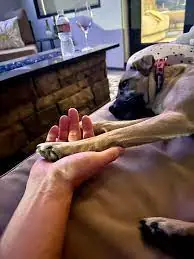
At first, even an outstretched hand sent Dobby scrambling away. Rescuers never forced it. They waited for permission that came in subtle ways — a pause instead of flight, a glance instead of panic.
When touch finally happened, it was brief.
A fingertip brushing fur.
A second of contact.
Then space again.
Dobby trembled. But he did not run.
That was enough for that day.
Healing Takes Time — and Safety
As weeks passed, Dobby’s body began to change.
With regular food and reduced stress, his coat slowly started to grow back. Bald patches filled in. His skin healed. His eyes softened.
Fear had kept his body in constant alert. Safety allowed it to repair itself.
This is something rescuers see often: healing accelerates when animals feel secure. Medicine matters — but safety matters just as much.
Trust Is Built, Not Given
Dobby’s trust did not arrive all at once.
It came in layers.
First, he trusted that food would appear.
Then, that humans would not chase him.
Then, that touch did not always mean pain.
Each layer rested on the one before it.
And every time fear resurfaced, rescuers stepped back again.
They never punished him for being afraid.
The Turning Point
One day, Dobby made a choice no one expected.
Instead of waiting for food to be placed down, he followed the person carrying the bowl.
Not closely.
Not confidently.
But he followed.
That single decision marked a shift.
Dobby was no longer just surviving — he was choosing connection.
A Dog Relearning the World
As Dobby’s confidence grew, so did his curiosity.
He began exploring his surroundings.
He lingered near people longer.
He allowed longer touches.
For the first time, he rested near a human instead of keeping constant distance.
Rest is a sign of safety.
Animals do not rest where they expect harm.
The Person Who Never Gave Up
Among the rescuers was one person who stayed especially consistent.
Same presence.
Same patience.
Same calm energy.
Day after day, they showed up — even when progress felt invisible.
This consistency mattered.
Dogs form bonds through predictability. Knowing what to expect reduces anxiety. Over time, Dobby began to seek this person out.
Not desperately.
Not fearfully.
But intentionally.
From Rescue to Home
Eventually, Dobby transitioned from rescue to home.
Not because he was “fixed,” but because he was ready.
Ready to trust.
Ready to rest.
Ready to belong.
Today, Dobby lives with the person who never rushed him, never forced him, and never gave up. He is loved. He is safe. He is home.
His fur has grown back. His body is stronger. But the most important change is invisible.
Dobby no longer lives in constant fear.
Why Dobby’s Story Matters
Dobby’s journey reminds us of something easy to forget.
Healing does not always look dramatic.
Trust does not come on a schedule.
Love is sometimes quiet work.
In a world that often demands quick results, Dobby’s rescue succeeded because people chose patience instead.
Fear Is Not Disobedience
Too often, fearful animals are labeled “difficult” or “unadoptable.” Dobby shows how wrong that can be.
Fear is not stubbornness.
Fear is not failure.
Fear is information.
When someone listens instead of forcing change, transformation becomes possible.
What Dobby Teaches Us
Dobby did not need to be trained into trust.
He needed to be shown that he was safe.
He teaches us that:
-
Hunger does not erase fear
-
Trust grows from respect
-
Patience can change lives
And most importantly — that not giving up can be the most powerful act of love.
From Running Away to Running Home 🐶💛
At first, Dobby wouldn’t let anyone get close.
Today, he leans into love.
And that quiet transformation is proof that sometimes, the animals who run the farthest are simply the ones who have waited the longest to feel safe.
If someone is willing to wait with them… they eventually stop running. 💛