Senior Cat Missing His Tail And Teeth Was Given One Year To Live — Four Years Later, He’s Thriving In The Arms Of The Woman Who Knew He Was Hers
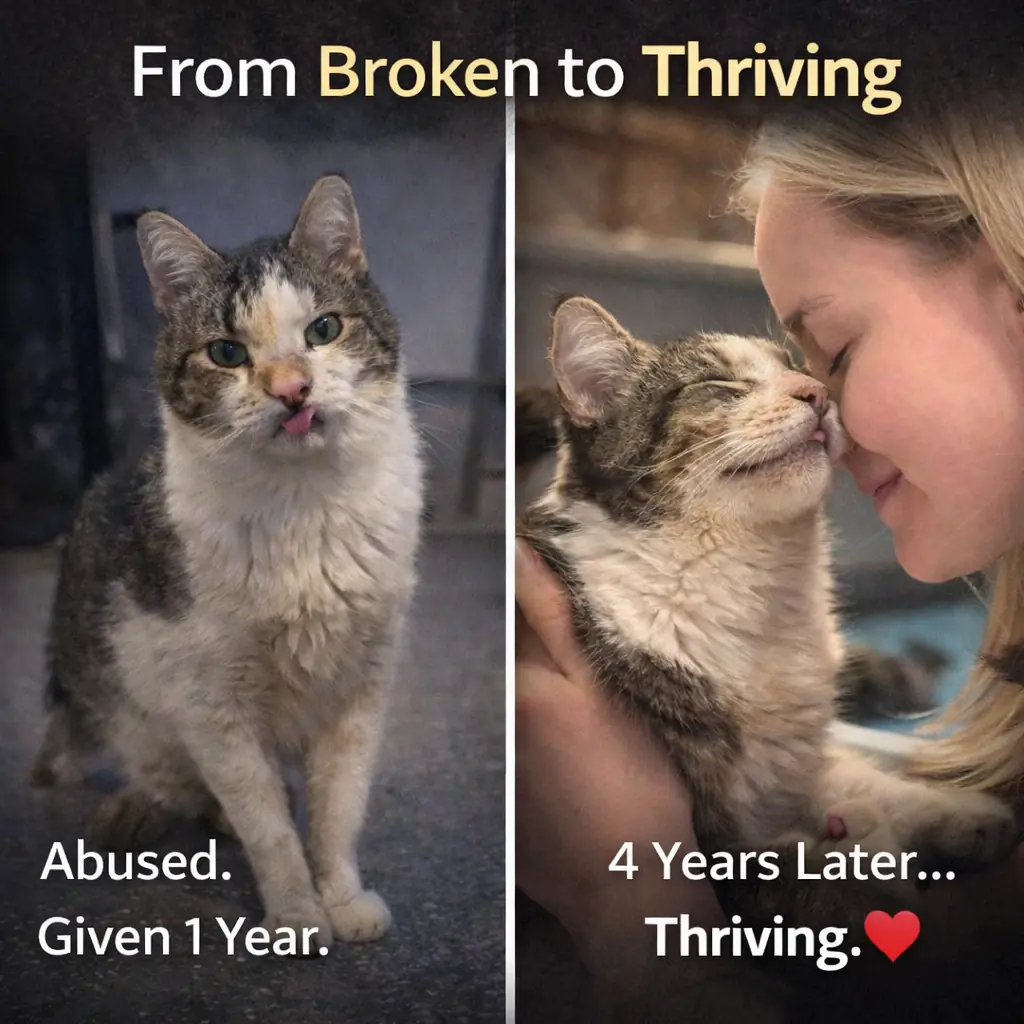
When she looked into his eyes, she didn’t see a broken cat — she saw her cat. Roman, a senior rescue missing his tail, half his tongue and all his teeth, had endured unimaginable abuse. Vets warned he might only have a year left. She decided that year would be filled with love. That was four years ago — and today, Roman is still thriving.
The Cat No One Expected To Survive
Roman didn’t look like the kind of cat most adopters rush toward.
He was older. His body carried scars. His tail was gone. His mouth permanently altered from trauma. He had no teeth at all. Eating required special care. Grooming required assistance.
And yet — his eyes were steady.
Rescue workers described him as gentle. Quiet. Observant.
He had been through neglect and abuse severe enough to permanently change his body. Some of the damage could never be reversed. But his spirit?
That was still intact.
“He Was Mine”
When she first met Roman, she didn’t hesitate.
Other visitors noticed his differences first. She noticed his gaze.
“He just looked at me,” she later said. “And I knew.”
There’s something that happens sometimes between animals and humans — a silent agreement. A recognition. Roman didn’t reach for attention dramatically. He simply waited.
And she chose him.
The Diagnosis That Changed Everything
Shortly after adoption, a veterinary examination brought sobering news.
Because of his age and prior abuse, Roman’s long-term prognosis was uncertain. Organ stress. Dental trauma. Chronic inflammation.
The vet gently prepared her:
“He may only have about a year.”
For some people, that kind of timeline would be discouraging.
For her, it clarified everything.
If Roman had one year, it would be the safest, warmest, most loved year of his life.
Learning To Care For A Special Needs Senior Cat
Caring for Roman wasn’t difficult — but it required intention.
Since he had no teeth, all meals had to be soft. Wet food was blended to an easier consistency. He ate slowly but happily.
Without a tail, his balance was slightly different, so climbing surfaces were modified.
Because of partial tongue loss, grooming assistance became part of their bonding routine. Gentle brushing sessions replaced what he couldn’t fully do himself.
Each adaptation wasn’t a burden.
It was love in practice.
From Survival Mode To Safety
The biggest transformation wasn’t physical.
It was emotional.
In the early weeks, Roman startled easily. Sudden movements made him freeze. Loud noises sent him hiding.
But slowly, trust replaced fear.
He began sleeping out in the open instead of under furniture.
He started seeking her lap.
Then one day, he did something small but monumental — he purred.
That sound changed everything.
The Year That Became Four
Months passed.
Then a year.
Roman didn’t decline.
He gained weight. His coat improved. His energy stabilized.
Follow-up vet visits brought surprising updates. While he remained a senior cat with special needs, he was stable. Comfortable. Happy.
That “one year” quietly became two.
Then three.
Now?
Four years later, Roman is still here.
Thriving.
Why Love Changes Outcomes
While medical science plays a critical role, environment deeply impacts animal health.
Reduced stress levels can:
-
Improve immune response
-
Stabilize digestion
-
Support cardiovascular function
-
Reduce inflammatory flare-ups
Roman’s case is a powerful example of how emotional security influences physical wellbeing.
He didn’t just survive because of treatment.
He survived because he finally felt safe.
The Beauty Of Adopting Senior Cats
Senior cats are often overlooked in shelters.
People worry about:
-
Shorter lifespan
-
Higher medical costs
-
Pre-existing conditions
But what many don’t realize is that senior cats often:
-
Bond deeply and quickly
-
Are calmer and affectionate
-
Require less high-energy stimulation
-
Show immense gratitude
Roman may not have had a perfect body.
But he had a perfect heart.
Living Fully — Not Counting Days
She never counted how much time he had left.
Instead, she focused on moments.
Morning cuddles.
Soft blankets.
Sunlit naps.
Gentle kisses on his forehead.
He adapted beautifully to his home routine. He even developed quirky habits — tilting his head slightly when curious, leaning into her hand for reassurance.
Each day became proof that predictions aren’t guarantees.
Redefining “Broken”
Roman’s missing tail doesn’t define him.
His lack of teeth doesn’t define him.
His scars don’t define him.
What defines him is resilience.
And what defines her is commitment.
Together, they rewrote the timeline.
Thriving — Four Years Later
Today, Roman looks completely different from the fragile cat described in that first prognosis.
His eyes are bright.
His posture is relaxed.
He sleeps confidently beside the person who chose him when others hesitated.
And perhaps most importantly — he is deeply loved.
A Reminder About Second Chances
Not every rescue story includes dramatic surgery or miraculous cures.
Sometimes the miracle is quieter.
It’s stability.
It’s routine.
It’s knowing that no one will hurt you again.
Roman was given “one year.”
Instead, he was given a life.
And he’s still living it.