Rescuers Peer Into 15-Foot Pit And Find Majestic Animal Fighting To Survive At The Bottom
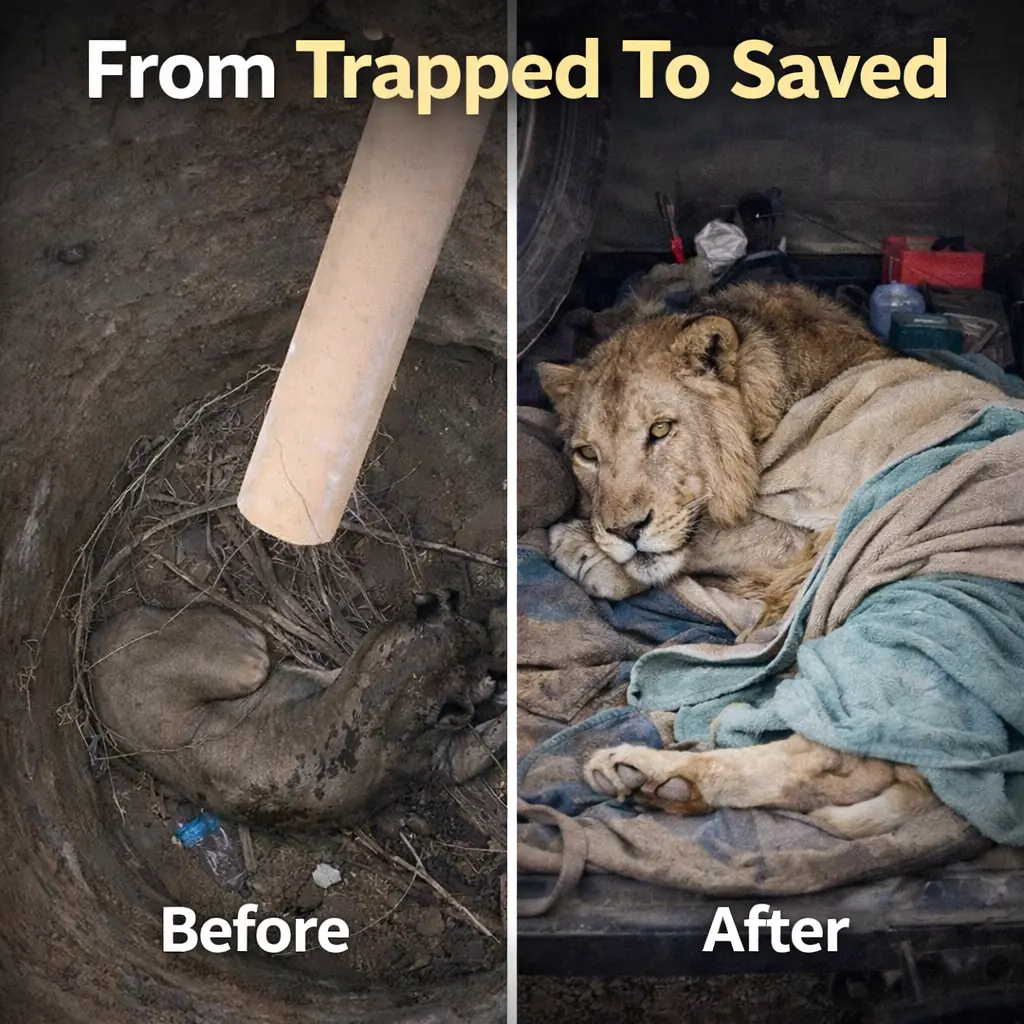
When rescuers leaned over the edge of a deep, abandoned pit, they expected to see debris — maybe trash or rainwater.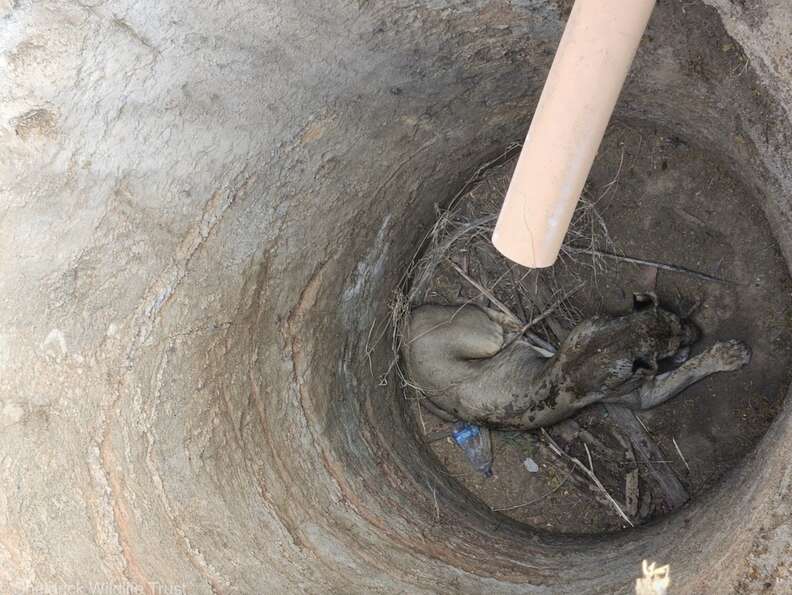
Instead, staring back at them from 15 feet below was a pair of exhausted, desperate eyes.
At the bottom of the pit lay a majestic lion — trapped, weakened, and struggling to survive.
What followed was a rescue operation filled with tension, compassion, and a race against time — proving once again how powerful human intervention can be when life hangs in the balance.
A Shocking Discovery In The Depths
The call came in unexpectedly. Someone had heard unusual sounds echoing from a large, unused pit — about 15 feet deep — located in a remote area.
When rescuers arrived and cautiously peered inside, they were stunned.
Curled against the dirt wall at the bottom was a full-grown lion. His once-proud frame was covered in mud. His body looked drained. He had clearly been trapped for hours — possibly longer.
There was no food.
No water.
No way out.
The steep, vertical walls made climbing impossible. Every attempt to leap upward likely ended in exhaustion.
For an animal built for power and dominance, this was a heartbreaking sight.
How Did He End Up There?
It’s believed the lion may have accidentally fallen while roaming. Open pits like this can become hidden hazards, especially in dry or overgrown areas.
Once inside, the drop is easy.
The escape is not.
Without immediate help, dehydration and stress could have become fatal.
Rescuers knew time was critical.
Assessing The Danger
Rescuing a wild lion is not like rescuing a domestic animal.
This wasn’t just a trapped animal.
This was a stressed predator — frightened, confused, and potentially defensive.
The team had to act carefully.
Too much noise could panic him.
Moving too slowly could cost him strength.
A strategy was formed:
-
Secure the area
-
Prepare sedation equipment
-
Lower rescue gear safely
-
Extract him without causing further injury
Every step required precision.
The Emotional Moment That Changed Everything
One rescuer later described the moment that stuck with him the most:
“When we locked eyes, he didn’t look aggressive. He looked tired.”
The lion wasn’t roaring.
He wasn’t lunging.
He was surviving.
And waiting.
That eye contact transformed the mission from a technical operation into something deeply emotional.
This was no longer just wildlife management.
This was a life at risk.
The Rescue Operation
Sedation was carefully administered from above to prevent sudden movement or panic.
Once the lion was calm, the team lowered a harness system designed to support his full body weight.
It took coordination, patience, and complete silence.
Slowly — inch by inch — they began lifting him.
Fifteen feet doesn’t sound like much.
But when you’re raising a 400+ pound animal from a vertical dirt shaft, every inch matters.
At one point, loose soil shifted. The team paused.
No one breathed.
Then — steady again.
Finally, after what felt like hours — though it was likely minutes — the lion reached ground level.
And for the first time since being trapped…
He was safe.
Immediate Medical Care
Once above ground, veterinarians quickly assessed him.
He was dehydrated.
Exhausted.
But miraculously — no major fractures.
The mud covering his body told a story of repeated attempts to climb out. His paws were worn, showing just how desperately he had tried.
He was wrapped in blankets and monitored closely.
And something remarkable happened.
As the sedation wore off, his breathing steadied.
His body relaxed.
He wasn’t fighting anymore.
He understood — in his own way — that the danger had passed.
Why Stories Like This Matter
Animal rescue stories resonate deeply for a reason.
They remind us:
-
Wildlife faces real dangers from human-made environments.
-
Simple hazards — like open pits — can become deadly traps.
-
Compassionate action saves lives.
In a world filled with distressing headlines, stories of rescue bring hope.
They show that intervention works.
That empathy matters.
That teamwork changes outcomes.
The Transformation: From Trapped To Thriving
Within days, the lion regained strength.
His posture changed.
His eyes sharpened.
The same animal who had lain helpless at the bottom of a dark pit was now alert, stable, and powerful again.
The transformation was dramatic — not just physically, but emotionally.
Stress replaced by stability.
Fear replaced by safety.
Desperation replaced by dignity.
That contrast is what makes this rescue unforgettable.
Hidden Dangers In Open Landscapes
Abandoned pits, wells, and construction sites pose serious threats to wildlife.
Many animals — not just lions — fall into these traps:
-
Deer
-
Leopards
-
Cows
-
Dogs
-
Hyenas
Prevention is just as important as rescue.
Covering unused wells.
Fencing dangerous areas.
Reporting hazards early.
These simple actions prevent future tragedies.
The Power Of Wildlife Rescue Teams
Behind every rescue like this is:
-
Training
-
Equipment
-
Courage
-
Coordination
Wildlife rescue requires balancing safety for humans and animals alike.
It’s not glamorous work.
It’s muddy.
Stressful.
Unpredictable.
But it saves lives.
A Second Chance Above Ground
The lion was eventually released back into a safe habitat area, fully recovered.
No longer trapped.
No longer fighting gravity.
Just walking — powerfully — on solid ground again.
That image alone is worth everything.
Why We Can’t Look Away
It’s easy to scroll past difficult images.
But sometimes, looking matters.
Because awareness leads to action.
And action leads to survival.
This lion’s story is proof that even in the darkest pit — literally — hope can be lowered down on a rope.
Final Thoughts
From 15 feet underground to freedom under the sky, this rescue reminds us of something powerful:
Strength isn’t just about muscle.
It’s about endurance.
And sometimes — it’s about waiting long enough for help to arrive.
Because when compassion shows up…
Even the deepest pit can become the start of a second chance.