Heard Banging On An Empty Balcony — Then They Found A Baby Bat Who Shouldn’t Have Been There
A neighbor investigating mysterious banging sounds on an empty apartment balcony made a discovery that would change a tiny life forever. Blown off course by powerful winds, a young bat had become stranded high above the ground — frightened, exhausted and unable to fly. What happened next is a heartwarming reminder that even the smallest creatures deserve compassion.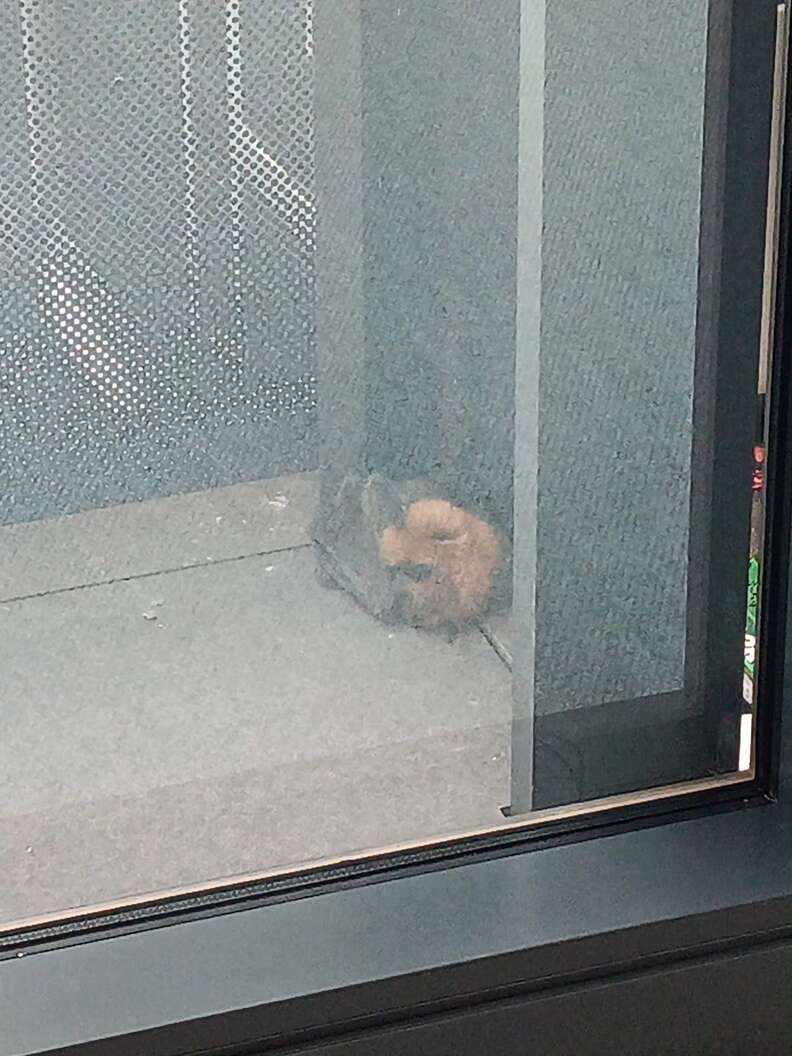
A Strange Noise In An Empty Unit
It started with a sound that didn’t belong.
Late one evening, a resident in an apartment complex noticed a repeated banging noise coming from a neighboring balcony. The unit was supposed to be empty — no one had moved in yet. At first, the sound was easy to ignore. Maybe it was something loose in the wind. Maybe construction debris.
But the noise continued.
Metal scraping. Light thuds. A soft flutter.
The neighbor stepped outside and listened more closely. The wind had been unusually strong that week, rattling railings and pushing loose objects around. But this sound felt different — almost deliberate.
Concern growing, they decided to investigate.
A Tiny Face In The Corner
When the neighbor carefully looked onto the balcony, they weren’t prepared for what they saw.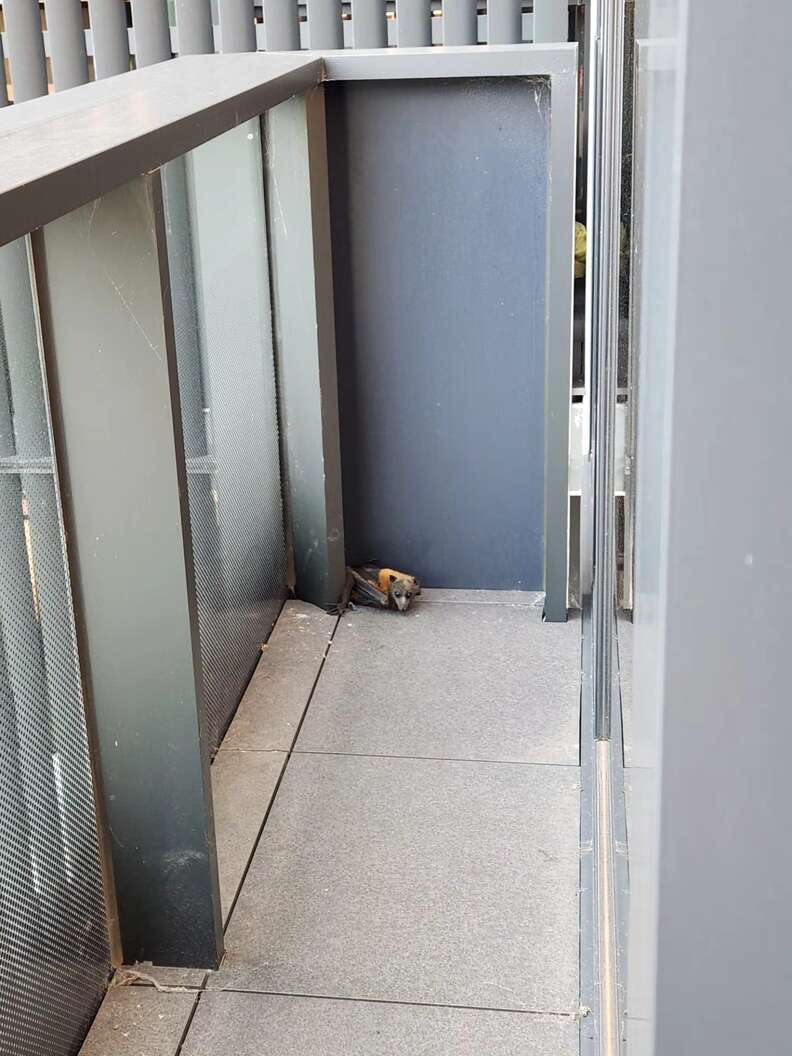
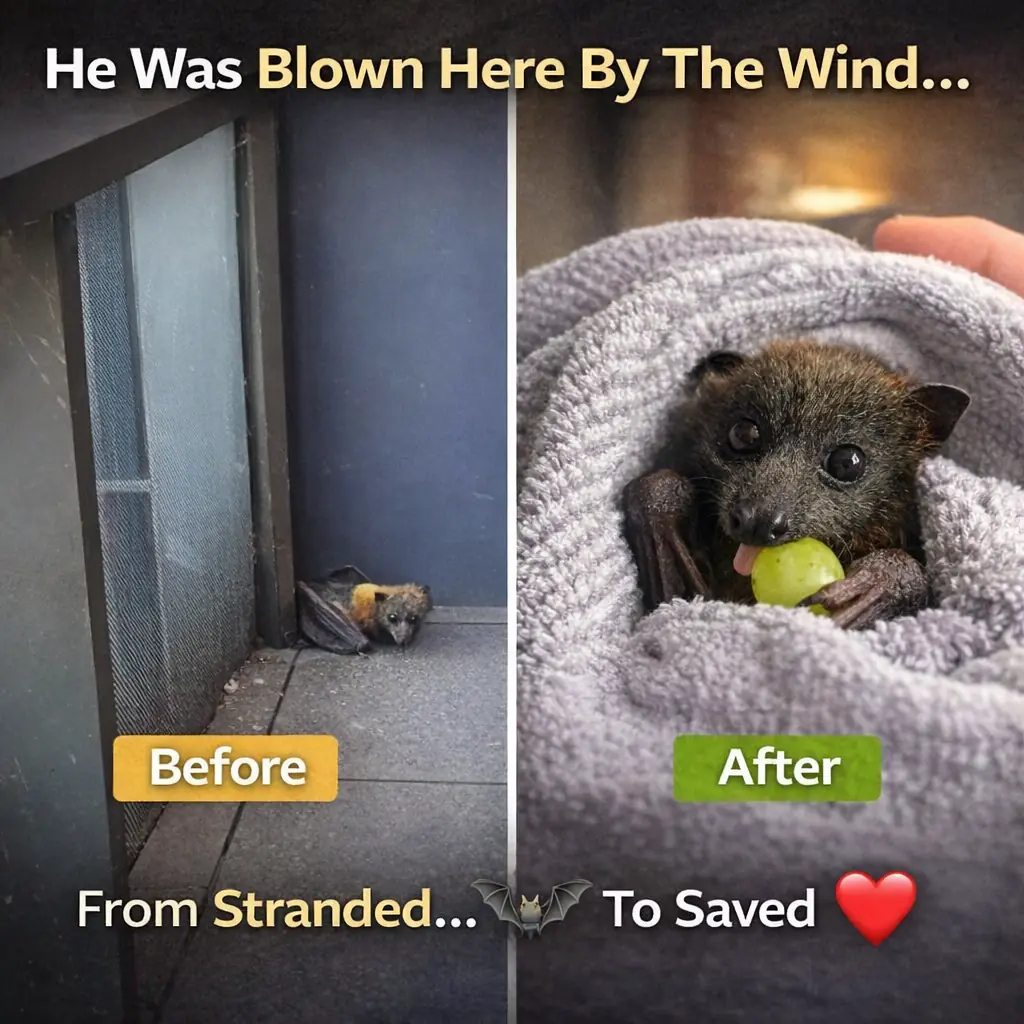
Curled tightly in the corner against the wall was a young bat.
He looked impossibly small. His fur was damp. One wing was stretched awkwardly to the side. He wasn’t hanging upside down like bats normally do — he was lying flat against the concrete, breathing quickly, eyes wide and alert.
He wasn’t supposed to be there.
Wildlife experts later suspected that strong gusts of wind had torn him from his roost and carried him across the building complex, dropping him onto the empty balcony. Too young and too weak to regain flight, he had been trapped there ever since.
And he had likely been there for hours.
Why Baby Bats Are So Vulnerable
Young bats are especially vulnerable to environmental disturbances.
Unlike adult bats, juveniles are still developing flight strength and coordination. A sudden storm, extreme winds, or human construction activity can easily displace them from safe roosting spots.
When grounded, bats face serious risks:
-
Dehydration
-
Predators
-
Starvation
-
Injury to delicate wing membranes
And balconies pose additional danger — smooth surfaces make climbing nearly impossible, and without height or a hanging point, takeoff becomes difficult.
This little bat had no safe escape route.
The Rescue Call
Unsure how to help safely, the neighbor did the right thing — they contacted a local wildlife rescue organization.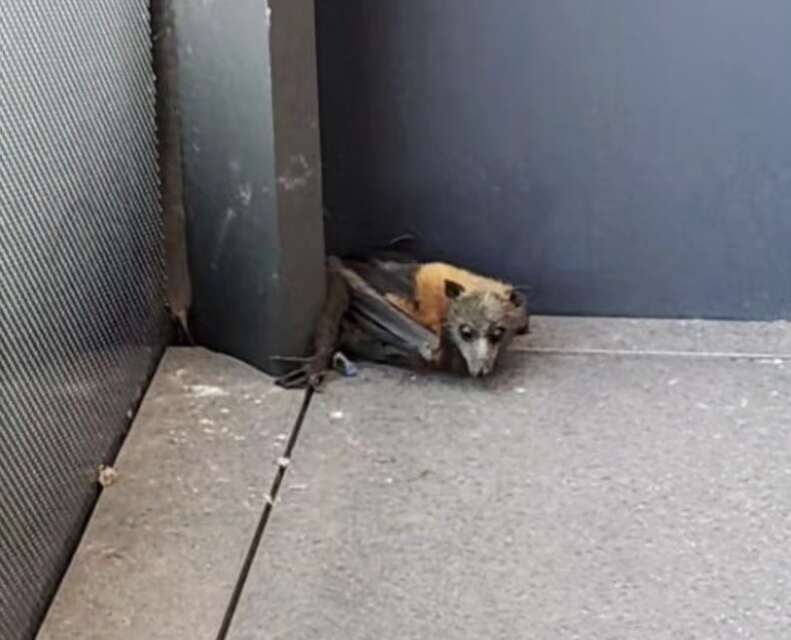
Handling bats without training is not recommended. Besides their fragile wings, bats can become extremely stressed during human contact. Wildlife rehabilitators are trained to safely assess injuries and minimize fear.
Within hours, rescuers arrived.
Using gloves and a soft towel, they gently wrapped the bat, carefully supporting his wings. He didn’t resist much — a sign he was likely exhausted.
Up close, they could see he was just a juvenile.
And he was very hungry.
First Signs Of Relief
Once transported to a licensed wildlife rehabilitator, the tiny bat was given fluids to treat dehydration. He was warmed gradually, since bats rely heavily on temperature regulation and can go into shock if chilled.
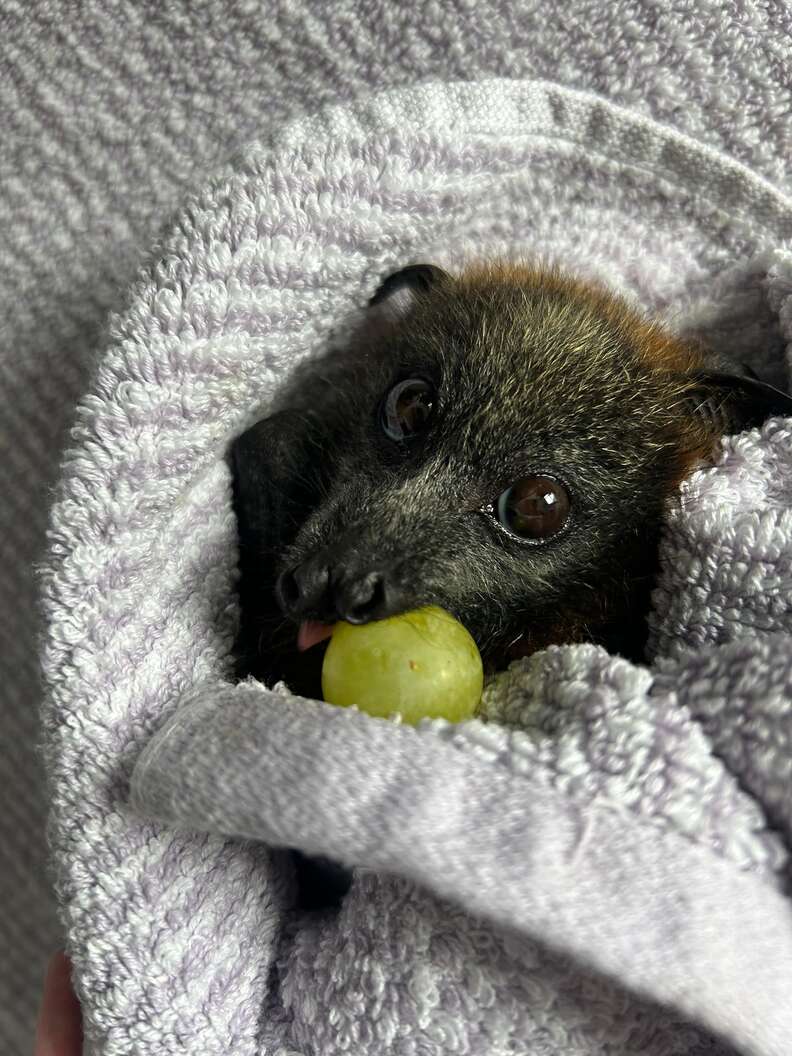
After being stabilized, he was offered small pieces of fruit.
At first, he hesitated.
Then — slowly — he began nibbling.
That was the moment everyone exhaled.
Eating meant hope.
Wrapped snugly in a soft towel, eyes now calmer instead of panicked, the little bat looked completely different from the frightened creature stranded on cold concrete just hours earlier.
From Stranded To Safe
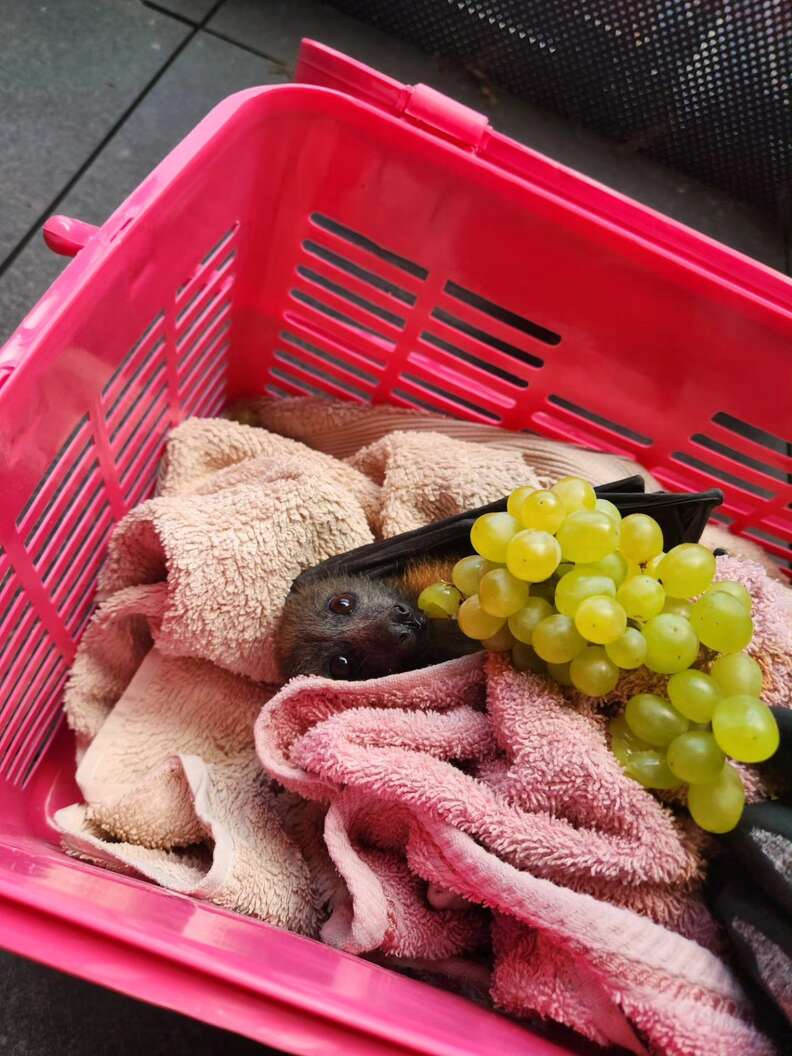
The transformation was remarkable.
Before:
-
Soaked from wind exposure
-
Too weak to fly
-
Alone on a hard balcony floor
After:
-
Warm and dry
-
Safely wrapped and monitored
-
Eating fruit confidently
His rescuers later shared that once fully hydrated and rested, he began exercising his wings again — small stretches at first, then stronger flutters.
Each day, he gained strength.
The Importance Of Wildlife Rescue
Stories like this highlight something many people don’t realize: urban environments can be unexpectedly dangerous for wildlife.
Balconies, glass buildings, artificial lights and storms amplified by open city spaces all increase risks for small animals.
Wildlife rescue organizations play a critical role in:
-
Providing emergency response
-
Offering medical treatment
-
Educating communities
-
Returning animals safely to the wild
Without intervention, this young bat likely would not have survived.
Why Bats Matter More Than You Think
Bats are often misunderstood, but they are essential to ecosystems.
Depending on the species, bats help by:
-
Pollinating plants
-
Dispersing seeds
-
Controlling insect populations
Insect-eating bats can consume thousands of insects in a single night, helping maintain ecological balance.
Saving one bat may feel small — but protecting wildlife biodiversity is never insignificant.
Preparing For Release
After several days of recovery and observation, the bat was deemed strong enough for release.
Rehabilitators carefully selected a safe area near natural roosting habitats, away from heavy human disturbance.
At dusk — the natural active time for bats — he was gently placed at height.
For a moment, he clung still.
Then he stretched his wings wide.
And flew.
A Reminder To Pay Attention
This rescue began because someone listened.
If the neighbor had ignored the banging noise, assuming it was just the wind, the outcome could have been very different.
Sometimes compassion starts with curiosity.
And sometimes, saving a life begins with simply checking what shouldn’t be there.
What To Do If You Find A Bat
If you ever encounter a grounded bat:
-
Do not handle it with bare hands.
-
Keep pets and children away.
-
Contact a licensed wildlife rehabilitator.
-
Avoid attempting to feed it without guidance.
Professional care makes all the difference.
Final Thoughts
From stranded on a balcony to safely soaring back into the night sky, this tiny bat’s journey is proof that even in concrete cities, kindness still makes room for wildlife.
All it took was one neighbor who chose to look — and one rescue team who chose to act.
And because of that, a life was saved.