Great Blue Heron Found Freezing Outside Basement Door Now Safe After Dramatic Wildlife Rescue
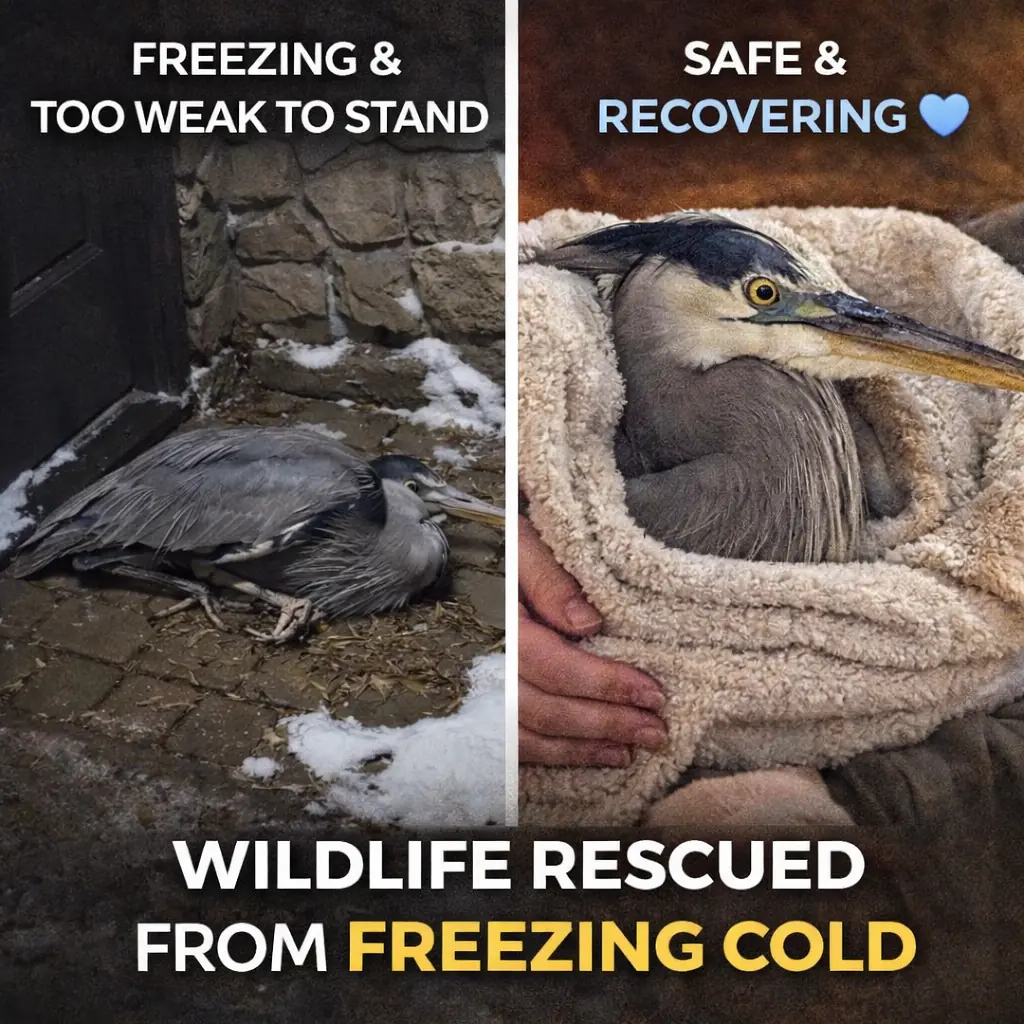
In near-below-zero temperatures, a beautiful great blue heron stood motionless outside a basement door — too weak to fly, too injured to move. What began as a neighbor’s worried glance quickly turned into a dramatic wildlife rescue that may have saved his life.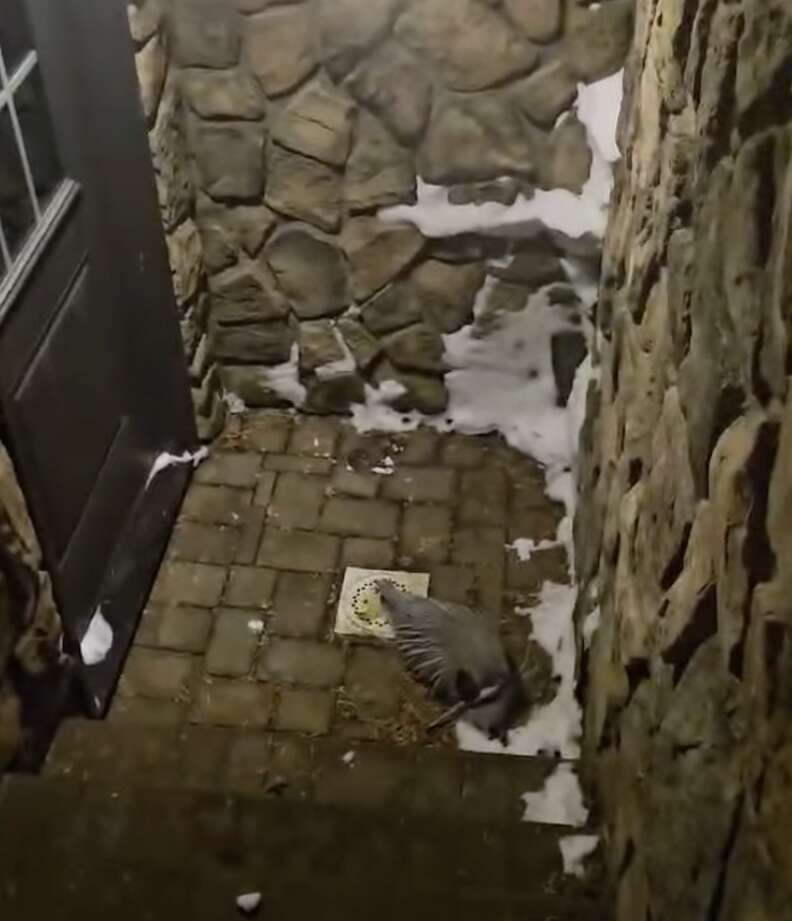
Full Article
When winter tightens its grip, survival becomes a daily battle for wildlife. Ice creeps into feathers. Water sources freeze. Food disappears. And for one great blue heron, the cold nearly became fatal.
A Strange Sight in the Freezing Cold
It was bitterly cold — the kind of cold that bites through layers and stings your lungs. Snow clung to the edges of sidewalks and the wind cut through quiet suburban streets.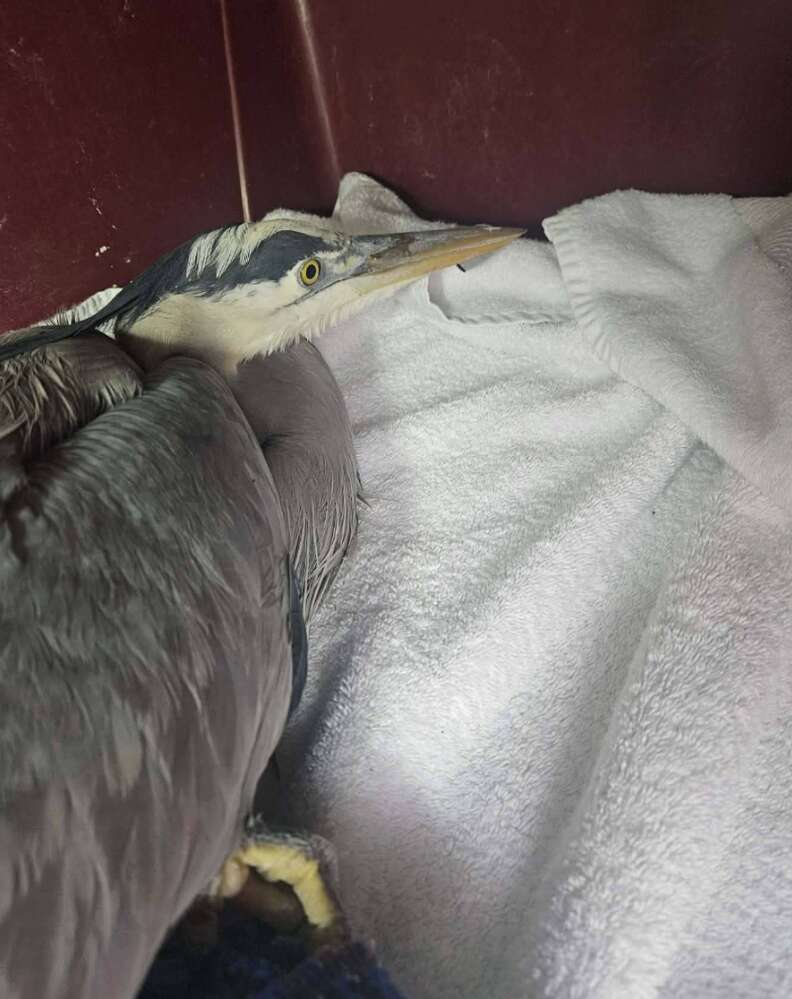
That’s when a local resident noticed something unusual near their basement door.
At first glance, it looked like a pile of gray feathers against the stone wall. But then it moved — barely.
A great blue heron.
These birds are usually seen standing tall in wetlands, gliding gracefully over lakes, or stalking fish in shallow waters. Seeing one pressed against a basement entryway in freezing temperatures made no sense.
And it was clear something was terribly wrong.
Too Weak To Stand
When rescuers arrived, the scene was heartbreaking.
The heron wasn’t just cold — he was debilitated.
He tried to shift his weight but collapsed. His long legs trembled beneath him. His feathers, meant to insulate him, were no match for the relentless cold.
In near-below-zero temperatures, even healthy birds struggle. For an injured one, hypothermia can set in quickly.
Rescuers moved carefully. Herons are large birds with powerful beaks capable of defending themselves — but this one barely reacted. That told them everything they needed to know about his condition.
He didn’t have the strength to fight.
A Gentle Rescue
Using towels and calm movements, the team carefully wrapped him up. The goal was immediate stabilization — warmth first, assessment later.
One rescuer supported his fragile body while another secured his wings to prevent further injury.
Even in his weakened state, his bright yellow eyes remained alert. There was still fight left in him.
They transported him quickly to a licensed wildlife rehabilitation center.
Every minute mattered.
The First Examination
Once inside the rehab facility, the heron was placed in a quiet, temperature-controlled space.
Gradual warming began — never too fast, as rapid temperature shifts can cause shock.
Veterinary staff performed a full examination:
-
Signs of dehydration
-
Possible wing or leg injuries
-
Weight loss
-
Frostbite risk
He was severely underweight and exhausted. There were indications of injury that may have prevented him from hunting effectively, which likely led to his weakened condition.
Winter had simply pushed him over the edge.
Why Winter Is So Dangerous for Birds
Great blue herons rely on open water to hunt fish, amphibians and small aquatic animals. When lakes and ponds freeze, food sources vanish.
Injured birds cannot travel far in search of alternatives.
Prolonged cold exposure leads to:
-
Hypothermia
-
Energy depletion
-
Organ stress
-
Predation risk
Without intervention, this heron likely would not have survived the night.
Small Acts Save Lives
The rescue happened because one neighbor decided to pay attention.
Wildlife often suffers silently. Many animals instinctively hide weakness to avoid predators. That means by the time humans notice distress, the situation is already critical.
This case is a reminder:
Observation saves lives.
If you ever see wildlife behaving abnormally — grounded birds, animals out during extreme weather, visible injuries — contacting licensed wildlife rehabilitators can make all the difference.
The Road To Recovery
Over the following days, the heron slowly regained strength.
Hydration.
Nutritional support.
Careful monitoring.
His posture improved. He began standing for short periods. His eyes grew brighter.
The rehab team remained cautiously optimistic.
Wild birds are resilient. Given the right support, they can bounce back in extraordinary ways.
Hope On The Horizon
While full recovery takes time, early signs are promising.
If healing continues, the ultimate goal will be release back into a safe habitat where he can fish and fly again.
That moment — watching a rehabilitated bird take flight — is what rescuers work toward every single day.
Why Wildlife Rescue Matters
Stories like this highlight something powerful:
Compassion extends beyond pets and domesticated animals.
Wildlife rehabilitation plays a critical role in ecosystem balance. Each bird returned to health supports biodiversity and natural food chains.
And sometimes, it just takes one person noticing something isn’t right.
A Second Chance
On one of the coldest days of winter, a great blue heron nearly lost everything.
Instead, because someone cared, he gained a second chance.
From freezing on a basement doorstep to recovering in warmth and safety — his story is a reminder that even in the harshest conditions, hope can arrive.
Sometimes, it shows up wrapped in a towel.