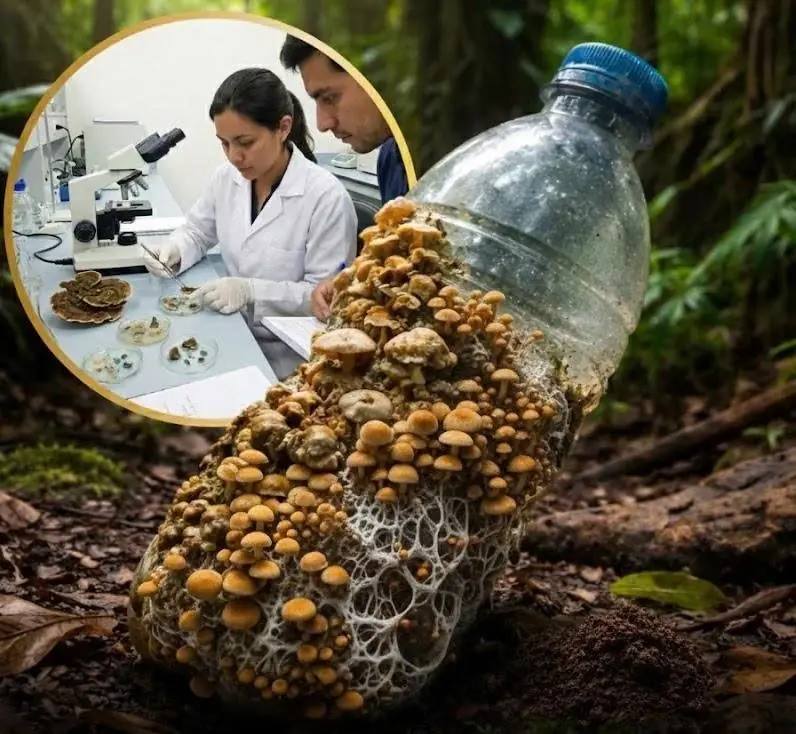
Scientists have identified a newly studied fungus in the Amazon rainforest that has the remarkable ability to decompose certain types of plastic and turn them into organic material. The discovery is being hailed as a potential breakthrough in the global fight against plastic pollution.
Researchers found the fungus growing naturally on discarded plastic in the rainforest soil. Laboratory tests later confirmed that the organism can digest plastic polymers and convert them into simpler, biodegradable compounds. Unlike many known microbes that require oxygen to break down plastic, this fungus is able to function even in low-oxygen environments, making it especially promising for waste treatment facilities and landfills.
Plastic waste has become one of the world’s most pressing environmental problems, with millions of tons entering ecosystems every year. Because most plastics take hundreds of years to degrade naturally, scientists have been searching for biological solutions that could speed up the process without creating toxic byproducts.
According to the research team, the fungus produces specialized enzymes that attack the molecular structure of plastic, allowing it to be absorbed and transformed into organic matter. While the process is still relatively slow, experts believe it could be improved through further study and controlled cultivation.
Environmental scientists caution that the discovery is not an instant solution to the plastic crisis. Large-scale application would require careful testing to ensure the fungus does not disrupt natural ecosystems or become invasive. However, they agree that it represents a promising step toward sustainable waste management.
Future research will focus on identifying the exact enzymes responsible for the breakdown process and exploring how they can be safely used in recycling systems. If successful, this biological method could complement existing recycling technologies and help reduce the growing mountains of plastic waste worldwide.
The finding highlights once again the immense and largely unexplored potential of rainforest biodiversity, suggesting that nature itself may hold the key to solving some of humanity’s most serious environmental challenges.