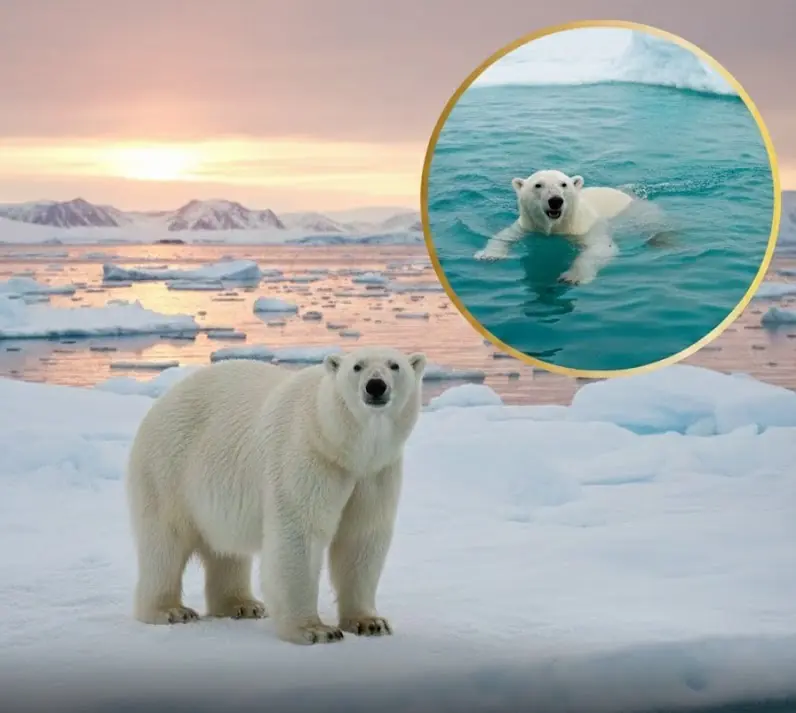
Arturo, a polar bear kept at Mendoza Zoo in Argentina, died at the age of 30 after spending most of his life far from the frozen landscapes his species is built for. Born in Alaska, he was moved to Argentina when he was young and never returned to a colder environment.
For years, animal welfare groups and concerned citizens called for Arturo to be relocated to a sanctuary with a climate closer to his natural habitat. Online petitions gathered hundreds of thousands of signatures, and offers of international assistance were made to help transport him. Despite the attention and public pressure, the move never took place.
Visitors to the zoo often described Arturo as restless. Photos and videos showed him pacing in circles and swaying his head, behavior experts say can be a sign of stress in captive animals. His enclosure included only a small concrete pool for cooling, and during extreme summer heat, zoo workers reportedly added blocks of ice to help him cope.
Unlike wild polar bears, Arturo never walked on sea ice or hunted seals in the ocean. His world was limited to a confined space in a city with hot summers and mild winters — conditions very different from the Arctic regions polar bears evolved to survive in.
After his death, Arturo became a symbol in the global debate over keeping large, climate-sensitive animals in captivity. Supporters of zoos argue that they can play an important role in education and conservation. Critics counter that certain species, especially wide-ranging predators like polar bears, cannot thrive in artificial environments.
Arturo’s story forced many people to ask difficult questions: What do humans owe animals that depend entirely on them for survival? Is it ethical to keep creatures designed for vast, icy wildernesses in small enclosures? And where should the line be drawn between conservation and confinement?
Though Arturo is gone, the conversation he inspired continues. His life has become a reminder that caring for captive animals is not only about keeping them alive, but about providing conditions that respect their physical needs and natural behavior.